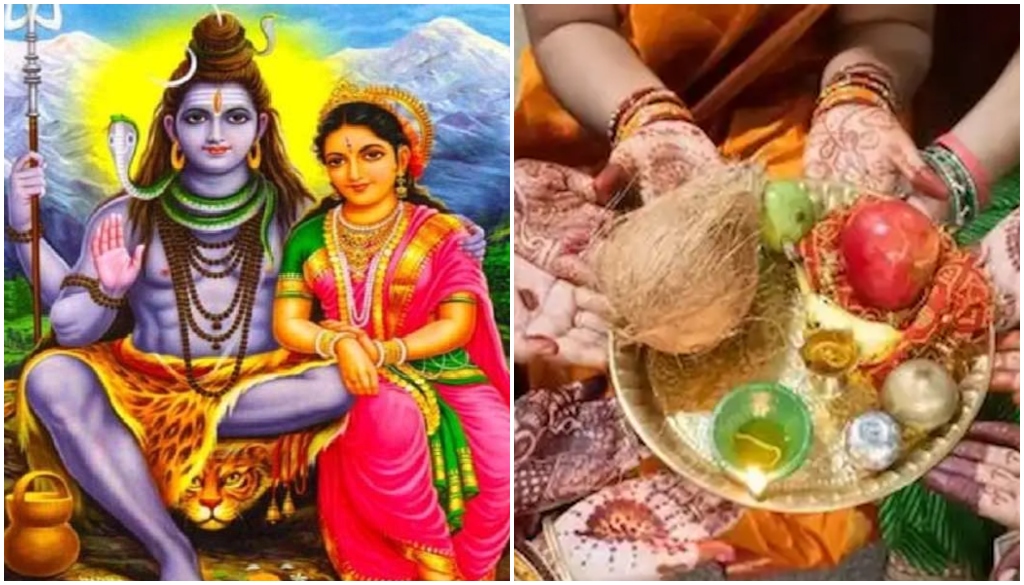
Patna: Hartalika Teej, the last Teej of the year, will be observed on August 26. Across India, women will mark the day through fasting, rituals and prayers to Lord Shiva and Goddess Parvati. The festival is associated with marital happiness, good fortune and devotion, and is closely linked to nature as it falls after the monsoon season, when greenery is at its peak.

A central part of the worship involves offering 16 different types of leaves to the Shivling, each carrying a particular meaning:
- Bilvapatra (bael leaf): Symbol of good luck
- Shami leaves: Associated with wealth and prosperity
- Mango leaves: Used for auspicious occasions
- Jaatipatra: Represents the blessing of childbirth
- Bhringraj: Linked to power and strength
- Sevantika: Symbol of marital happiness
- Agastya: Represents splendour and prosperity
- Banana leaves: Associated with success
- Bamboo leaves: Believed to enhance progeny
- Deodar leaves: Linked with wealth and prosperity
- Betel leaves: Represent mutual love and understanding
- Dhatura: Offered for salvation and the destruction of sins
- Champa: Symbol of beauty and health
- Oleander leaves: Associated with fame and happiness
- Neem: Represents virtuous character
- Ashok leaves: Symbol of peace and a happy life
Alongside these leaves, devotees also offer seasonal fruits such as bananas, apples, pears, papayas, pomegranates and guavas, all of which are considered auspicious and linked to prosperity.

On the day, women fast and in the evening create a Shivling from sand or clay. The rituals begin during pradosh kaal (twilight), with leaves offered in sequence. Tradition holds that leaves should be placed upside down, while fruits and flowers are offered upright. The puja is accompanied by devotional singing and an overnight vigil.