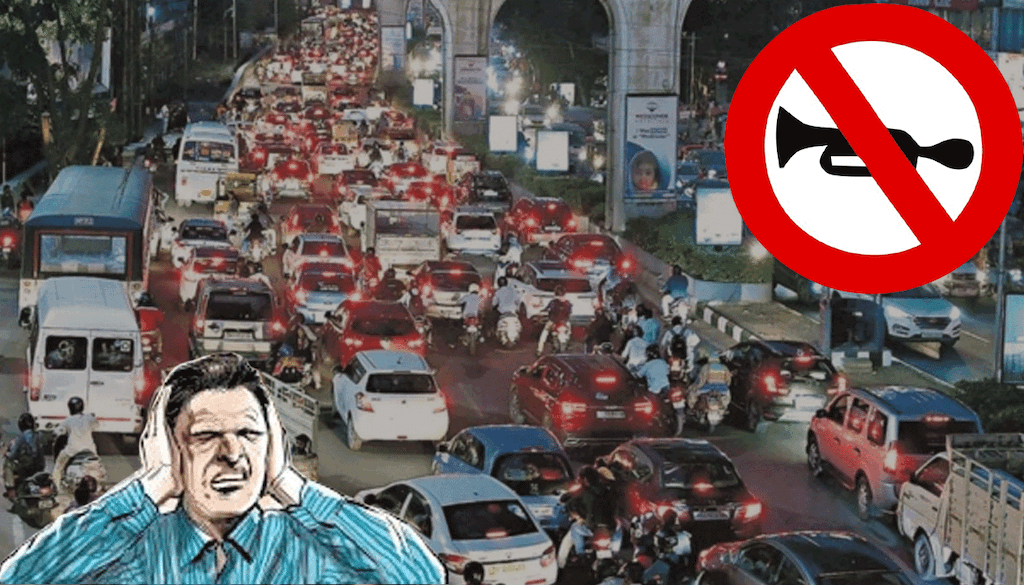
Patna: A feedback report from Bihar’s transport department has painted a stark picture of how incessant honking is affecting daily life, with citizens linking the noise to anger, stress and even accidents. The findings emerged from a road safety campaign conducted in January, where five lakh residents were surveyed across the state.

The results showed that three and a half lakh people – around 60% – reported being disturbed by the constant blare of vehicle horns. In Patna alone, 60,000 of the one lakh respondents said the horns were unbearable, with some describing the noise as so loud it provoked sudden bouts of rage.
The department noted that excessive honking contributed to 30,453 accident cases between July and December last year. Many victims reported being startled by loud horns, losing balance, and falling on busy roads. Two-wheeler and auto drivers were singled out as the most frequent offenders.

The World Health Organization recommends horn sounds be kept under 85 decibels, yet levels recorded in Patna often touched 110 – a threshold considered dangerous. Experts warned that prolonged exposure could cause hearing loss, insomnia, and fatigue, with children, the elderly, and animals especially vulnerable.
Authorities identified seven “honking hotspots” in the state capital: Income Tax roundabout, Boring Road crossing, Kurji, Anisabad Golambar, Bypass, Kankarbagh Tempo Stand, and Bakarganj. Noise levels peak during rush hours between 9–11am and 5–10pm, when congestion is at its worst.
“Despite repeated awareness drives, people are still not following the rules. Loud horns are not just a nuisance – they are a real danger,” said Pinku Kumar, additional district transport officer in Patna.
Officials stressed that road safety campaigns continue to urge compliance with traffic rules, but the latest findings underline a deeper problem: Bihar’s roads are not just clogged with vehicles, but with a culture of noise that is taking a toll on health, safety, and public patience.