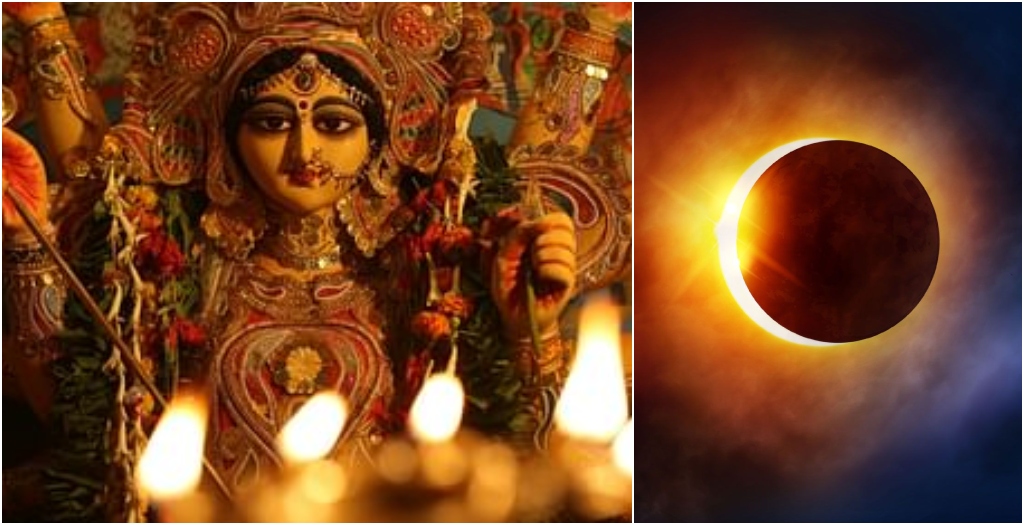
Patna: The last solar eclipse of the year will take place on September 21, coinciding with Sarvapitre Amavasya – a day dedicated to paying respect to ancestors through Shradh and Tarpan rituals. This rare combination has sparked curiosity among devotees as the event falls just one day before the start of Sharadiya Navratri, one of the most important Hindu festivals.

According to astronomers, the solar eclipse will begin at 1:13 pm Indian time. However, as the eclipse will occur during the night hours in India, it will not be visible anywhere in the country. This means the Sutak period, which usually restricts religious activities, will not be considered valid. People will be free to perform all rituals, donations and prayers on Sarvapitre Amavasya without any concern.
Religious leaders have assured devotees that the solar eclipse will not affect Pitru Paksha rituals or the start of Navratri. They have called this a good sign for India and said that there will be no interruption in Kalash Sthapana, which marks the beginning of Navratri celebrations. Navratri will begin on September 22 as planned, with all rituals taking place at the right time.

While the solar eclipse will not be seen in India, it will be visible from New Zealand, Antarctica, Eastern Australia and some parts of the South Pacific Ocean. For Indian devotees, this means there will be no restrictions on worship, bathing or charitable acts. Temples and homes can continue with their preparations for Navratri as usual.