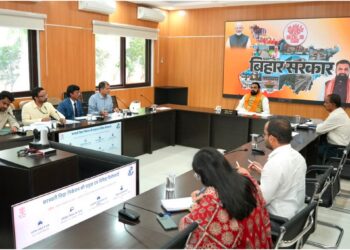
Patna: The Bihar government has taken another step towards improving the lives of domestic workers in the state. On Monday, a one-day workshop was organised at the Pratibimb Auditorium in Niyojan Bhawan, Patna, to discuss ways to make social security for domestic workers more accessible and effective. The event was held in collaboration with the International Labor Organization (ILO) and the V.V. Giri National Labor Institute, Noida.

The workshop was chaired by Rajesh Bharti, the Labour Commissioner of Bihar. It brought together several senior officials and experts, including Mariko Oruchi, Senior Technical Specialist (Social Security) at ILO-DWT, New Delhi; Dr Arvind, Director General of the V.V. Giri National Labor Institute; Dr Elena Samantare; and Joint Labour Commissioner Vijay Kumar. Representatives from labour unions, domestic worker associations, and other government departments also participated in the event.
During the workshop, a detailed presentation was shared on the findings of a survey conducted to understand the working conditions and challenges faced by domestic workers in Bihar. The study highlighted several issues, including the lack of social security coverage, job instability, and low awareness among workers about government welfare schemes. Experts at the session discussed possible measures to strengthen policy implementation and ensure that the benefits of social protection reach more households.

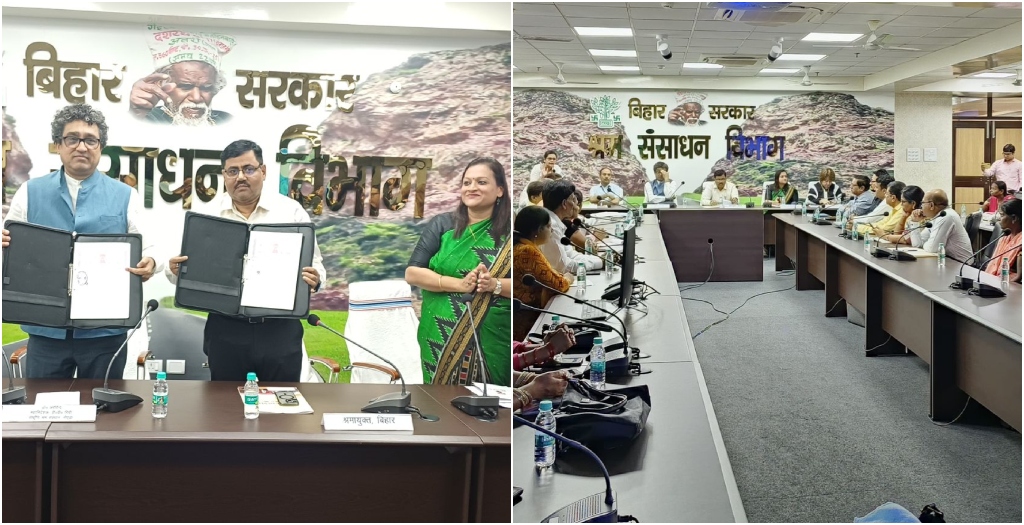
A key highlight of the day was the signing of a Memorandum of Understanding (MoU) between the Dashrath Manjhi Institute of Labor and Employment, Patna, and the V.V. Giri National Labor Institute, Noida. The agreement aims to improve coordination and research between the two institutions and help design better programmes for workers’ welfare.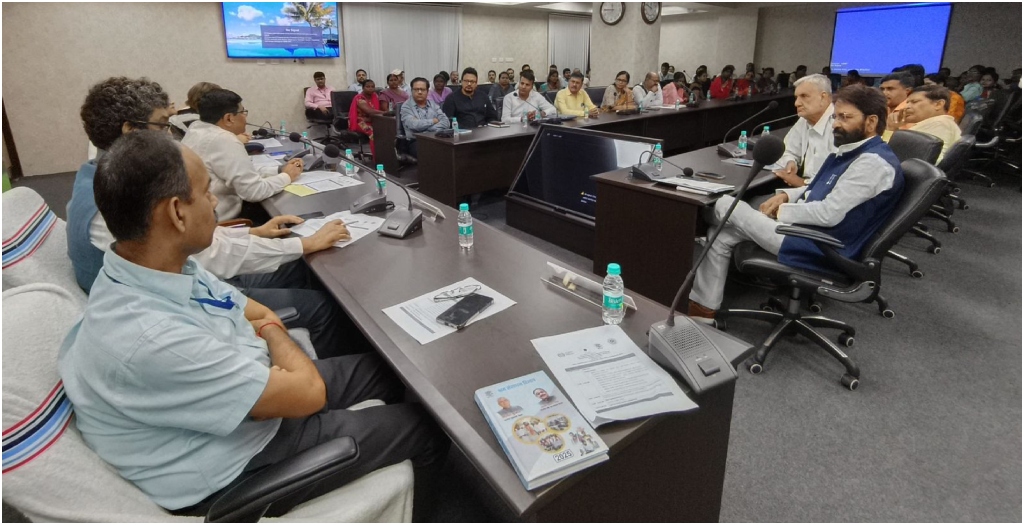
Officials at the event praised the efforts of the Bihar Labour Resources Department for its continued work to support domestic workers. They also encouraged further collaboration with national and international organisations to expand social security coverage and improve working conditions. The workshop ended on a positive note, with all participants expressing their commitment to ensuring that domestic workers receive the recognition, support, and protection they deserve.