Sudhanshu Kumar
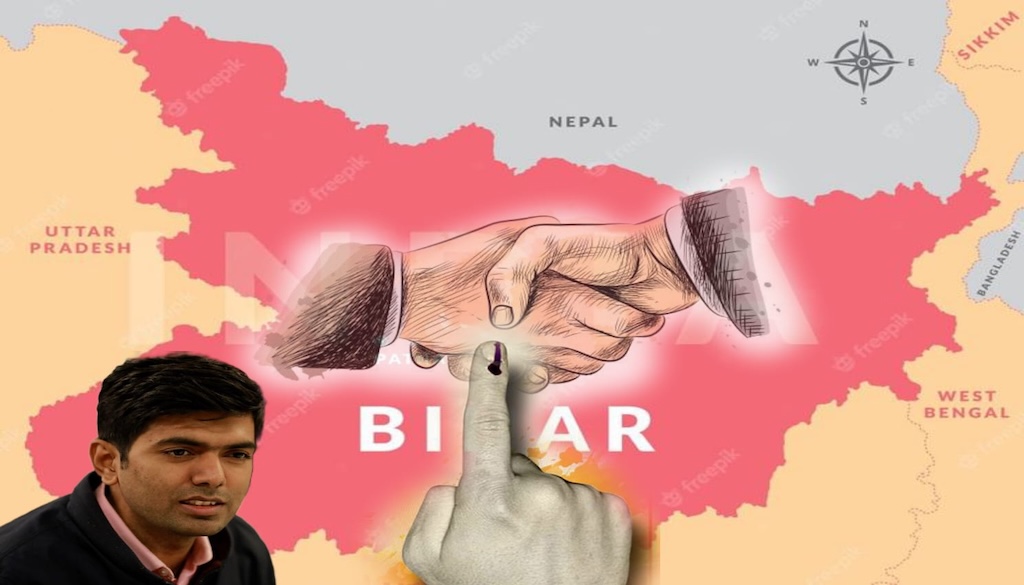
With mere days until Bihar’s Assembly elections on November 6 and 11, the showdown between the National Democratic Alliance (NDA) and Mahagathbandhan teeters on a knife-edge, defying all predictions. Razor-thin margins and fluid alliances have turned this into a high-stakes gamble, where every caste equation and booth-level management could tip the scales.

From Duopoly to Triangle: Bihar’s Shifting Political Geometry
Prashant Kishor’s Jan Suraaj insurgency has disrupted the traditional duopoly. It has turned head-to-head contests into triangular tussles across many constituencies. Its rise has siphoned votes from both camps and triggered last-minute tactical recalibrations. This fresh entrant siphons disillusioned votes from incumbents, forcing tactical recalibrations and injecting unpredictability into Bihar’s fractious politics.

Knife-Edge: Alliances Wobble, Voters Wait
Voter apathy looms, fed by a paradox: widespread fatigue with incumbency, yet no clear opposition. After five years of revolving coalitions under Chief Minister Nitish Kumar, every major party has had a turn in power, blunting the edge of anti-incumbency. Apathy looms large, rooted in the incumbency conundrum. Over the past five years, Chief Minister Nitish Kumar’s revolving coalitions have rotated all major players—BJP, RJD, JD(U), Congress, CPI(ML), CPI—through the corridors of power in Bihar. This carousel has diluted anti-incumbency’s venom; no single foe bears the full brunt of governance failures, from crumbling infrastructure to youth unemployment. Turnout fears mount as urban youth eye migration over ballots.
Urban campaigns blaze across digital platforms, with viral memes and targeted ads dominating narratives in Patna’s corridors of power and among internet users. But in rural Bihar—the agrarian heartland that sways a majority of seats—outreach falters. Social engineering, vital in a state cleaved by caste lines, and grassroots door-to-door drives remain slow to ignite. Booth-level mobilization is sluggish, hampered by a shorter campaign window than in previous elections. Villages echo with scepticism, as voters grapple with promises that rarely transcend the tarmac.
Populism, Apathy, and the Jan Suraaj Jolt
Strategically, both alliances are locked in a populist arms race, doling out freebies from direct cash transfers to subsidies, with little concern for fiscal sustainability. It’s short-termism at its starkest—electoral gimmicks over enduring reforms. By contrast, though nascent, Jan Suraaj has created a buzz with a policy-driven approach focused on migration, employment, and governance. Unlike the alliances, it appeals to youth by promising structural reform without populist giveaways or drawing on the exchequer. Yet, its skeletal organizational machinery—lacking robust booth networks—poses a peril: converting buzz into ballots remains a Herculean challenge. Its success relies heavily on the individual candidates who can ride on the known face and issues raised by Prashant Kishor.
Too Close to Call: Bihar’s Battle of Alliances and Aspirations
Bihar’s battle isn’t just of alliances; it’s of aspirations unfulfilled. Will rural fervour surge to redeem forgotten promises? Can urban rolls defy disinterest? Eleventh-hour shocks—alliance defections or viral scandals—lurk as swing factors. In this too-close-to-call crucible, the mandate may demand vision beyond freebies, urging a Bihar that aspires to more than mere survival. As polls dawn, one truth endures: democracy’s pulse beats fiercest in the undecided heartland.
Verdict? The final outcome hinges on rural enthusiasm, voter turnout, and unpredictable last-minute shifts. The margins are thin and the stakes immense. Bihar’s verdict may yet surprise.
(The author is Patna based Associate Professor. Views are personal. Can be reached at X handle @onlysudh)