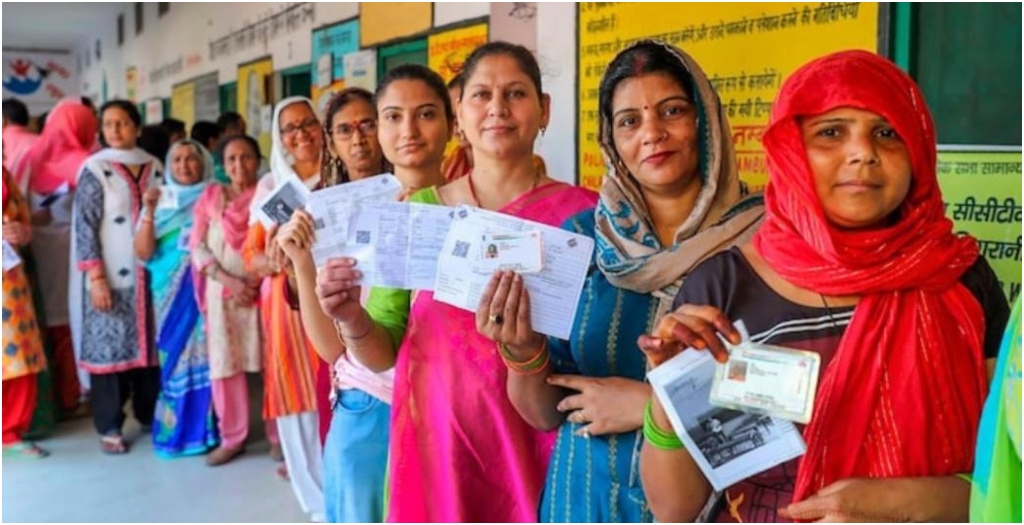
Patna: Women have once again made history in Bihar. In the first phase of the 2025 Bihar Assembly Elections, they turned out in greater numbers than men, proving that they are now the real force shaping the state’s politics. According to the Election Commission, women’s participation stood at a record 64.66%, far higher than men’s turnout. Out of 37.5 million voters across 121 constituencies, 17.6 million were women. In several districts such as Begusarai, Gopalganj, and Muzaffarpur, the women’s turnout was 5 to 10% higher than that of men, showing their growing involvement and awareness.

Chief Electoral Officer Vinod Singh Gunjyal praised the high participation and said that women’s enthusiasm for voting shows the strength of Bihar’s democracy. He pointed out that this positive trend has continued since 2010. That year, women’s turnout was 54.49% compared to 51.12% for men. In 2015, the figure rose to 60.48% for women and 53.32% for men, and in 2020, women again led with 59.7% compared to men’s 54.5%. Experts believe this growing confidence among women is due to welfare schemes like the Chief Minister’s Women’s Employment Scheme, which gives Rs 10,000 to support self-employment, and 35% reservation for women in government jobs. The Opposition has also made promises to attract women voters — RJD leader Tejashwi Yadav has offered one-time financial help of Rs 30,000 for women if his party comes to power.
However, while women have become active voters, they still remain neglected as candidates. Of the 1,314 candidates in the first phase, only 122 are women — just 9.28%. This imbalance shows a clear gap between participation and representation.

The RJD fielded 24 women candidates (16.7%) out of 144 seats, while the BJP gave 13–15 women tickets out of 160 seats — about 8 to 9%. The JDU, though smaller in size, allotted 22 tickets to women in its 45 seats, nearly 49%, while Congress gave 5 tickets to women in 30 seats (16.7%). The Jan Suraj Party gave around 25 tickets to women across 243 seats, focusing on young women leaders. Compared to 2020, when only 62 women contested, this year’s figure of 122 is a clear rise.
Yet, the demand for 33% reservation for women in the Assembly remains pending. In 2020, 26 out of 62 women candidates won, but the total number of women MLAs remained only 38 out of 243 — just 15.6%. As Bihar continues to see record-breaking women’s participation, the call for fair representation grows louder than ever.