Patna: An investigation into Bihar’s urban development programmes has uncovered widespread irregularities, with officials identifying more than 100 projects that were re-tendered despite construction having already been completed, raising concerns over governance, oversight and the misuse of public funds.

According to official findings, at least 105 such “duplicate projects” have been detected so far under the Chief Minister’s Comprehensive Urban Development Scheme, which covers all 38 districts of the state. Of these, 32 projects have been cancelled with immediate effect, a move the government says has averted a potential loss of around Rs 250 crore.
Under the scheme, a total of 4,787 projects were sanctioned across north and south Bihar. However, investigators found that in several cases, works that had already been executed—such as roads, drains and concrete pathways—were selected again, and the process of issuing fresh tenders and allocating funds had begun.

Officials explained that a duplicate project refers to a situation where a completed construction work is proposed again as a new project, with tenders floated for the same activity. “Had these cases not been identified in time, the financial implications for the state would have been severe,” a senior official involved in the probe said.
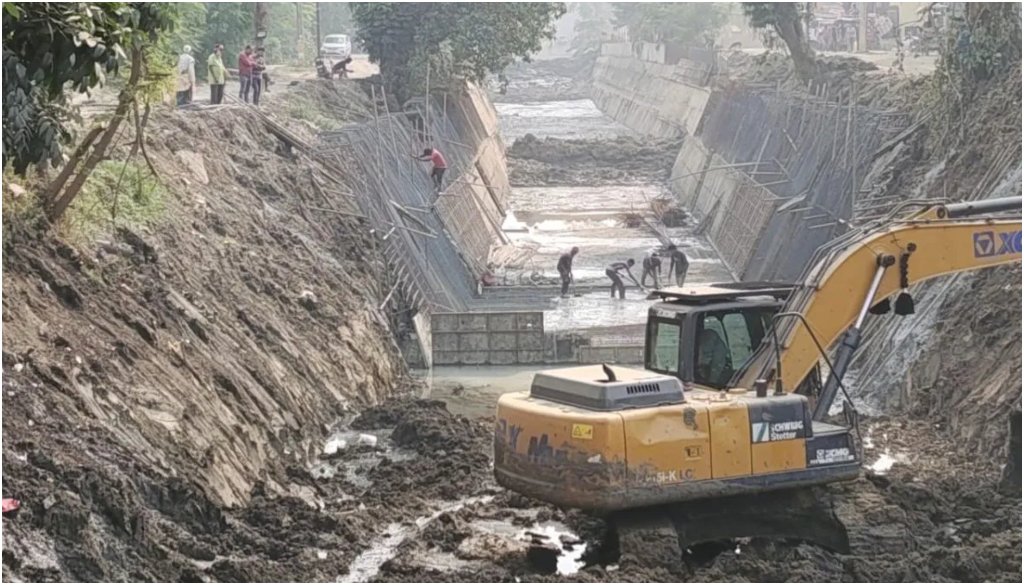
Several such cases were detected in Patna, where urban infrastructure projects had already been completed in some localities. In one instance, a road on the Bypass Road was finished in June, only to be included again in the urban development plan three months later, with a fresh tender issued. The tender was cancelled after the discrepancy came to light.
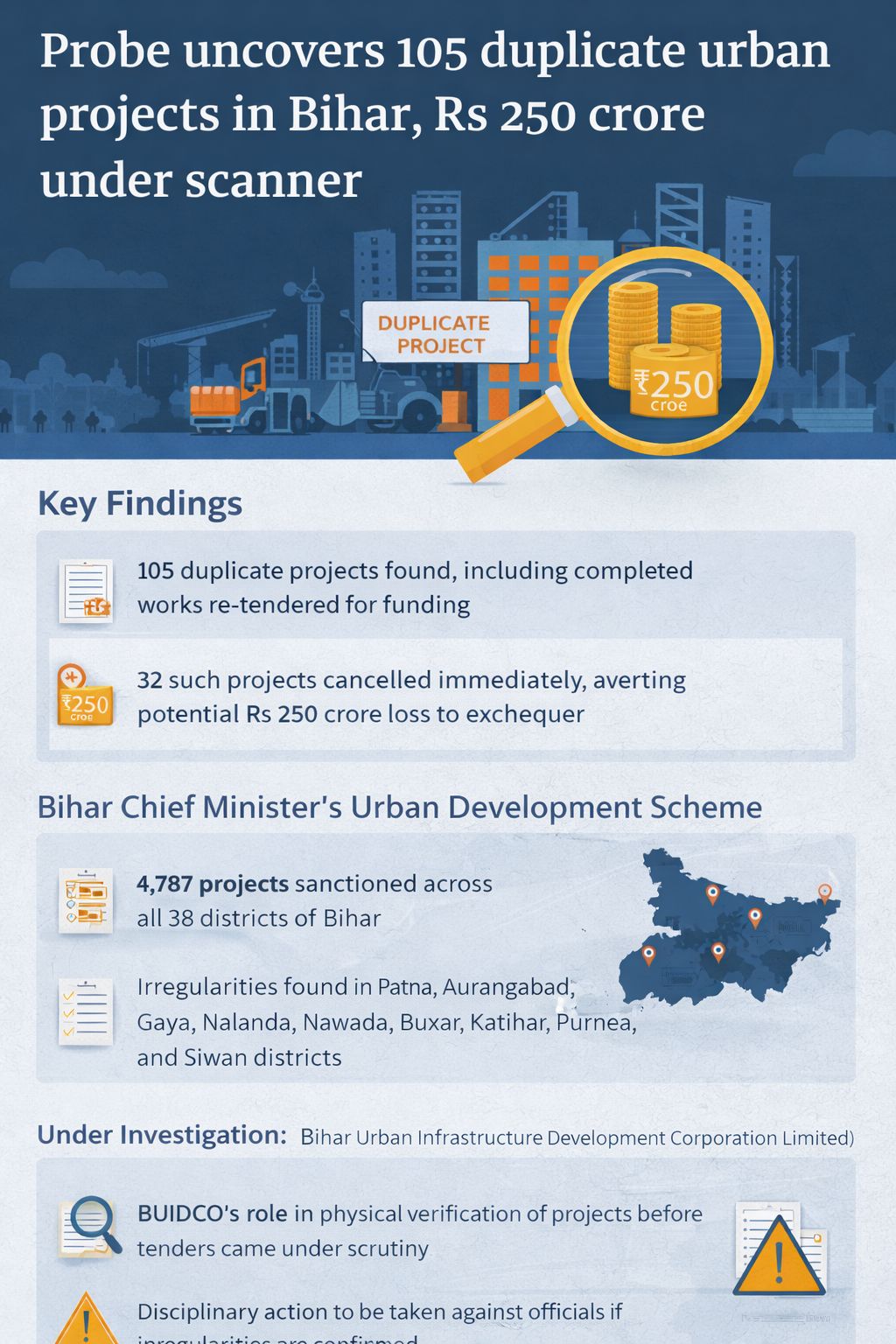
The problem is not confined to the capital. Investigators have flagged similar cases in districts including Aurangabad, Gaya, Munger, Nalanda, Nawada, Buxar, Katihar, Purnea and Siwan. Around 15 projects in the Patna region alone have come under scrutiny, with several already scrapped.
The role of Bihar Urban Infrastructure Development Corporation Limited, which was responsible for implementing projects under the scheme, is also being examined. BUIDCO was required to carry out physical verification of works before issuing tenders, but officials say significant lapses were found. Following directions from the corporation’s managing director, the scope of the inquiry was expanded, leading to the identification of additional duplicate projects.
Investigators also found that many earlier tenders had been issued at inflated rates. Under a revised system, tenders are now being floated based on the Bill of Rates (BOR), which officials say has introduced greater transparency and is expected to reduce the scope for manipulation.
Government sources said most of the 32 cancelled projects were at an early stage, while detailed investigations into the remaining cases are ongoing. Where irregularities are confirmed, officials said not only will tenders be cancelled, but disciplinary action will also be initiated against engineers and other officials responsible. The process of fixing departmental accountability has already begun.
Opposition parties have criticised the government, arguing that without the investigation the issue could have snowballed into a major scam. The government, however, maintains that the action demonstrates its commitment to transparency and fiscal discipline. Officials in the chief minister’s office said urban development schemes would now be reviewed in phases, with monitoring intensified across Bihar to ensure that public funds are not misused.