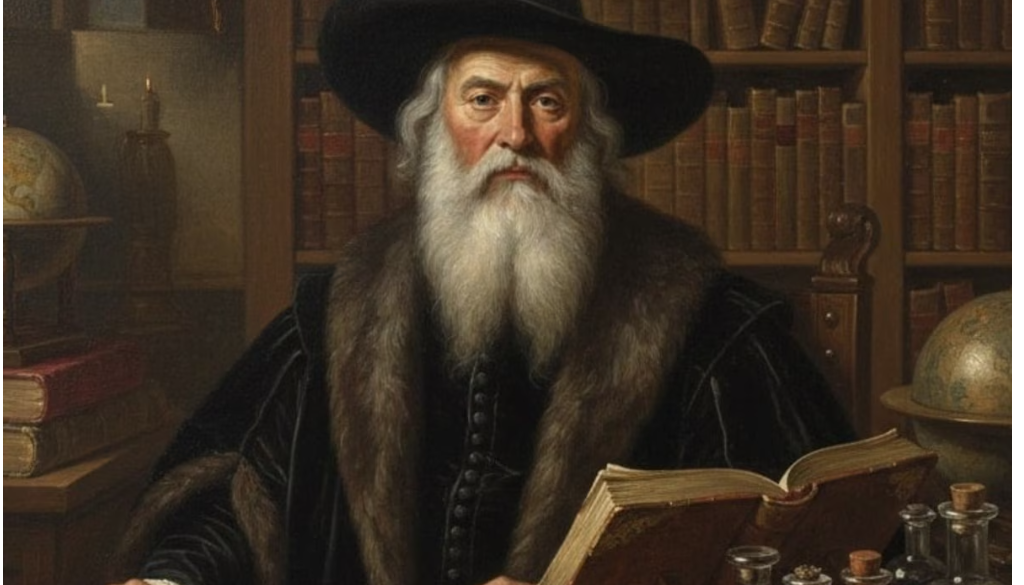
Patna: Predictions attributed to the 16th-century French astrologer Michel de Nostredame, better known as Nostradamus, are once again circulating widely online, with commentators claiming that his writings foretell political violence, authoritarian rule, and large-scale conflict in 2026.

Nostradamus’s book Les Prophéties, first published in 1555, consists of 942 quatrains written in deliberately obscure language. Over the centuries, these verses have been repeatedly reinterpreted in the context of major world events — often retrospectively — from the rise of Hitler to the September 11 attacks and the Covid-19 pandemic.
One quatrain now attracting renewed attention states that a “great man” will be struck down by lightning in daylight. Some commentators have suggested this symbolises the death or removal of a powerful political figure, possibly through assassination or a sudden coup. Historians, however, caution that such readings rely heavily on metaphor and selective interpretation.

Another passage has been linked to warnings of “rivers of blood” in Ticino, a Swiss region known for its stability. Online interpretations have attempted to connect the verse to recent violent incidents in Europe, though the original text does not explicitly reference modern geography or events.
Perhaps the most contested imagery involves a “swarm of bees” lying in wait at night. This has been interpreted by some as a metaphor for covert political movements or conspiracies, with darker symbolism used to suggest the strengthening of authoritarian regimes. Additional verses speak of a prolonged war lasting more than a year, clashes between rulers, and a deadly naval conflict involving seven forces — claims now loosely associated with tensions in the South China Sea.
Academic experts note that Nostradamus’s language is intentionally vague, making it adaptable to almost any period of uncertainty. “These prophecies tend to gain popularity during moments of global anxiety,” historians have observed, adding that they reveal more about contemporary fears than about the future itself.
As geopolitical tensions, climate crises, and political instability continue to shape public discourse, Nostradamus’s verses appear to function less as predictions and more as cultural mirrors — reflecting the unease of the times in which they are read.
Whether 2026 will unfold in the dramatic fashion suggested by these interpretations remains unknown. What is clear is that Nostradamus’s legacy endures not because of accuracy, but because of ambiguity.