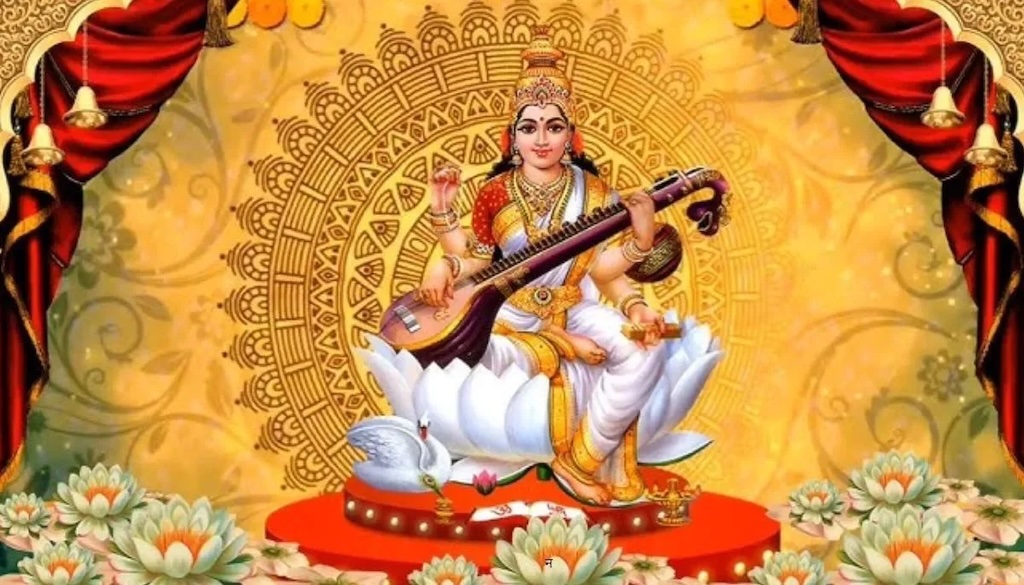
Patna: Basant Panchami, the festival that heralds the arrival of spring and honours Goddess Saraswati, is being observed today, with no ambiguity over its timing — a detail that has heightened its religious and cultural significance.

According to the Hindu calendar, Basant Panchami falls on the fifth day (Panchami) of the bright half of the month of Magha. In 2026, the Panchami tithi begins before sunrise on January 23 and continues throughout the day, making it fully suitable for worship and auspicious ceremonies without the need for further calendrical consultation.
A festival of knowledge and renewal

Traditionally associated with learning, wisdom, music and the arts, Basant Panchami is dedicated to Goddess Saraswati, revered as the deity of speech and knowledge. Hindu mythology traces her origin to this very day, when Lord Brahma is believed to have created her to bring order, sound and learning into the universe. Depicted holding a veena, a book, a rosary and a gesture of blessing, Saraswati symbolises the harmony of intellect and creativity.
A Patna- based astrologer notes that Basant Panchami also marks a seasonal transition. “In Indian tradition, spring is regarded as the king of seasons, and its arrival begins with Basant Panchami,” he says, adding that the festival blends natural renewal with spiritual aspiration.
Auspicious timings and rituals
The most favourable period for Saraswati Puja this year is between 7:17 am and 10:30 am on January 23, coinciding with sunrise, Panchami tithi and auspicious Choghadiya muhurats — Chara, Labha and Amrita.
Devotees traditionally bathe early, wear yellow or light-coloured clothes, and place an idol or image of Goddess Saraswati on a clean altar draped in yellow cloth. Pens, books, notebooks and musical instruments are kept near the deity, reflecting prayers for intellectual growth, especially among students. Yellow flowers and sweets such as besan ladoos, boondi or kheer are offered before the distribution of prasad.
A ‘self-proven’ day for ceremonies
Beyond worship, Basant Panchami holds a special place in Muhurta Shastra as a swayam-siddha (self-proven) auspicious day. Weddings, engagements, housewarming ceremonies, naming rituals, foundation-laying events and even business ventures can be undertaken without checking additional astrological charts.
The belief that Lord Shiva and Goddess Parvati’s engagement took place on Basant Panchami has further reinforced its reputation as a particularly favourable day for marriages, said to bless couples with long-lasting harmony.
Rare planetary alignments
Astrologers point out that 2026 brings an added layer of significance through celestial alignments. The Sun, Mercury, Mars and Venus are all positioned in Capricorn, forming multiple auspicious yogas. The Sun–Mercury conjunction creates Budhaditya and Lakshmi Narayan yogas associated with intellect and prosperity, while Mars in its exalted sign forms the Ruchaka Raj Yoga, linked to strength and leadership.
The Moon in Pisces and Jupiter in Gemini further combine to create Gajakesari Yoga, traditionally associated with success and wisdom. Additional yogas — Parigha until mid-afternoon, followed by Shiva Yoga and Ravi Yoga — are believed to enhance the spiritual potency of the day, particularly for students and those engaged in creative pursuits.
As winter loosens its grip and fields begin to turn yellow with mustard blooms, Basant Panchami once again blends season, scholarship and faith — offering devotees a moment to celebrate learning, renewal and hopeful beginnings.