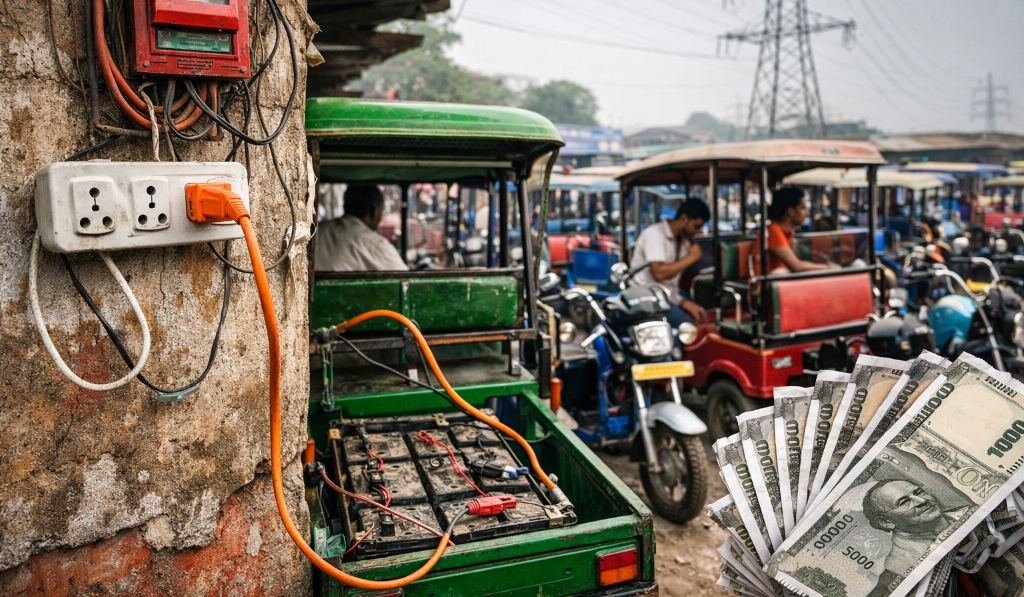
Patna: Patna’s streets are witnessing a rapid rise in electric rickshaws, with around 27,000 vehicles operating daily in the city. Yet, only 643 operators have obtained legitimate electric vehicle (EV) LT connections, raising questions about how thousands of rickshaws are being charged through domestic connections or potentially illegal electricity use.

The Bihar government provides domestic consumers with 125 units of free electricity and additional subsidies. However, this subsidised power is increasingly being used for commercial purposes, including e-rickshaw charging. This misuse is causing daily losses of millions of rupees for the state electricity distribution company (DISCOM), while domestic users continue to pay subsidised rates intended for personal use.
Data from the Patna District Transport Office shows that between April 1, 2020 and 31 March 31,2025. 26,173 e-rickshaws were registered, adding to an earlier 10,000 vehicles. Of the total 36,000 e-rickshaws in the district, approximately 9,000 operate in rural areas, while 27,000 serve the city.

Most operators with commercial EV connections run their own charging stations, which typically have 5–7 points and serve 10–15 rickshaws per day. Around 6,000–7,000 drivers use these stations daily, but nearly 20,000 charge at home using domestic power, bypassing proper commercial channels. This practice leads to a per-unit revenue loss of Rs 2.25–3.30 for DISCOM, compared with Rs 8.72 per unit for legitimate EV connections.
E-rickshaws employ two types of batteries. Older models, with five batteries, take 8–9 hours to charge fully, while newer single-battery models require 3–4 hours, depending on voltage availability. Once charged, the vehicles can travel 100–120 km per trip, highlighting the growing demand for electricity and the scale of the potential revenue loss.