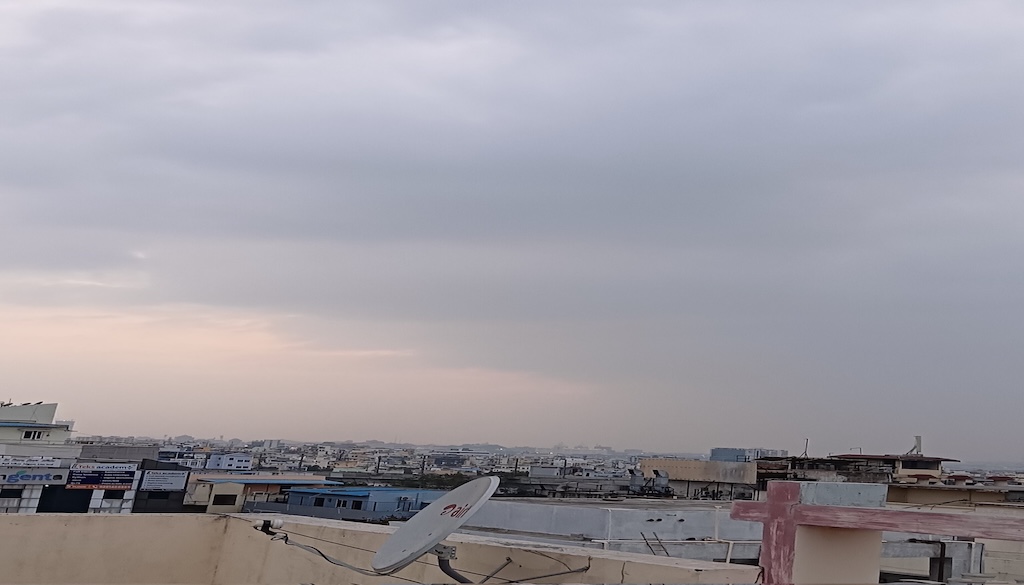
Patna: Weather conditions across Bihar remain largely normal, with light chill being felt during the morning and evening hours, while bright sunshine during the day is providing relief from the cold. The India Meteorological Department (IMD) has not issued any fog alert for any district today.

However, early morning fog was reported in pockets such as Bagaha and Madhubani, while Madhepura and Bagaha also witnessed dense fog during the early hours on Thursday.
According to the weather department, there is a possibility of rain and snowfall in the hilly regions in the coming days due to active western disturbances. Its impact may be felt in Bihar in the form of fluctuating temperatures and cool winds. Meteorologists have indicated that temperatures may start rising gradually from the second week of February.

In the last 24 hours, Siwan recorded the lowest minimum temperature in the state at 10.3°C. Motihari followed with 10.6°C, and Samastipur recorded 10.9°C. Patna remained comparatively warmer with a minimum temperature of 14°C — the highest among the major districts.
In the capital Patna, weather is expected to remain slightly cooler than normal. Light cold winds may be felt in the morning, while sunshine during the day will keep conditions comfortable.
Why Is the Weather Changing?
According to the IMD, the current weather pattern is being influenced by a combination of western disturbances, jet stream activity, and cold north-westerly winds.
Western disturbances are major systems that affect North India’s weather. When active, they bring rain and snowfall to the Himalayan region, and their impact reaches the plains, including Bihar, in the form of falling temperatures and cold winds.
The IMD stated that two western disturbances are active in the first week of February. Rain and snowfall in the hills are already affecting the weather across North India, including Bihar.
Role of Jet Stream
The jet stream — fast-moving winds in the upper atmosphere — is also playing a key role. When its position shifts, it pushes cold air towards the plains. This is why the chill is felt more during mornings and evenings, while daytime sunshine keeps temperatures stable.
Meteorologists say that changes in the jet stream during active western disturbances make the weather pattern unstable, leading to frequent temperature fluctuations.
Himalayan Snowfall Impact
Snowfall in the Himalayan region sends cold north-westerly winds towards Bihar. As a result, temperatures dip, and fog can form in some areas during early hours.
Experts say that North India is currently in a transition phase — winter is gradually ending but has not completely withdrawn. Cold conditions are likely to ease slowly from the second week of February.