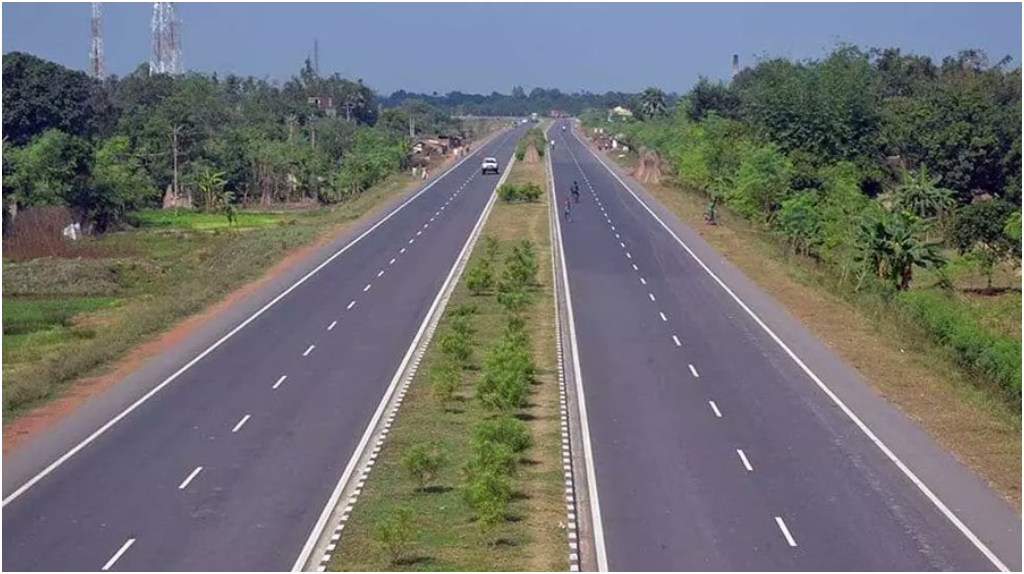
Patna: The Bihar government has outlined an ambitious infrastructure blueprint centred on expressways, greenfield corridors and new river bridges, with the stated goal of ensuring that travel from any part of the state to Patna can be completed within four hours.

During the budget debate in the legislative assembly, road construction minister Dilip Jaiswal announced plans for five new expressways, two high-speed greenfield corridors and 12 major bridges across key rivers.
Work is under way on five expressways: Varanasi–Ranchi–Kolkata, Gorakhpur–Siliguri, Patna–Purnia, Raxaul–Haldia and Buxar–Bhagalpur. The government has also sought central approval for two major corridors — the 250km Pashupatinath–Baidyanath corridor and the 225km Narayani–Ganga corridor — which are expected to strengthen interstate connectivity while linking Bihar with prominent religious destinations in Nepal and Jharkhand.

A major component of the plan focuses on river connectivity. Twelve new bridges are proposed or under construction across the Ganga, Kosi, Son and Gandak rivers. Three bridges are planned over the Ganga at Buxar, Matihani and Kahalgaon, while four new crossings will span the Gandak. A four-lane bridge near the Valmiki Tiger Reserve has been described as strategically important for tourism and environmental access. Officials say the bridges will significantly reduce travel distances between north and south Bihar, long divided by major river systems.
Under the Saat Nishchay-3 programme, the state is also finalising tenders for the maintenance of 19,353km of state highways between 2026 and 2033. In addition, around 3,000km of new state highways are proposed.
The minister said the department had secured a budgetary allocation of more than Rs 74,000 crore for 2026–27, signalling the scale of the infrastructure push.
The plan also includes recruitment to address staffing gaps in the road construction department. The process has begun to fill 1,300 vacant posts, including senior and junior engineers, clerks and amins.
The government argues that improved connectivity will not only reduce travel time but also stimulate economic activity, tourism and employment across the state.