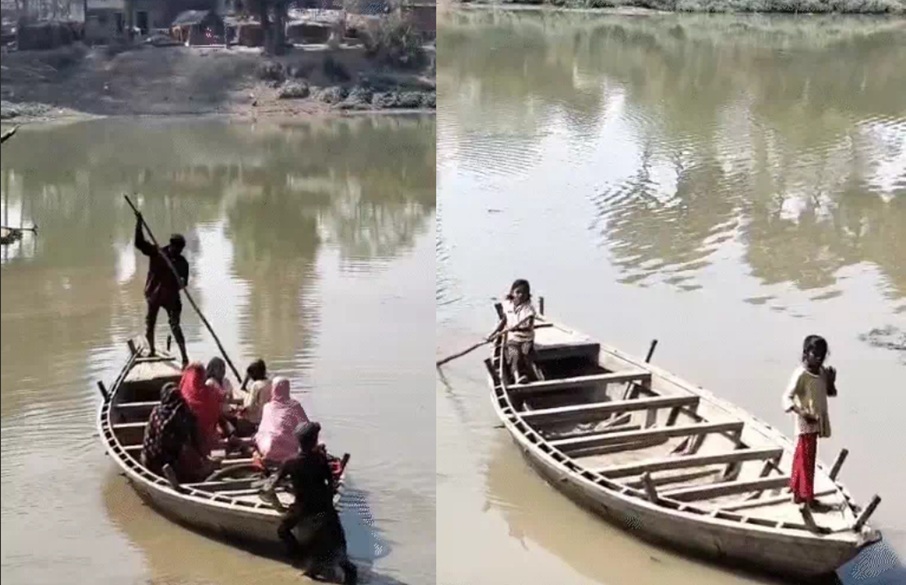
Nalanda: Residents of two villages in Nalanda district are facing daily hardship as construction of a proposed bridge over the Sakri River has stalled soon after it began, forcing locals — including schoolchildren — to cross the river using a single manually operated boat.

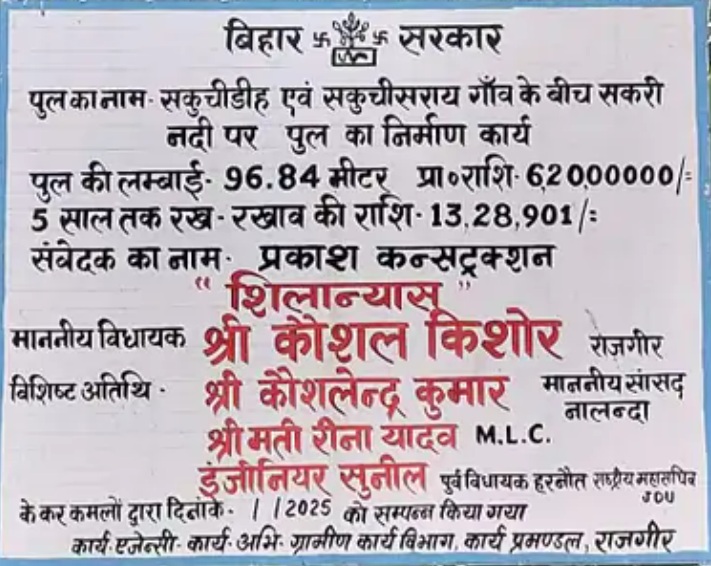
The bridge, sanctioned under the Chief Minister Rural Bridge Scheme at a cost of Rs 6.2 crore, was meant to connect Sakuchidih and Sakuchisarai villages located about 30 km from Bihar Sharif in the Giriyak block. Each village has a population of around 1,000, but there is no bridge, no reliable boat service, and no trained boat operator.
At present, only one boat is available, and it is often rowed by children aged 10–12 who have learned to operate it out of necessity. Students must cross the river daily to attend school. Without the boat route, they would have to travel about 8 km by road instead of just 1 km via the river.

The Sakri River divides the local panchayat into two geographic sections. Essential services such as the main market, higher secondary school, and primary healthcare facilities are located across the river in Sakuchisarai. After crossing the river, residents must still walk nearly 900 meters to reach the market.
During monsoon season, when the river swells, villagers are forced to take a longer road route using bridges located 5 km away at Govardhan Bigha or 8 km away at Manpur.
Residents say mornings often begin with children pushing the boat into the water themselves because no operator is present. Some villagers who cannot row wait on the riverbank until someone else arrives to help them cross. Children frequently assist elderly residents and women.
Local resident Sangeeta Devi appealed to authorities to complete the bridge, saying repeated announcements have raised hopes but work never progresses. She said people sometimes wait for hours to cross, and women are now compelled to row boats as well. She also recalled falling into the river recently when she lost balance while boarding, losing her phone in the water.
Another villager, Rita Devi, said she has been hearing promises of a bridge since she married into the village more than 20 years ago. She added that accidents have occurred in the past when boats capsized, leading to deaths, yet no permanent solution has been provided. The current boat, she said, was purchased through community donations rather than government support.
According to the project foundation board, construction was scheduled to begin on July 30, 2025. However, villagers claim that after initial soil testing, work stopped entirely and neither contractors nor officials returned to the site.
An executive engineer of the Rural Works Department in Rajgir said the Detailed Project Report has been sent to headquarters for re-evaluation on orders from senior authorities and final approval is still pending. She said construction will begin once clearance is received.
Meanwhile, residents fear another looming threat: riverbank erosion. They say embankments have not been repaired for years and the river’s course is gradually shifting toward the village. Without reinforcement before the monsoon, they warn, floodwaters could inundate homes.
Medical emergencies pose the greatest risk. Villagers say crossing the river at night is extremely dangerous, and patients must often be carried or transported along the 8 km road route, wasting critical treatment time that can mean the difference between life and death.