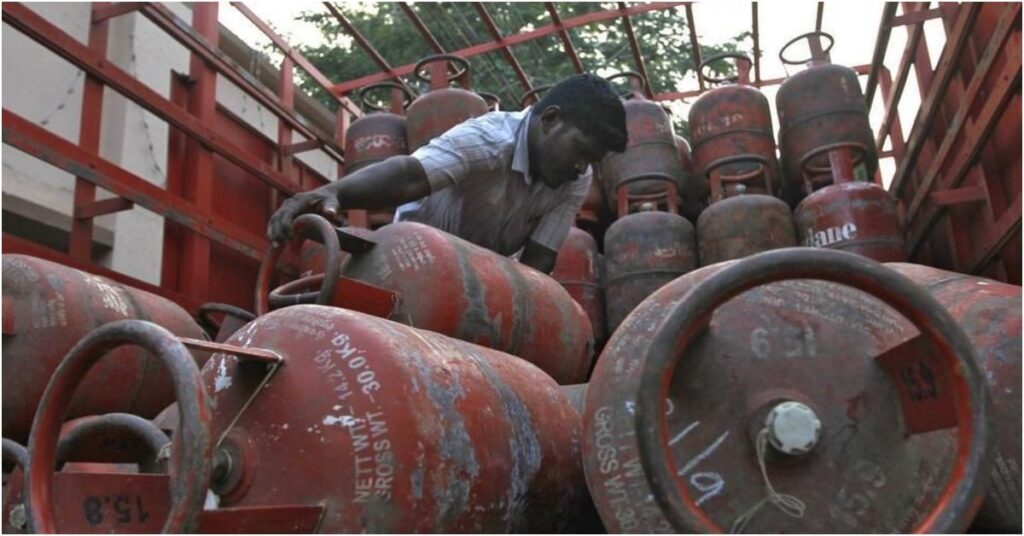
Patna: The central government has announced the approval of millions of free cooking gas connections for low-income households in Bihar under a programme aimed at reducing reliance on traditional fuels and improving living conditions for women.

The Ministry of Petroleum and Natural Gas has sanctioned 2.5 million new connections through the Pradhan Mantri Ujjwala Yojana , which provides subsidised or free liquefied petroleum gas connections to families below the poverty line. Officials said the initiative targets households that have historically depended on firewood and coal stoves for cooking – practices associated with indoor air pollution and environmental degradation.
Following the ministry’s directive, state authorities and gas distribution companies have been instructed to begin implementing the scheme. Upendra Kumar, special secretary of Bihar’s food and consumer protection department, issued orders to district administrations to facilitate the distribution of connections and streamline the application process.

Kumar emphasised that officials should minimise bureaucratic hurdles so that eligible beneficiaries are not excluded. Public awareness campaigns are also planned to inform households about the scheme and the documentation required to apply.
Government representatives argue that the expansion of the Ujjwala programme will ease domestic burdens on women, who are often responsible for collecting firewood, and contribute to broader environmental goals by reducing deforestation and carbon emissions. District-level committees have been established to oversee implementation.
Critics of similar schemes in the past have raised concerns about the long-term affordability of gas refills for low-income families, noting that an initial free connection does not guarantee sustained usage. Officials have responded by pointing to existing subsidy structures and efforts to improve supply chains in rural areas.
The initiative comes amid wider efforts by the central government to expand social welfare programmes in rural regions, where access to clean energy remains limited.