Muzaffarpur: A major rural development initiative under the Vikasit Bharat Ji Ram Ji (Employment and Livelihood Guarantee Mission) is set to boost livelihoods and water security, with plans to construct 26 modern rural haats and 20 check dams across the district.

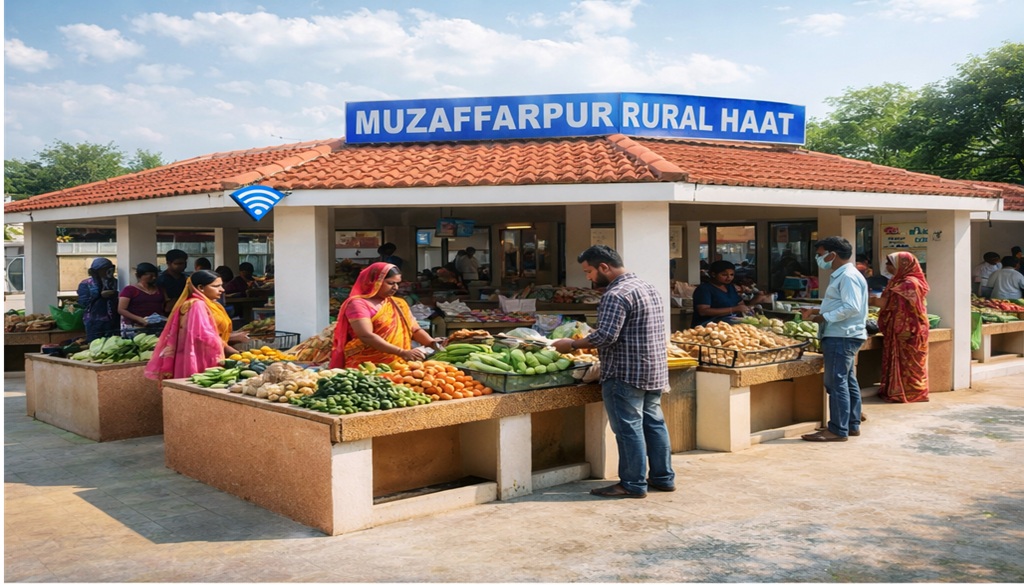
Officials said approval has been granted for the projects, and land has already been identified in various blocks. Each rural haat will be developed on around one acre and equipped with facilities including internet connectivity, WiFi access, office space, sheds and boundary walls.
The haats will be operated by members of self-help groups, commonly known as Jeevika Didis, and are expected to serve as permanent marketplaces for local produce and daily-use goods. The estimated expenditure for each haat ranges between Rs 20 lakh and Rs 1 crore, with completion targeted for the 2026–27 financial year.

Amit Kumar, district programme officer for the mission, said the rural haats would be developed as model marketplaces. Products made by self-help groups will also be tagged and sold through online platforms, with the process already underway.
The initiative is expected to provide a steady source of income for rural women, promote economic self-reliance and generate employment opportunities. By offering a dedicated space for selling vegetables and household items, the haats are also aimed at strengthening the rural economy.
Alongside livelihood measures, the scheme includes plans to construct 20 check dams in different blocks to support water conservation efforts. These structures are designed to harvest rainwater, recharge groundwater levels and reduce soil erosion.
Officials said the check dams would help farmers by improving irrigation access, particularly during the dry or rabi season, reducing dependence on alternative water sources.
Described as a cost-effective method of local water management, check dams slow down water flow in small rivers and streams, allowing water to percolate into the ground while preserving fertile soil.
Authorities said the combined focus on employment generation and sustainable water management is expected to deliver long-term benefits to rural communities in the district.