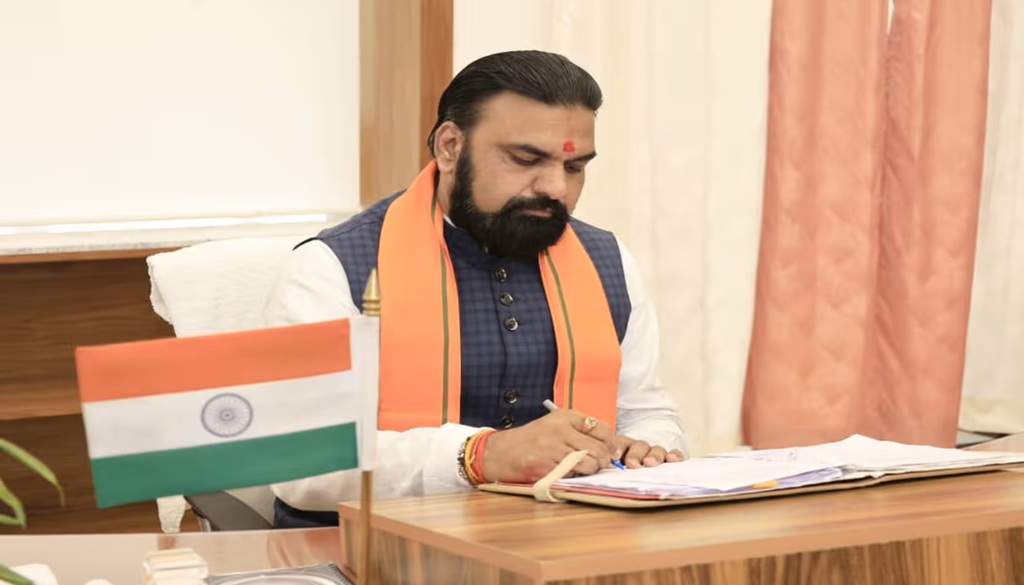
Patna: The Bharatiya Janata Party (BJP) has, for the first time, installed its own Chief Minister in Bihar, with Samrat Choudhary taking oath on Wednesday. However, his elevation has triggered intense political discussion amid visible signs of unease within the party ranks.

Soon after the swearing-in, questions began surfacing over possible factionalism within the BJP. The absence of several senior leaders at both the oath-taking ceremony and a felicitation event at the party office has added to speculation about internal dissent.
One of the notable developments was the delayed congratulatory message from Prime Minister Narendra Modi, which came nearly three hours after the ceremony. Traditionally, such occasions see prompt and high-profile endorsements.

The swearing-in event itself saw limited attendance from top BJP leadership. While senior party leader J. P. Nadda and central observer Shivraj Singh Chouhan were present, several senior central leaders and chief ministers from other states were absent. This is in contrast to previous BJP-led oath ceremonies, which typically witness a strong show of unity at the national level.
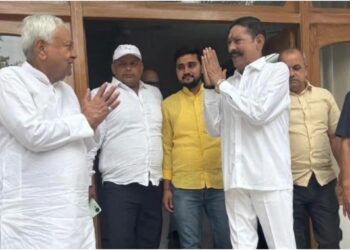
Adding to the intrigue, senior BJP leader Vijay Sinha—who had proposed Choudhary’s name during the legislature party meeting—did not attend either the swearing-in at Raj Bhavan or the felicitation programme at the party headquarters. Though he later visited Choudhary’s residence to extend greetings, his earlier absence has been widely noted.
Sinha’s remarks during the legislature party meeting have also drawn attention. Referring to himself as a “soldier of the party,” he stated that he proposed Choudhary’s name in line with the leadership’s directive, a comment that has been interpreted in some quarters as a sign of reluctance.
The felicitation event at the BJP state headquarters on Veerchand Patel Path also saw limited participation from senior leaders. State president Sanjay Saraogi was present, but many prominent MPs, MLAs, and senior leaders were missing from the stage. Party officials maintained that the event was organised by workers and hence largely attended by them, but insiders suggest underlying dissatisfaction among sections of the cadre.
Visual cues from Patna’s streets further fueled the narrative. Unlike previous occasions, where major political developments are marked by an abundance of posters and hoardings, the city saw only a handful of banners congratulating Choudhary. Senior party leaders largely refrained from putting up large-scale displays, with most hoardings appearing later under the NDA banner.
Sources within the party indicate that part of the discontent stems from Choudhary’s political background. Having begun his career with the Rashtriya Janata Dal (RJD) and later moving to the Janata Dal (United) before joining the BJP, some leaders privately question his ideological alignment with the party’s core base.
Party insiders, however, suggest that the leadership is attempting to balance political messaging. The relatively low-key swearing-in is being seen as an effort to ensure a smooth transition of power without giving the impression that Nitish Kumar was sidelined.
Analysts point out that the BJP’s decision is part of a broader social engineering strategy aimed at consolidating support among Kushwaha voters while retaining the existing NDA base. At the same time, the party appears cautious about not alienating its traditional support groups, including upper castes and Vaishya voters.
While there is no immediate electoral test in Bihar, observers note that how the party manages internal dynamics and voter equations could have implications for the 2029 Lok Sabha elections.