Vaishali/Patna: In the narrow lanes of Naya Tola, grief this week became intertwined with quiet defiance.

When 79-year-old Tarini Prasad Singh died, villagers began asking a familiar question — who would shoulder the bier and perform the last rites in a family with no son?
The answer came from his five daughters.

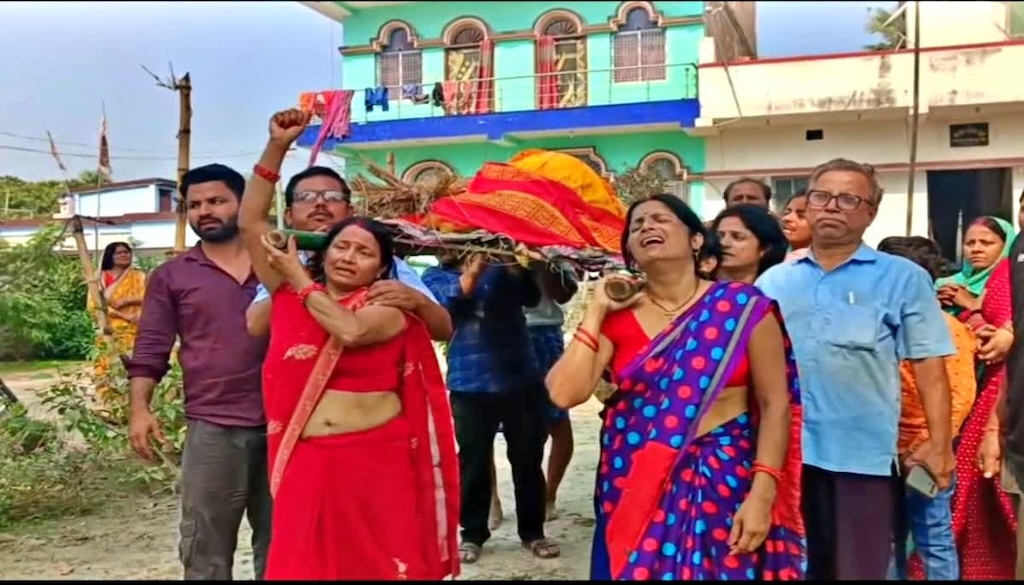
In a scene that moved residents across the village, Poonam Singh, Neelam Singh, Madhuri Sinha, Mala Singh and Chandni Singh stepped forward together, lifting their father’s bier onto their shoulders and carrying out the funeral rites themselves.
For many in the village, the moment carried emotional weight far beyond a funeral procession.
Breaking A Tradition Long Reserved For Sons
In many parts of rural Bihar, the final rites of parents are traditionally performed by sons, reflecting long-standing patriarchal customs around inheritance, lineage and religious duty.
But the daughters of Tarini Prasad Singh said they wanted to challenge the belief that such responsibilities belonged exclusively to men.
“We took this step to end discrimination between sons and daughters,” said Madhuri Singh.
“If a woman can give birth and nurture life, why can she not shoulder her father’s bier?” she asked.
She said their father had fulfilled every responsibility towards his daughters — educating them and arranging their marriages with dignity — and they felt it was their duty to stand beside him in his final journey.
A Village Watches In Silence
Residents said many people watching the procession became visibly emotional as the sisters carried the bier through the village.
What began as a deeply personal act of mourning soon became a wider conversation about gender equality and changing social attitudes.
Villagers gathered along the route, some in silence and others openly praising the courage of the daughters.
“A Girl Is Never Weak”
The sisters said they hoped their actions would send a broader message to society.
“A girl is never weak,” family members said, adding that daughters are equally capable of fulfilling responsibilities traditionally associated with sons.
In a state where conversations around women’s rights and gender equality continue to evolve, the funeral procession in Naya Tola has resonated far beyond the village itself — not as an act of rebellion, but as a deeply human expression of duty, grief and love.