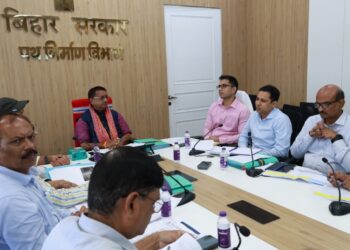
Patna: Bihar is preparing to launch a pilot-scale injection well project to tackle declining groundwater levels across the state. The initiative, to be implemented by the Minor Water Resources Department, will channel rainwater directly into deep underground aquifers to improve groundwater recharge and ensure long-term water security.

The move comes as the state reports encouraging progress in groundwater conservation through the Jal-Jeevan-Hariyali campaign, with the number of groundwater-stressed blocks witnessing a significant decline over the past eight years.
Rainwater to Be Injected Directly into Aquifers

Under the proposed injection well system, harvested rainwater will be transported directly into deep aquifers, helping replenish underground water reserves that have been depleted due to excessive extraction and changing climatic conditions.
Officials believe the technology can play a crucial role in stabilising groundwater levels and securing water availability for future generations. Alongside the project, the government is also working on a new regulatory framework aimed at monitoring and controlling groundwater extraction.
Groundwater-Stressed Blocks Decline
According to a recent government assessment, the Jal-Jeevan-Hariyali campaign has delivered measurable improvements in groundwater management.
In 2017, Bihar had 102 blocks classified under semi-critical, critical and over-exploited groundwater categories. By 2025, that number had fallen to 64, reflecting a substantial improvement in groundwater conditions across several districts.
Restoration and Rainwater Harvesting Efforts Expanded
The state has undertaken large-scale restoration of traditional water bodies, including ponds, ahars, pokhars and old wells, under the conservation programme.
Additional measures such as rainwater harvesting systems, check dams and groundwater recharge structures have also been implemented to improve water retention and reduce dependence on groundwater extraction.
Green Cover Rises to 15.5%
Officials said Bihar’s green cover has increased from 9% to 15.5% in recent years. The government has now set a target of raising the figure to 17% through extensive plantation drives and afforestation initiatives.
Experts say increased vegetation cover plays an important role in improving groundwater recharge and maintaining ecological balance.
Farmers Report Better Irrigation Access
The promotion of water conservation practices, organic farming and drip irrigation has also benefited the agricultural sector.
Government data indicates that improved irrigation facilities and efficient water use have contributed to a 25–30% increase in farmers’ incomes in several areas.
Experts See Long-Term Benefits
Water resource experts believe sustained investment in groundwater recharge, rainwater harvesting and afforestation can significantly reduce the risk of future water shortages.
They say the proposed injection well project, if implemented successfully, could become an important tool in Bihar’s long-term strategy for sustainable water management.