Patna: Jitiya, also known as Jivitputrika Vrat, is an important Hindu observance during which mothers traditionally observe a fast and pray for the wellbeing, longevity, prosperity and future of their children.

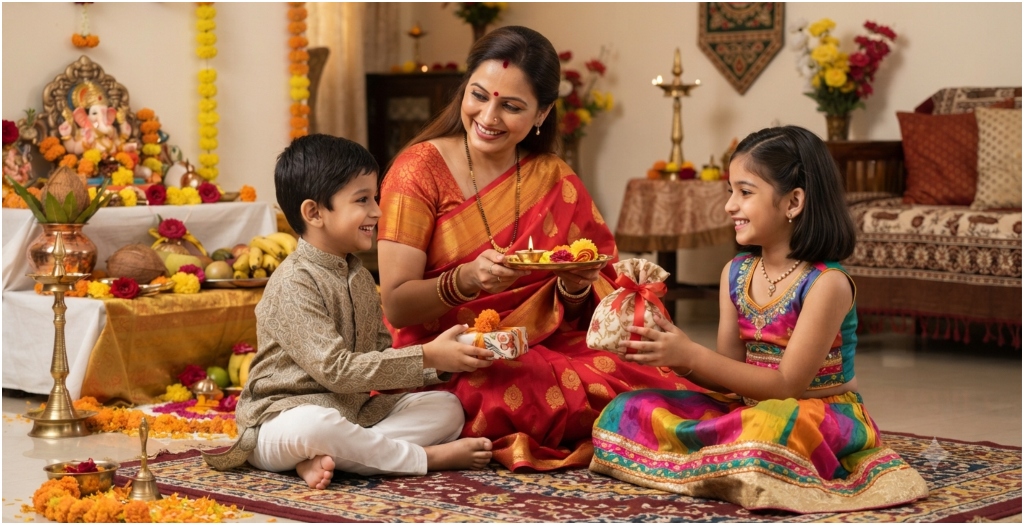
According to religious traditions, certain offerings, sacred symbols and gifts may be given to children after the worship or during Paran, when the fast is broken. These practices are associated with seeking the blessings of Lord Jimutavahan.
Sacred Jitiya Thread

A Raksha Sutra is traditionally regarded as an auspicious symbol during Jitiya. After the worship, mothers may tie a red or yellow cotton thread around the child’s wrist or neck while remembering Lord Jimutavahan.
According to religious belief, the thread represents protection and is associated with the wellbeing of the child.
New Clothes
New clothes are another traditional gift that mothers may offer their children on Jitiya. They are associated with auspiciousness and prosperity.
Families may have children wear the new clothes after the worship and seek blessings from the deity and elders.
Fruits And Kheer
Cucumbers have a traditional significance in Jitiya rituals and are associated in some traditions with continuity of the family lineage and the wellbeing of children.
After the worship, seasonal fruits, including cucumber, and preparations such as kheer may be offered as prasad, depending on family and regional customs.
Toys For Children
Mothers may also give toys to young children as a gesture of affection on Jitiya. The practice places emphasis on the happiness and wellbeing of children after the completion of the observance.
Thekua And Chana Prasad
Thekua and chana are among the foods associated with Jitiya observances in parts of Bihar and neighbouring regions. Thekua may be offered as bhog and distributed as prasad after the rituals.
Families follow different customs for Jitiya, so the specific offerings and timing of Paran may vary according to regional traditions and the family’s religious calendar.