
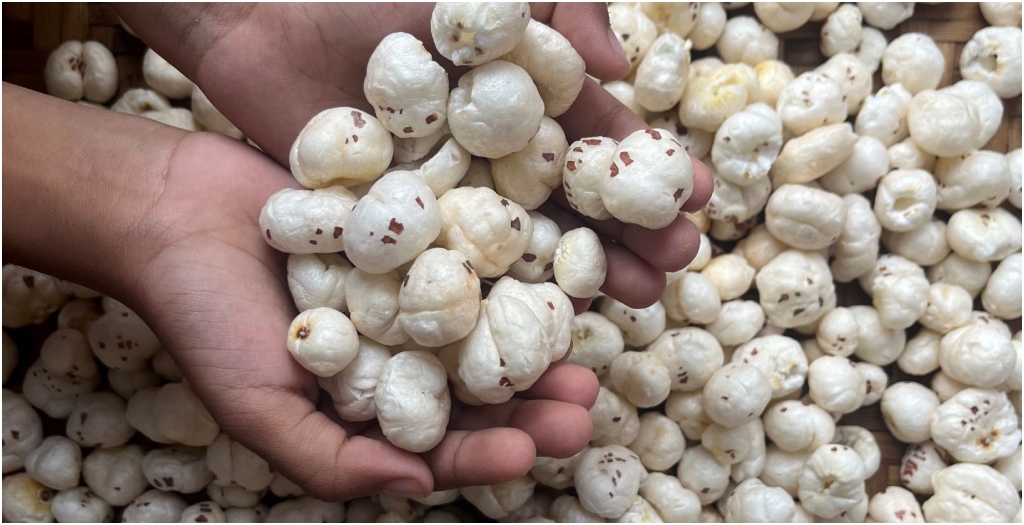
Patna: Bihar is targeting makhana exports of 30,000 metric tonnes by 2030-31 as the state government seeks to establish GI-tagged Mithila Makhana as a recognised product in international markets.

Under the five-year Makhana Se Samriddhi Abhiyan, running from 2026-27 to 2030-31, the government plans to double the area under cultivation, increase production and strengthen processing and export infrastructure.
Agriculture Minister Vijay Kumar Sinha said Bihar accounts for approximately 80-85% of India’s total makhana production. The state is working with the Agricultural and Processed Food Products Export Development Authority (APEDA) to expand the product’s international reach.

According to the state government, Indian makhana and value-added products reached more than 20 countries in 2025-26, generating export revenue of US$22 million.
Bihar targets higher production and exports
The state plans to increase the area under makhana cultivation from 41,000 hectares in 2025-26 to 82,000 hectares by 2030-31.
The government has also set a target of raising popped makhana production to 91,512 metric tonnes over the same period, alongside the export target of 30,000 metric tonnes.
The action plan focuses on expanding cultivation, improving post-harvest infrastructure, supporting research and development, strengthening branding and promoting Bihar’s makhana in international markets.
Rs 89.79 crore allocated for sector development
The government has earmarked Rs 89.79 crore under the annual action plan for 2026-27 to support the development of the makhana sector.
The investment is intended to strengthen production and processing, improve infrastructure and expand the market reach of Bihar’s makhana products.
The government expects these measures to improve market access and create additional income opportunities for farmers and businesses involved in the supply chain.
Mithila Makhana expands international reach
The state government said consignments of GI-tagged Mithila Makhana reached the United States, Canada, Australia and Greece in 2026.
It also reported that an 18-metric-tonne sea shipment of GI-tagged Mithila Makhana was dispatched to Australia from the Bihar Industrial Area Development Authority (BIADA) industrial area in Bihta.
The government is seeking to use geographical indication (GI) recognition, quality assurance and stronger market linkages to distinguish Mithila Makhana in international markets.
Farmer income records significant increase
According to figures cited by the agriculture minister, baseline income from makhana cultivation increased from Rs 35,000 per hectare in 2012-13 to Rs 4,25,750 per hectare in 2025-26.
The figures indicate an increase of more than 12 times over the period, although the statement did not specify whether the estimates account for changes in cultivation costs or inflation.
Vision 2030 aims to boost GI-tagged sales
Under Bihar Vision 2030, the government aims to ensure that one in every two packets of makhana consumed worldwide carries the GI tag of Mithila Makhana.
The target is intended to strengthen the product’s regional identity and improve its recognition in international markets.
The success of the initiative will depend on expanding production, maintaining quality standards, improving processing and building reliable export channels as global demand for makhana grows.