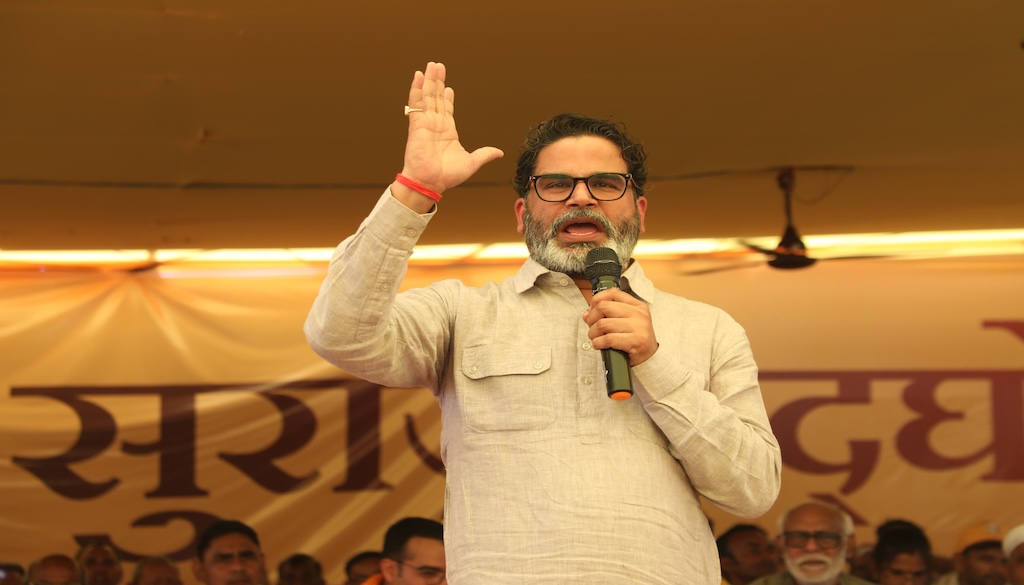
Patna: The Bharatiya Janata Party (BJP) has launched an intensive election strategy for the Bankipur Assembly by-election, deploying ministers, Members of Parliament, MLAs and senior party functionaries at the ward and booth levels as it seeks to retain one of its strongest urban constituencies against Jan Suraaj founder Prashant Kishor.

According to party sources and political observers, the BJP has assigned one minister to each of the 11 Patna Municipal Corporation wards falling under the Bankipur Assembly constituency, while MLAs, MPs and district presidents have been tasked with supervising polling booths. Leaders have reportedly been assigned to areas where their own caste or community has a significant presence in an effort to consolidate traditional vote banks.
The BJP has not publicly stated that these measures are aimed specifically at countering Prashant Kishor, but the party’s intensified campaign comes after his entry into the by-election.

Candidate Change Fuelled Speculation
Political attention shifted after the BJP changed its candidate days after the nomination process began.
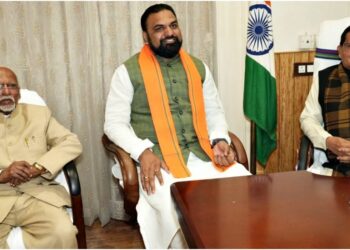
The party initially announced Abhishek Kumar “Bunty” as its nominee on July 7, and he filed his nomination on July 9 in the presence of senior NDA leaders, including Bihar Chief Minister Samrat Choudhary. However, Bunty withdrew his nomination the following day, citing personal reasons.
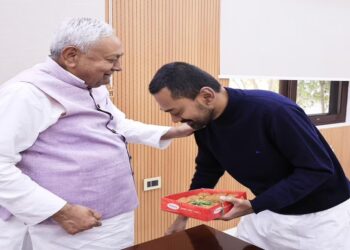
The BJP subsequently fielded Neeraj Kumar Sinha as its candidate. While the party has maintained that the withdrawal was for personal reasons, political discussions have linked the move to the evolving electoral contest following Prashant Kishor’s candidature.
Video of BJP Candidate Draws Attention
Another incident that attracted attention occurred after Neeraj Kumar Sinha filed his nomination on July 13. A video circulated on social media appeared to show Bihar BJP president Sanjay Saraogi preventing Sinha from speaking to reporters before escorting him to a vehicle.
The incident came after Sinha had given brief interviews to two YouTube channels in which he appeared hesitant while responding to questions. The clips were widely shared on social media.
A political analyst said Sinha appeared less comfortable speaking on camera and suggested that the party may prefer to limit his media interactions, particularly in a constituency with a relatively educated urban electorate.
Four-Pronged Campaign Strategy
According to BJP leaders and party sources, the campaign is focused on four key areas:
1. Consolidating Traditional Vote Banks
The party has assigned senior leaders to mobilise its traditional support base among upper-caste and urban middle-class voters, including professionals, traders and government employees.
Party insiders said feedback suggested that issues such as the alleged NEET student murder case in Jehanabad, the Bharat Tiwari encounter case in Ara, and political developments surrounding former Chief Minister Nitish Kumar have generated discontent among sections of certain communities.
To address these concerns, BJP has assigned prominent leaders to engage directly with voters. Among the party’s 40 star campaigners, 15 belong to upper-caste communities, including Brahmins, Bhumihars, Rajputs and Kayasthas.
2. Increasing Voter Turnout
During organisational meetings held on July 13 and 14, BJP leaders instructed workers to focus on maximising voter turnout in Bankipur, traditionally one of Bihar’s lowest-turnout Assembly constituencies.
The party has:
- Appointed special in-charges for all 422 polling booths.
- Assigned MLAs, MPs, district presidents and local office-bearers to oversee booth management.
- Deployed 11 ministers across the constituency’s 11 municipal wards.
- Directed workers to ensure traditional BJP supporters cast their votes before 12 noon on polling day.
The strategy is aimed at improving turnout among the BJP’s core supporters while attracting additional urban voters.
Political observers note that if Prashant Kishor succeeds in mobilising a significant number of urban voters who usually abstain from voting, the contest could become considerably more competitive.
3. Seeking JD(U)’s Support Among EBC Voters
Sources said the BJP is also working closely with its NDA ally Janata Dal (United) to consolidate support among Kurmi and Extremely Backward Class (EBC) voters.
Senior BJP leaders have held meetings with JD(U) leaders in recent days to demonstrate alliance unity. Former Chief Minister Nitish Kumar has reportedly directed JD(U) workers to actively campaign for BJP candidate Neeraj Kumar Sinha and ensure the NDA’s victory.
4. Targeting Jan Suraaj Leaders
In recent days, several former Jan Suraaj leaders joined the BJP, including mathematician Dr K.C. Sinha, former Kumhrar Assembly candidate Ritesh Ranjan (Bittu Singh), former Maner candidate Sandeep Kumar Singh (Gopal Singh) and film director Chetna Jhamb.
Political analysts believe these defections are intended to project the BJP as organisationally stronger while creating the perception that Jan Suraaj is losing momentum ahead of the by-election.
Why the Election Matters
Political observers say the Bankipur by-election carries significance beyond a single Assembly seat.
It is the first electoral test for Chief Minister Samrat Choudhary since assuming office. Prashant Kishor has repeatedly described the by-election as a referendum on the BJP-led government’s leadership, arguing that the outcome will reflect public sentiment toward the new Chief Minister.
Another political analyst said a BJP defeat would be viewed as a political setback for the ruling party and could strengthen Prashant Kishor’s claim that he has emerged as a credible alternative in Bihar politics.
With Bankipur remaining a BJP stronghold since 1995, the by-election is widely being viewed as a high-stakes contest for both the ruling party and Prashant Kishor’s emerging Jan Suraaj movement.