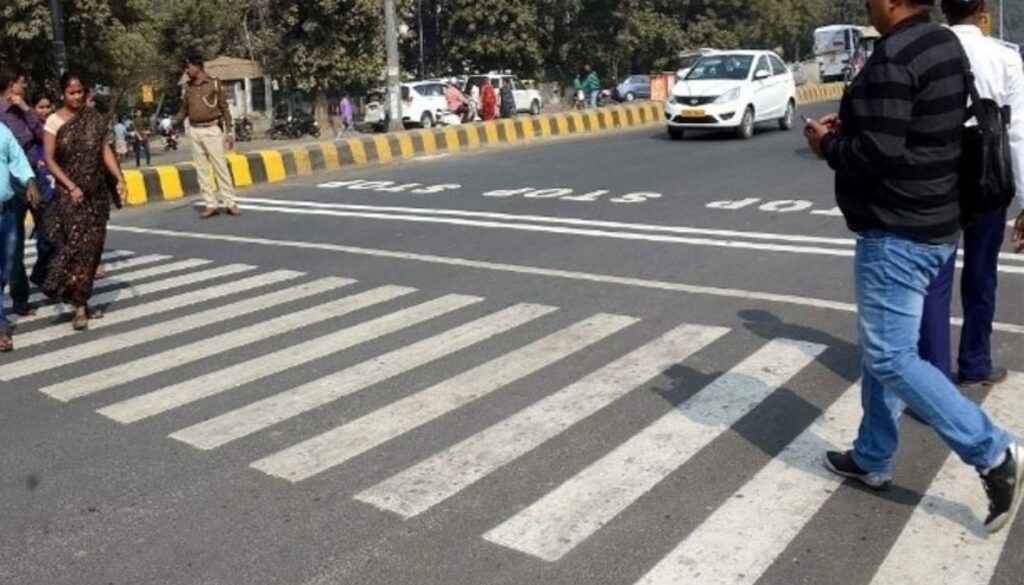
Patna: Authorities in Bihar have announced plans to install zebra crossings at 14,000 new locations in an effort to strengthen pedestrian safety and improve traffic discipline. The state’s development commissioner has directed all relevant road and infrastructure departments to complete construction and painting work by April 30,2026.

The initiative forms part of a broader push to reduce road accidents and create safer crossing points for pedestrians. Officials said departments have been instructed to ensure that all crossings are clearly visible, standardised and compliant with safety norms, particularly in areas with heavy footfall and accident risks.
According to government data, the proposed sites include 342 locations under the Road Construction Department, 12,858 under the Rural Works Department and 88 under the National Highways Authority of India. Around 9,500 zebra crossings have already been built by these agencies in previous phases, with the new expansion expected to significantly widen coverage across urban and rural roads.

The plan was reviewed during a high-level meeting focused on road safety, traffic management and accident prevention. Authorities said crossings will be prioritised near schools, hospitals, marketplaces, busy intersections and accident-prone stretches, where pedestrian movement is high and safety risks are greater.
Officials from the transport department emphasised that pedestrians have the primary right of way on roads, describing the project as essential for protecting vulnerable groups including senior citizens, persons with disabilities and schoolchildren. They added that properly marked crossings can encourage motorists to slow down and comply with traffic rules.
To ensure accountability, departments have been instructed to submit weekly progress reports, while district administrations will monitor implementation through road safety committee meetings. Authorities have also appealed to motorists to respect zebra crossings and give priority to pedestrians, stressing that public cooperation remains crucial to achieving meaningful reductions in road accidents.