Patna: Bihar’s government has set an ambitious target of attracting Rs 50 lakh crore in investments and generating one crore employment opportunities over the next five years, the state’s industries minister said on Monday, outlining a broad industrial expansion strategy that includes new infrastructure projects, policy reforms and recent corporate investments.

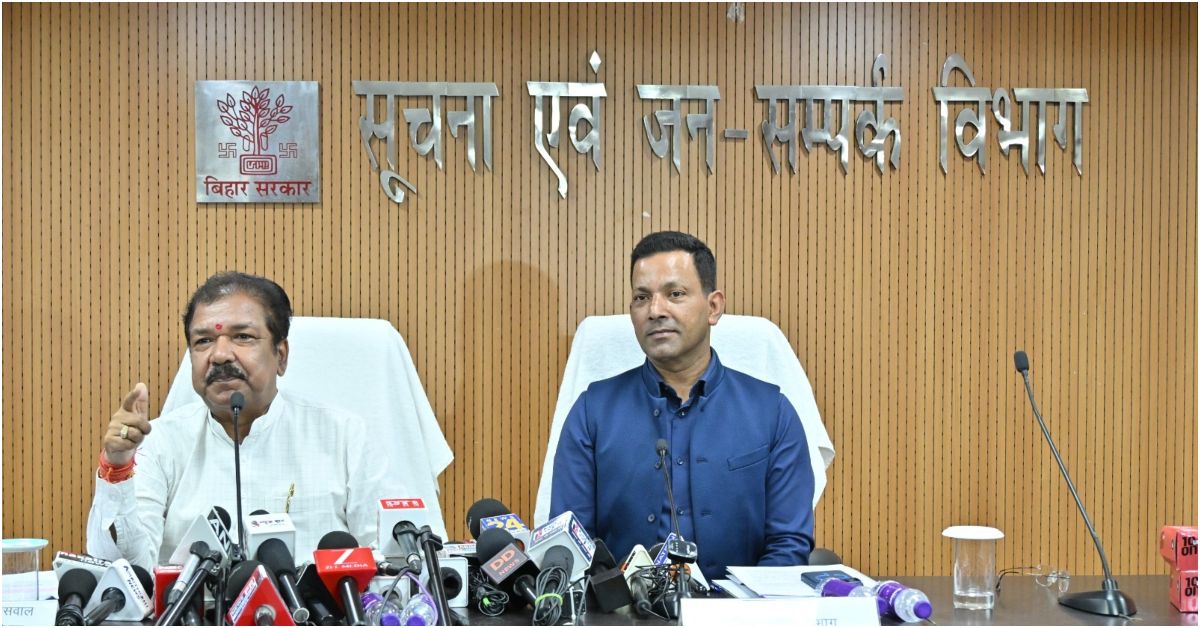
Addressing a press conference in Patna, Industries Minister Dilip Kumar Jaiswal said the state’s industrial push was advancing under the leadership of Chief Minister Nitish Kumar and was beginning to yield results, citing the establishment of major manufacturing facilities and increased investor interest.
Jaiswal said the government’s investment strategy rests on strengthening core infrastructure, including expressway expansion, industrial corridors, urban development, logistics networks, air connectivity and power supply. He said Bihar’s energy capacity was being expanded with a 2,400MW thermal power plant under construction at Pirpainti in Bhagalpur, estimated to cost around Rs 30,000 crore, alongside another major NTPC project in Aurangabad.

He claimed that these measures were already encouraging private sector participation, pointing to recent industrial activity including a Coca-Cola bottling plant in Buxar, a JK Super Cement facility, leather units in Muzaffarpur and Darbhanga, and the development of the National Institute of Food Technology Entrepreneurship and Management (NIFTEM) in Vaishali district.
The minister said the government expected a significant acceleration in industrial projects within the next 12 to 18 months, arguing that Bihar was entering a new phase of industrialisation after decades of limited large-scale manufacturing growth.
“The sustained efforts of the government are now paying dividends,” he said, adding that the administration expected a “network of industries” to emerge across the state in the near future.
Officials said the strategy is anchored in the state’s industrial policy framework, including the Bihar Industrial Investment Promotion Policy 2025, described by the government as one of the country’s more competitive incentive regimes. A new semiconductor policy approved for 2026 is intended to position Bihar as a technology hub in eastern India.
The government has also introduced sector-specific policies covering logistics, exports, textiles and leather, and startups. According to the minister, these have been supplemented by investment roadshows in domestic and international markets, including Bengaluru, Kolkata, New Delhi, Mumbai and Thailand.
Jaiswal said Bihar had received 747 investment proposals worth Rs 17,217 crore in the 2025–26 financial year. He added that the Bihar Industrial Area Development Authority (BIADA) had allotted 404 acres of land to 317 investors, with potential investments estimated at Rs 5,500 crore and projected employment generation of more than 22,500 jobs. Companies involved include Reliance Industries, JK Lakshmi Cement, Mother Dairy and Aditya Birla Group, among others.
The minister also highlighted legislative reforms aimed at improving the ease of doing business. He said the Jan Vishwas Act had replaced criminal penalties for minor regulatory violations with monetary fines, reducing legal risks for entrepreneurs.
“Industrial development requires regulatory certainty,” he said, adding that the reforms were designed to create a more investor-friendly environment.
Among the state’s longer-term plans is the development of an electronic city near JP Setu on the route to Chhapra, which is currently being explored under a public-private partnership model. Officials said discussions had included consultations with industry stakeholders in Bengaluru.
The government also reported progress under its startup policy. According to official figures, 109 startups were registered in 2025–26, while 1,456 startups have received financial assistance out of 1,653 selected under the scheme. A total of Rs 92.2 crore has been disbursed so far, including Rs 27.84 crore in the current financial year.
Separately, under the Mukhyamantri Udyami Yojana, more than 44,000 beneficiaries have received Rs 3,242.19 crore in financial support to promote self-employment among youth, women and marginalised communities. More than 6.5 lakh applications were received between February and March 2026, officials said.
While the government has framed its industrial strategy as part of a broader economic transformation, analysts note that Bihar continues to face structural challenges, including infrastructure gaps and outmigration. The administration, however, maintains that its current policy framework and investment pipeline will significantly alter the state’s industrial landscape over the coming years.