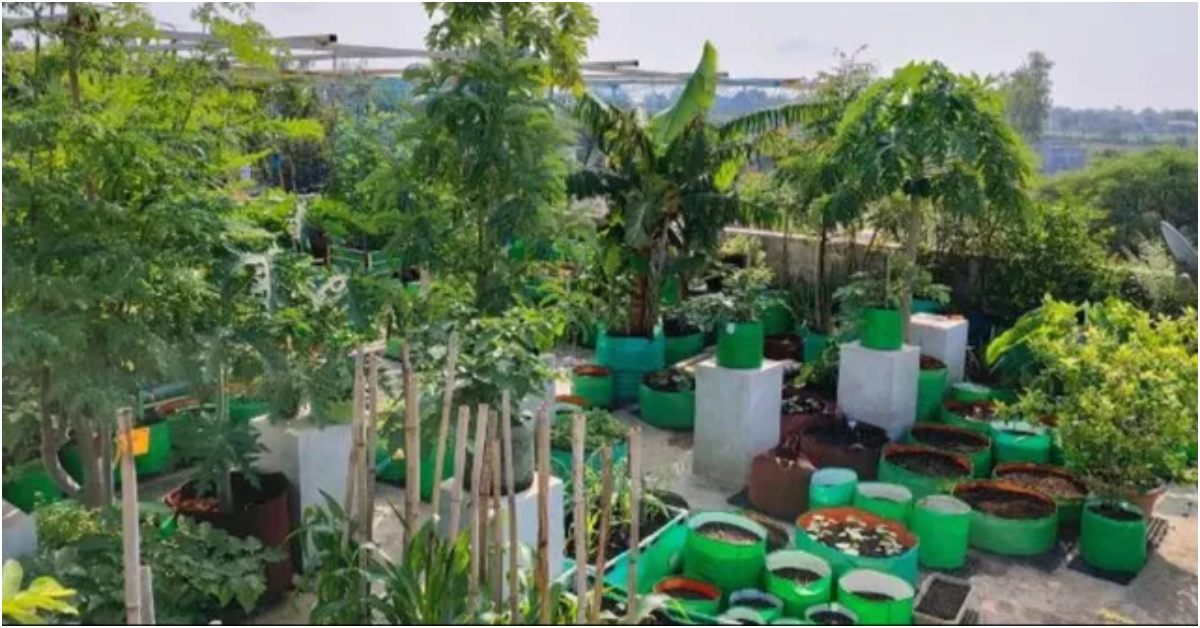
Patna: The government of is offering a 75% subsidy to encourage urban residents to turn their rooftops into vegetable gardens, as part of a push to address shrinking cultivable land and rising temperatures in cities.

The “Rooftop Gardening Scheme”, operated by the state’s horticulture directorate under the agriculture department, aims to improve household nutrition, supplement incomes and mitigate the urban heat island effect by expanding green cover across city neighbourhoods.
Under the scheme, the cost of a basic unit comprising 30 pots and plants has been fixed at Rs 10,000, while a larger “farming bed model” is priced at Rs 60,000. The state will subsidise up to 75% of the cost for both models, a move officials say is designed to make the initiative accessible to middle-income and lower-income families.

According to government data, 428 beneficiaries have availed themselves of the scheme in the 2025-26 financial year so far, with Rs 3.17 crore sanctioned for its implementation. The programme is currently being rolled out in the municipal corporation areas targeting urban and semi-urban households.
Officials say rooftop gardens can help regulate indoor temperatures by creating an insulating green layer, offering relief during peak summer months while contributing to environmental balance.
The state’s agriculture minister, said women’s self-help groups were being trained under the programme and that community marketing would be promoted through dedicated “Rooftop Gardening Service Teams”. The initiative, he said, could create regular income streams for women and open up entrepreneurial opportunities for young people in installation and consultancy services.
Residents interested in applying can contact their municipal corporation’s horticulture or agriculture office for details on eligibility and the application process, which is being coordinated through district horticulture officers.
The government says the broader aim is to “green every rooftop”, positioning terrace gardening as a tool to strengthen food security, reduce household expenditure and promote environmentally sustainable urban development.