
Patna: Agrivoltaic farming, or Agri-Photovoltaic (Agri-PV), could offer Bihar a way to expand solar energy without taking fertile agricultural land out of cultivation, experts said at the Bihar Agri-PV Summit 2026 held in Patna.

The summit focused on integrating agriculture with solar power generation on the same land, with discussions centred on increasing farmers’ income and accelerating Bihar’s transition towards clean energy.
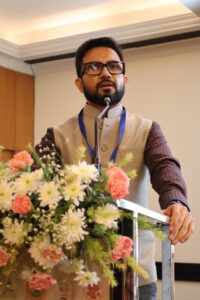
Director of the Bihar Renewable Energy Development Agency (BREDA), Rahul Kumar, IAS, said Bihar’s predominantly agrarian economy and limited availability of land make Agri-PV an important model to explore.

Rather than using fertile agricultural land exclusively for solar projects, Kumar suggested developing Agri-PV models in areas where horticulture and allied agricultural activities are undertaken.
“Given the limited availability of land in Bihar, the Agri-PV model could emerge as an effective solution,” he said, adding that farming could continue while the same land is simultaneously used for solar power generation.
Solar power and farming on the same land
Under Agri-PV models, solar panels are installed at suitable heights and configurations to allow agricultural activities to continue underneath or between the panels.
According to experts at the summit, the approach could provide farmers with an additional income stream from solar energy while maintaining agricultural production. It could also help increase renewable power generation across the state.
Kumar highlighted the potential of Agri-PV particularly in horticulture-based regions, where small landholdings and fruit cultivation are common. He said solar installations could be adapted to local agricultural conditions to create additional income opportunities for farmers.
Bihar policy already recognises Agri-PV
Kumar said initiatives are also being undertaken in Bihar to develop community-based agrivoltaic models with active participation from farmers.
He noted that the Bihar Renewable Energy Policy 2025 recognises Agri-PV under the special category of “Solar for Agriculture”. Opportunities to promote Agri-PV projects under PM-KUSUM 2 could also be explored, he added.
Technology, investment and financing discussed
The summit also examined the practical aspects of implementing Agri-PV projects, including solar technology, land utilisation, crop cultivation, irrigation systems, project costs and investment requirements.
Experts discussed the need to identify suitable configurations that can balance solar power generation with crop productivity. Financial and investment models were also considered important for scaling up Agri-PV projects in the state.
Experts call for greater coordination
Speakers said Bihar has significant potential for Agri-PV expansion because of its strong agricultural base. Greater coordination between the agriculture and energy sectors, they said, could generate economic benefits for farmers while supporting the state’s renewable energy targets.
The summit also stressed the need for collaboration among the government, private sector, farmers, technical experts and financial institutions to facilitate large-scale adoption of Agri-PV models.
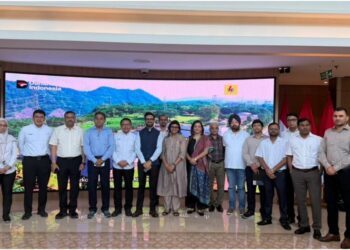
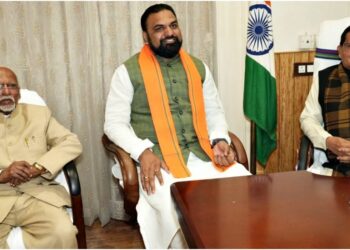
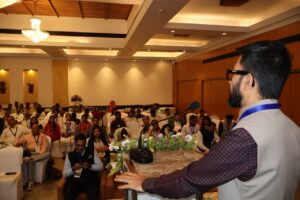
The event was attended by BREDA Director Rahul Kumar, CII Bihar State Council Chairman Gaurav Sah, and Director of Horticulture in Bihar’s Agriculture Department Abhishek Kumar, IFS, along with representatives from the agriculture, energy, renewable energy and private sectors.
The summit ultimately focused on identifying opportunities at the intersection of agriculture and renewable energy and promoting farmer-centric models that can create additional income while contributing to Bihar’s clean-energy transition.