
New Delhi: Bihar unveiled a model of technology-driven governance at the India AI Impact Expo 2026, highlighting innovations in digital democracy, AI-based election systems, and administrative training that drew attention from policymakers and tech experts nationwide.

The Bihar Pavilion, located on the first floor of Hall No. 5, became a focal point of the event, hosting officials including Rajya Sabha member Sanjay Kumar Jha and Sandeep Poundrik, Secretary at the Ministry of Steel. Speaking at the pavilion, Jha praised Bihar’s efforts, saying: “Through mobile e-voting, AI-based counting, and the GenNext Lab, Bihar is setting the tone for New India’s digital democracy. This initiative strengthens transparency, inclusion, and accountability, placing Bihar at the forefront of technology-led governance.”
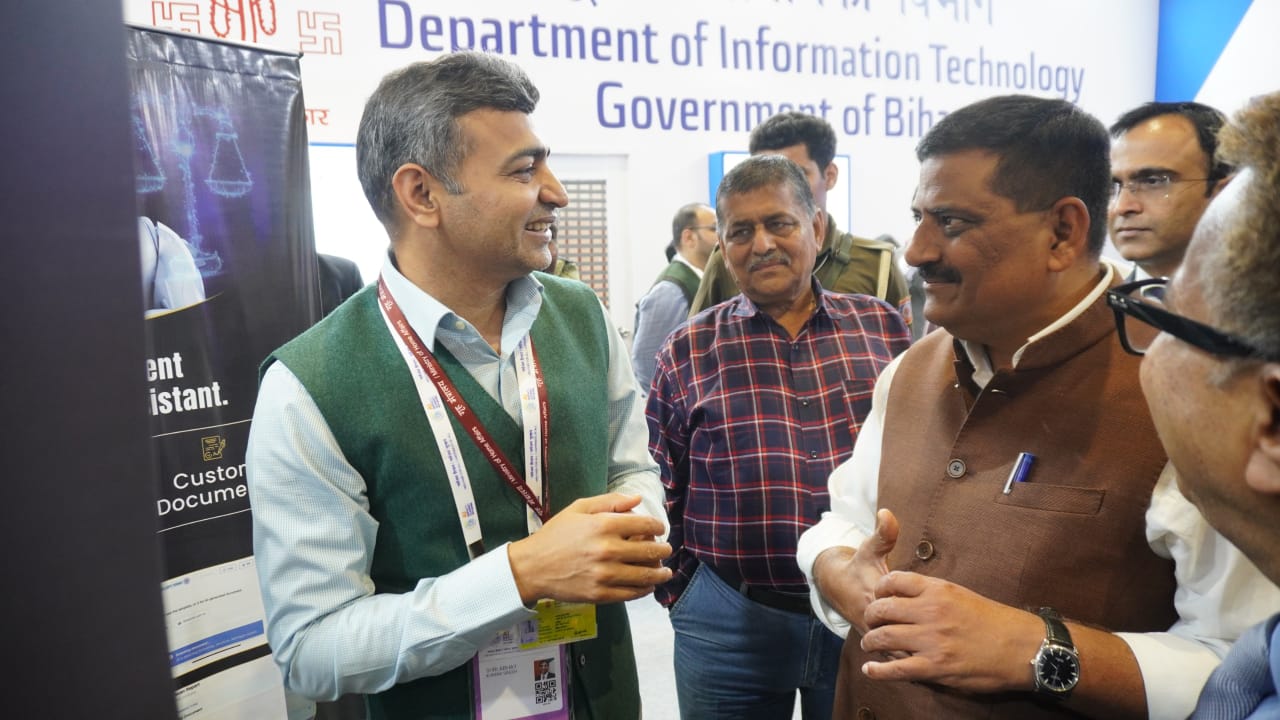

India’s First Mobile-Based Remote E-Voting
The State Election Commission of Bihar has introduced the country’s first state-level mobile-based remote e-voting system for urban local body elections. Designed for migrant voters, the elderly, persons with disabilities, and hospitalized citizens, the system uses AI, facial recognition, and blockchain technology to ensure vote immutability, security, and reliability. Dr Deepak Prasad, Commissioner of the State Election Commission of Bihar, described the initiative as a step that could redefine electoral participation across the country.
The pavilion also demonstrated an FRS-based voter verification mobile app, capable of detecting fake or duplicate voting through facial recognition, even with older EPIC voter ID photos. Notably, the app works offline, further bolstering election credibility.
AI-Enhanced Counting for Speed and Accuracy
An AI-based OCR counting system was displayed, enabling real-time extraction and validation of EVM data. Video records and time-stamped audit logs allow verification at any level, reducing human error and accelerating result declaration. Bihar has already successfully implemented this system in municipal and panchayat elections.
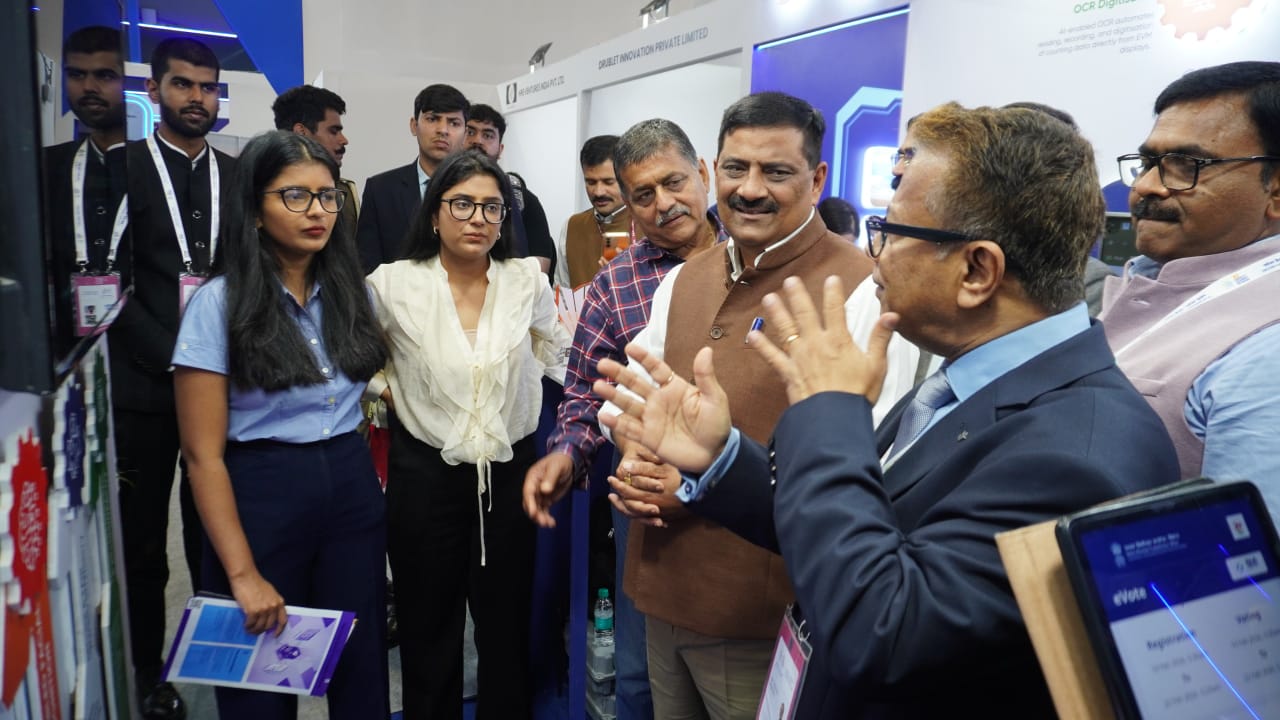
Transforming Governance Through Data, AI, and GIS
The Bihar GenNext Lab at the Bihar Institute of Public Administration and Rural Development (BIPARD), Gaya, demonstrated seven digital kiosks showcasing how AI, data science, and GIS can transform governance. Since its inauguration in October 2024, the lab has provided advanced training to civil servants and supported evidence-based policymaking.
Key features include:
- Dashboard Kiosk: Real-time data visualisations for 45 departments and 38 districts, enabling scheme monitoring across state, district, and block levels.
- Data Repository Kiosk: Unified access to departmental data, accelerating policy formulation and review.
- GIS Mapping Kiosk: Displays locations of government institutions from Panchayat to state level.
- Ask Aryabhat: A government data-driven chatbot for comparison, analysis, and decision support.
- Bihar at its Grassroots: Highlights district-level success stories and technology-enabled impact.
- CollabNote & Bihar Map: Streamlines inter-department collaboration and provides interactive visual overviews of district-wise development.
Dr B. Rajendra, Director General of BIPARD, said: “Through our pavilion at the India AI Impact Expo, we demonstrated how administrative training, digital governance, and AI-based capacity building can elevate Bihar to a new standard of transparent and accountable governance.”
Bihar’s showcase emphasised that integrating AI and data at every level—from electoral processes to policy implementation—can enhance transparency, efficiency, and democratic participation. Officials hope that the state’s model will serve as a blueprint for other states looking to embrace technology-led governance.