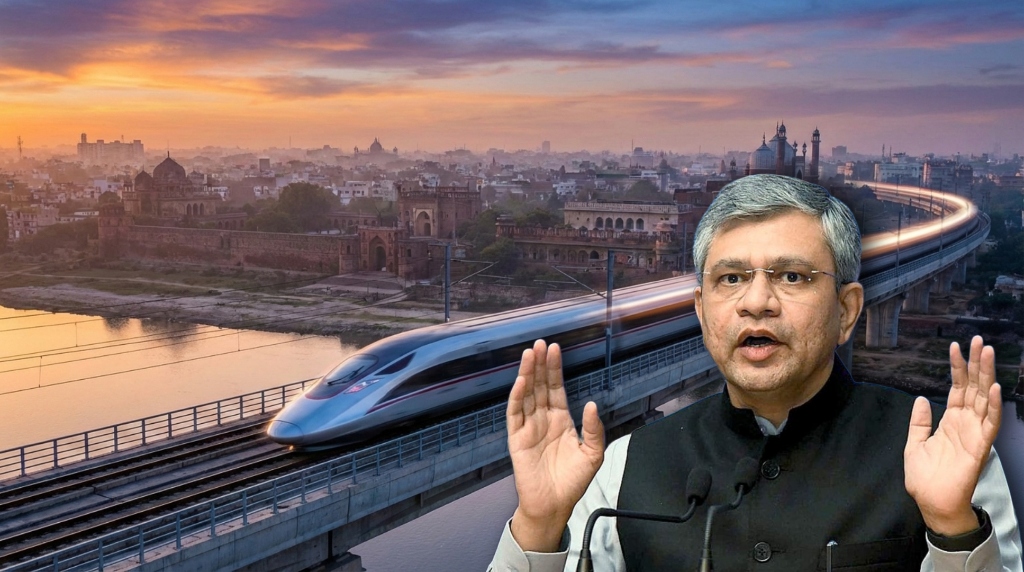
Patna: Bihar’s long-discussed bullet train project is edging closer to implementation, with construction work expected to begin in March following its announcement in the Union Budget. The proposed high-speed rail network is designed to transform connectivity across the state, allowing trains to run at speeds of up to 350kmph and sharply reducing journey times between key cities.

Under the plan, two dedicated corridors will be developed: one linking Delhi with Varanasi, and another extending from Varanasi to Siliguri. Passengers from Patna heading to the national capital will travel via Varanasi, cutting the journey to around four hours — a significant drop from the 12 to 20 hours typically required by conventional services.
The Varanasi–Siliguri stretch will pass through Bihar, with stops proposed at Patna and Katihar. Officials estimate that the Patna–Siliguri leg could be completed in just over two hours, while the full corridor is expected to take less than three hours. The improved travel times are expected to boost trade, tourism and regional mobility, particularly in north and eastern Bihar.

To move the project forward, a high-level committee is set to be formed by the end of February to conduct an aerial survey of the proposed alignment. The survey will assess elevation, river crossings, forest land and other technical challenges that could affect construction of the high-speed infrastructure.
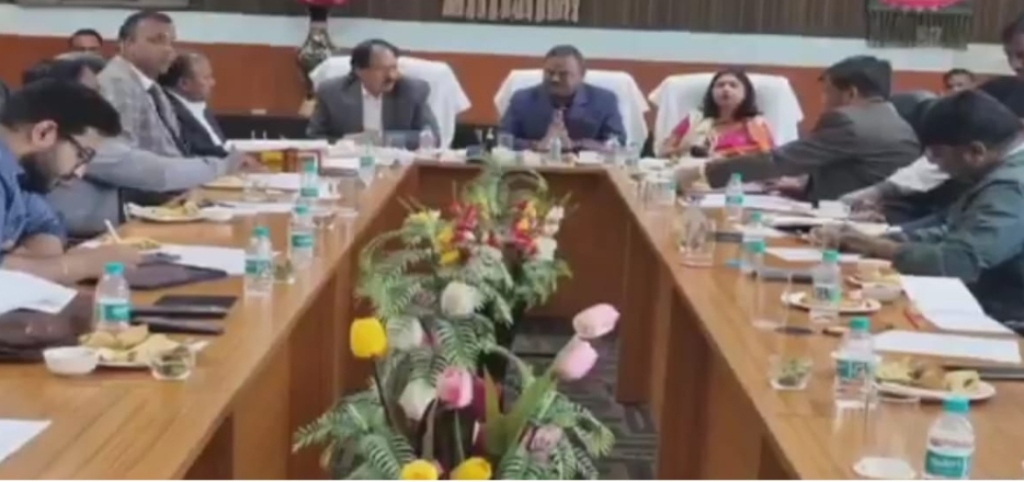 Meanwhile, Indian Railways has begun technical preparations. Twenty-five engineers selected from across the country are undergoing a two-week specialist training programme at IIT Patna, focusing on high-speed rail systems, track design, signalling and safety protocols. Existing railway tracks are not compatible with bullet train speeds, requiring the development of dedicated corridors with advanced engineering standards.
Animesh Kumar Sinha, director general of Indian Railways, said passenger safety would remain paramount, adding that faster operations would only be introduced after deploying robust protection measures, including the indigenous ‘Kavach’ safety system. IIT Patna’s director, Prof T N Singh, said combining speed with reliability and safety was a “non-negotiable responsibility” for the project’s planners.
If completed as planned, the bullet train network could mark a significant shift in Bihar’s transport landscape, integrating the state more closely with national economic corridors and offering commuters a faster, modern alternative to long-distance travel