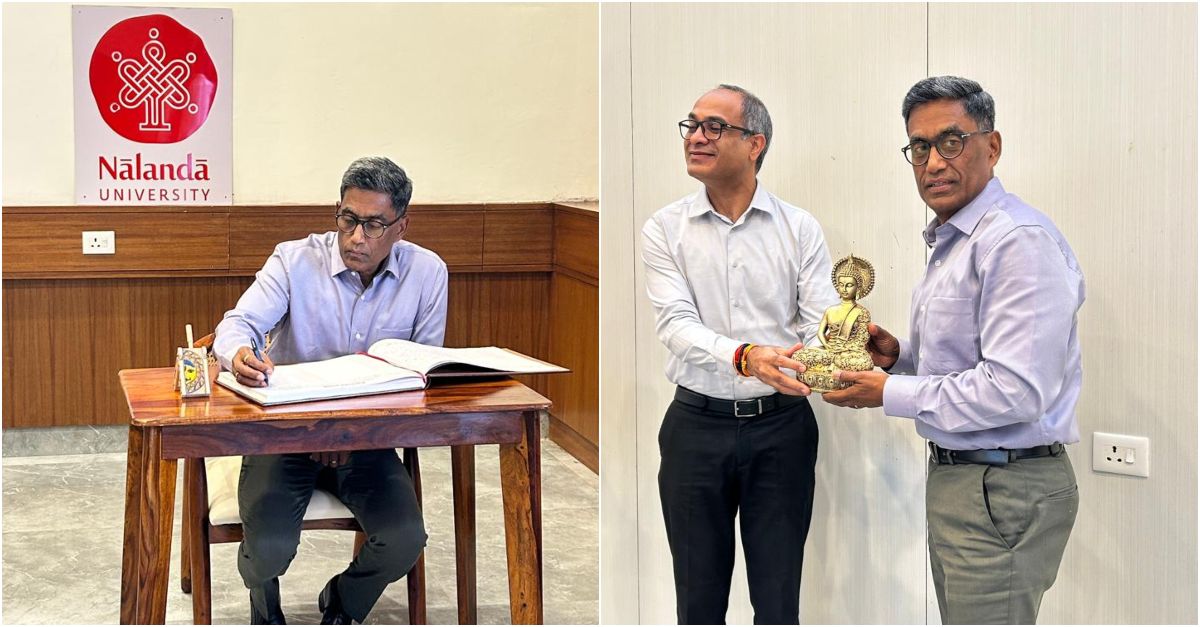
Rajgir: Nalanda University welcomed Bihar chief secretary Pratyaya Amrit on Friday as he toured the university’s newly constructed campus in Rajgir and reviewed its academic and environmental infrastructure.

Accompanied by senior state officials, including the Nalanda district magistrate and superintendent of police, Amrit visited key facilities across the campus to assess its academic activities, modern amenities and sustainability initiatives.
University faculty members briefed the chief secretary on the institution’s historical significance and its present academic structure. Officials said the university currently houses several internationally oriented schools, including the School of Historical Studies, the School of Ecology and Environmental Studies, and the School of Buddhist Studies.

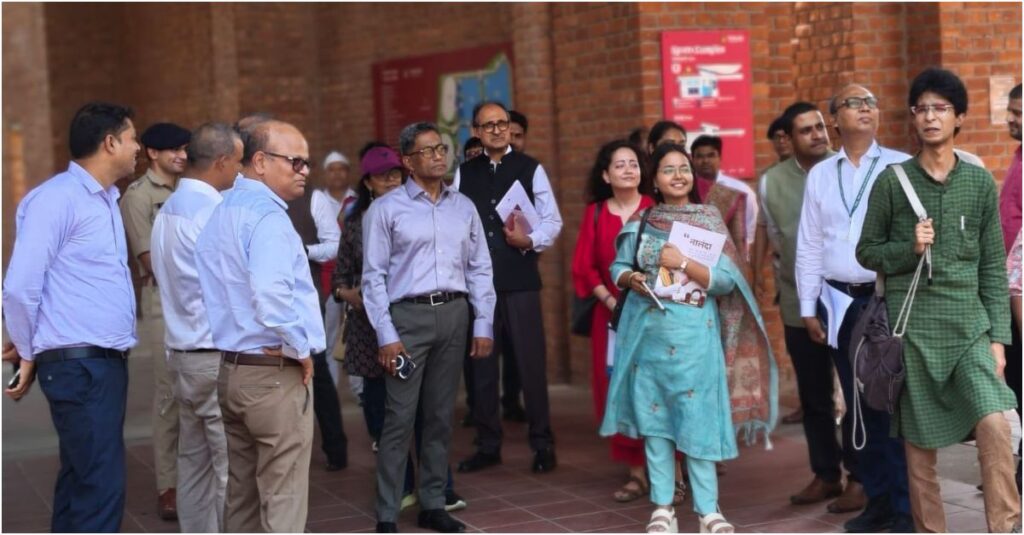
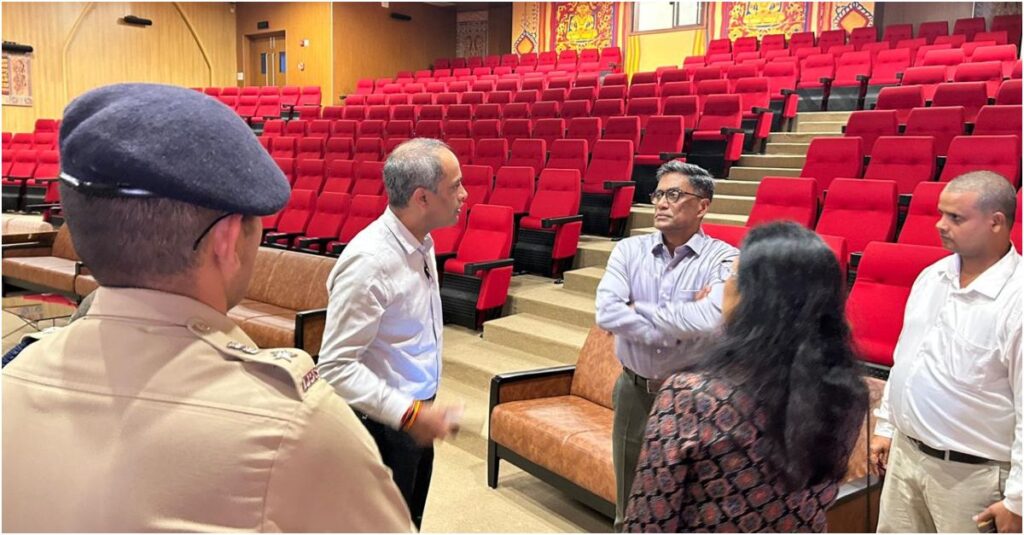
During the visit, Amrit inspected the university library, the Sushma Swaraj Auditorium, the yoga complex and academic blocks. He praised the campus for combining architectural elements inspired by ancient Nalanda with contemporary technology and infrastructure.
The chief secretary also reviewed the university’s environmental initiatives, including its 6.5MW solar farm, biogas plant and water harvesting systems. Describing the campus as a “net zero” model, he said the university’s approach to sustainability could serve as an example for educational institutions across Bihar.
“Nalanda has historically stood as a symbol of knowledge not only for Bihar but for the entire world,” Amrit said during an interaction with officials and faculty members. “The new campus preserves its ancient heritage while embracing modern innovation.”
He added that the Bihar government remained committed to supporting the university’s development and strengthening its role as an international centre for higher learning.
Officials also briefed the chief secretary on infrastructure and development projects underway around the Rajgir campus. Concluding the visit, Amrit said the university was expected to play a greater role in enhancing India’s academic and cultural links with countries in south-east Asia and beyond.