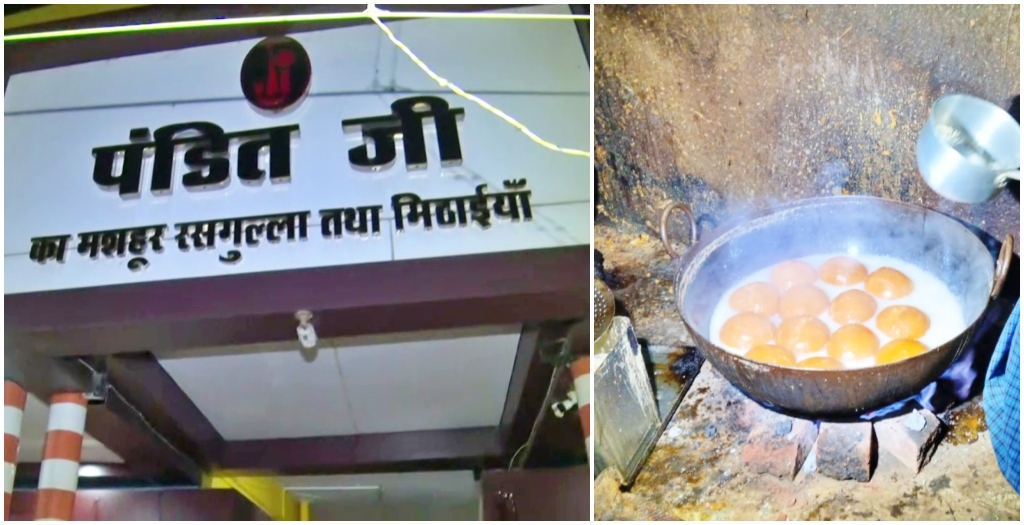
Gayaji: As Bihar prepares for its upcoming Assembly elections, attention is turning to an unusual source of hope for politicians: a sweet called the “election rasgulla.” Made at Pandit Ji Mithai Dukaan in Gayaji’s Panchanpur market, this rasgulla is not just a dessert but a symbol of luck for election candidates. Many local leaders and prominent politicians visit the shop, hoping that tasting this famous sweet might bring them success in the polls. For over 50 years, this tradition has continued, and the rasgulla has gained a reputation that stretches far beyond Gayaji.

Panditji’s sweet shop has a long history. It was started in 1969 by four brothers in a small hut. Over the years, it has grown into a famous establishment known for its huge rasgullas, some weighing up to five kilograms. Sunil Mishra, one of the owners, explained that the idea of making large rasgullas began when a police officer, Pushpankar Pandey, frequently visited the shop and would eat 10 to 12 small rasgullas at a time. Inspired by this, the brothers began crafting larger and larger rasgullas, which became a signature of their shop. Today, these massive sweets are not only sold daily but are also ordered as gifts for elections, weddings, and festivals.
Over the decades, many prominent political leaders have tasted Panditji’s rasgullas. Former and current leaders, including Karpoori Thakur, Atal Bihari Vajpayee, Draupadi Murmu, Nitish Kumar, Lalu Prasad Yadav, and Jitan Ram Manjhi, are said to have visited the shop. The rasgulla is seen as a good omen, and candidates often eat it before campaigns or share it after victories. Despite their high cost—ranging from Rs 300 to Rs 600 per piece—the sweets remain in great demand, especially during election season. “Elections are a festival of democracy,” said shopkeeper Anil Mishra. “And every festival is incomplete without sweets.”

However, the excitement over the rasgulla coexists with real issues faced by voters. Residents of the Tikari constituency, where the shop is located, highlight problems like poor infrastructure, bad roads, and neglected schools. Murali Yadav, a local voter, said that despite the sweet’s popularity, it cannot fix the lack of development in the area. Tikari, once a princely zamindari known as Tikari Raj, has a complex political history, with elections often decided by close margins and caste dynamics. Still, the election rasgulla continues to be a part of campaign traditions, symbolising hope and positivity for candidates.
For politicians and locals alike, Panditji’s rasgulla represents more than just a sweet treat. It is a blend of tradition, superstition, and community spirit that has endured for more than five decades. As candidates prepare for the Bihar Assembly elections, a stop at Panchanpur market to taste the legendary rasgulla has become almost mandatory, a small gesture believed to bring a little extra luck to their campaign.