Patna: Voting began today for the first phase of the Bihar Assembly elections, with more than 3.75 crore voters across 121 seats in 18 districts set to determine the fate of the NDA, the Grand Alliance, and Prashant Kishor’s Jan Suraaj.

The contest is shaping up as a multi-cornered battle, with the chief ministerial prospects of Tejashwi Prasad Yadav, BJP’s deputy chief minister Samrat Choudhary, and Vijay Kumar Sinha under scrutiny. Sixteen ministers are also seeking re-election. In a particularly complex race, Tejashwi’s elder brother, Tej Pratap Yadav of the Janashakti Janata Dal, faces competition from Mukesh Roshan of his former party, the RJD, alongside several independent candidates.
Special scrutiny at polling booths

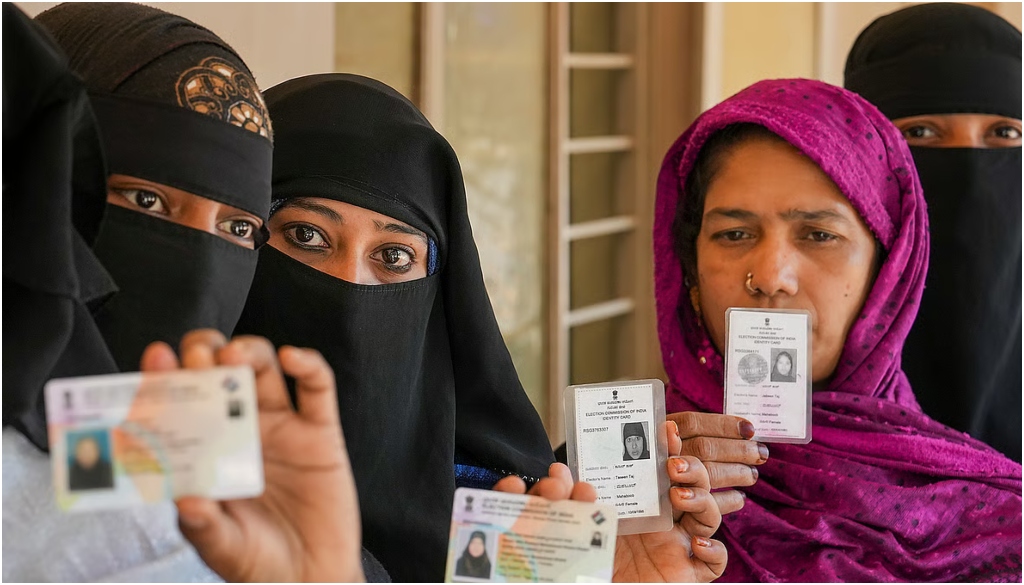
In an unprecedented move, the Election Commission has assigned Anganwadi workers to polling stations to verify the identity of women wearing burqas or veils. The workers, known as Sevikas, have undergone district-level training to conduct identity checks discreetly and ensure that votes are cast legitimately.
Chief Election Commissioner Gyanesh Kumar insisted that the measure is procedural and not targeted at any religious community. “Every task has a process,” he said. “Anganwadi workers will be present at every booth to verify identities. Strict action will be taken against anyone attempting to hide their identity or cast a fraudulent vote.”
The decision follows a demand from BJP president Dilip Jaiswal, who called for measures to identify women wearing burqas through voter cards to prevent fraudulent voting. While the Commission maintains that the step is aimed at election integrity, the move has drawn attention for its focus on women’s attire.