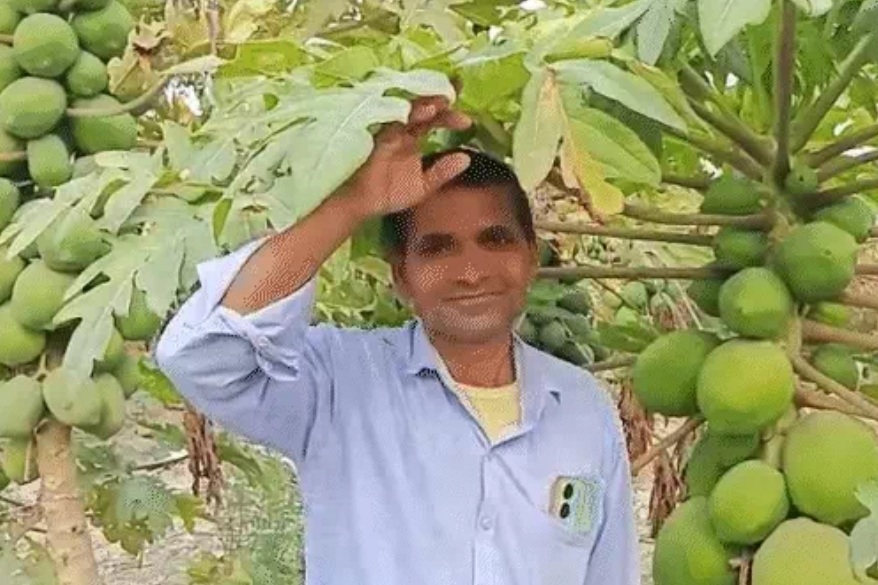
Samastipur: A farmer in Samastipur has built a profitable livelihood through natural papaya cultivation, earning up to Rs 40,000 per month while also generating income opportunities for more than 50 local suppliers who distribute his produce.

Manoj Kumar shifted to papaya farming nearly a decade ago after agricultural scientists from Krishi Vigyan Kendra Viroli advised him to try an alternative crop. He underwent 15 days of training and initially started cultivation on a small plot. Earlier, he had grown traditional crops such as potato, wheat and maize but faced losses due to low yields.
Today, he cultivates around 1,000 papaya plants across one acre. Each plant produces at least 80 kilograms of fruit per month, according to the farmer. Demand for his naturally grown papayas has risen sharply because of their taste, drawing buyers not only from Samastipur but also from nearby areas such as Muzaffarpur, Rosera and Kalyanpur. However, he says he is still unable to meet demand.

After initial setbacks with other varieties, he began cultivating papayas using Pusa Selection seeds through natural farming methods four years ago. Since then, both yield and market demand have improved significantly, especially among premium buyers.
He explained that under natural cultivation, papaya plants take about five to six months to bear fruit and are ready for harvest in around eight months. Planting involves preparing pits measuring 50 cm in length, width and depth at a spacing of about 1.25 meters, or wider for taller varieties. The pits are left open for about two weeks to allow sunlight to eliminate pests and pathogens before being filled with soil mixed with organic manure and vermicompost. Light irrigation is required daily until plants establish.
The farmer said saplings are usually planted between June and July or February and March, though regions with heavy rainfall or colder climates may prefer September or late winter planting.
Local distributors who collect papayas from his farm and supply them to markets reportedly earn between Rs 15,000 and Rs 20,000 per month, making the initiative a small but growing rural employment model.