
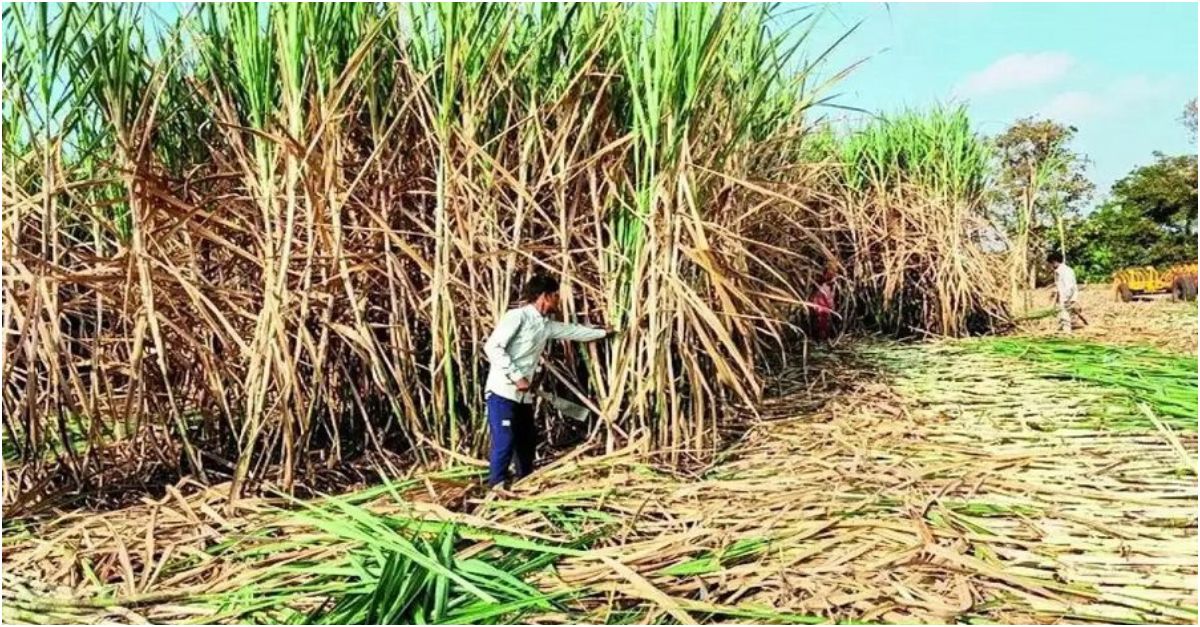
Patna: The Bihar government is preparing to establish a network of custom hiring centres across major sugarcane-growing districts, in a bid to modernise cultivation, reduce costs and improve productivity for small and marginal farmers.

The initiative, led by the state’s Sugarcane Industries Department, aims to tackle longstanding challenges in the sector, where limited mechanisation and rising input costs have constrained yields and farm incomes. Officials say the centres – to be known as Ganna Sewa Kendras – will function as integrated service hubs, offering machinery on a rental basis alongside agronomic guidance and access to government schemes.
Most of Bihar’s sugarcane farmers operate on small landholdings and lack the financial capacity to purchase expensive equipment such as planters, ratoon management tools and mechanical harvesters. Limited access to institutional credit has further restricted investment in farm mechanisation.

“The cost of cultivating sugarcane manually is unsustainable for farmers with one to two acres of land,” a senior department official said. “Without mechanisation, yields remain low, post-harvest losses are high, and farmers’ incomes continue to suffer.”
Under the new model, farmers will be able to hire crop-specific machinery when needed, rather than investing in ownership. The centres will be equipped with tools tailored to sugarcane cultivation, allowing for more efficient planting, maintenance and harvesting suited to local conditions.
Officials expect the approach to reduce per-acre input costs, improve crop quality and increase supply to sugar mills. The programme is also designed to encourage rural entrepreneurship, with young people supported to set up and operate the centres as viable businesses.
Beyond machinery access, the Ganna Sewa Kendras are intended to serve as single-window platforms for farmers. Services will include advice on crop management, information on new varieties, assistance with subsidies and connections to mills and markets – areas where farmers often face fragmented or limited access.
The department is finalising details of financial and institutional support for the centres, including subsidies, equipment procurement and training. Priority is expected to be given to districts with high sugarcane cultivation but low levels of mechanisation.
The scheme forms part of a broader effort to strengthen Bihar’s sugar industry, which underpins the livelihoods of millions of farming families across the state.