Patna: Mountains of uncollected rubbish are piling up across 261 towns and cities in Bihar, raising serious public health and environmental concerns and exposing deep flaws in the state’s solid waste management system.

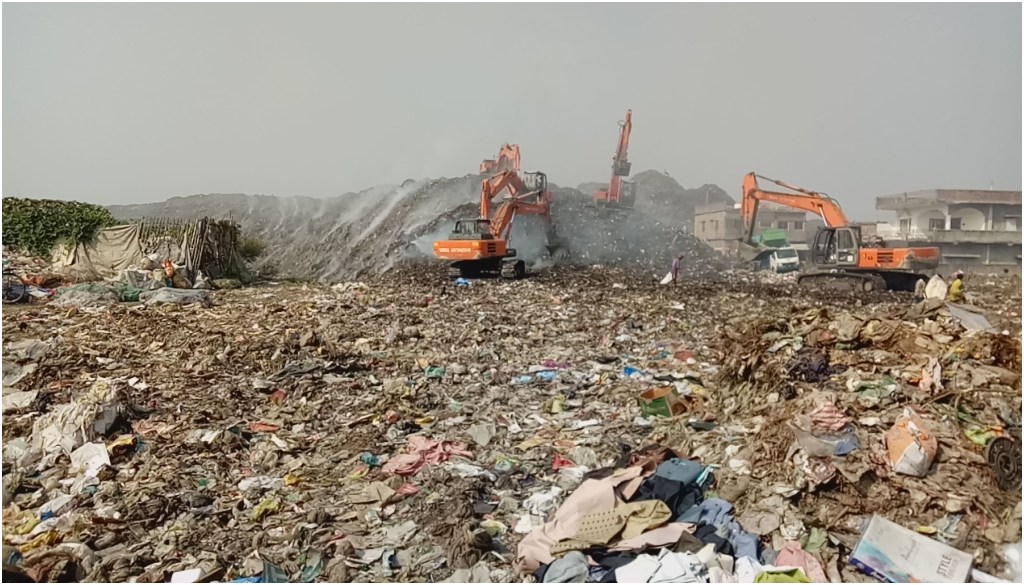
Heaps of garbage now line roadsides, riverbanks, railway tracks and vacant plots in urban areas, in some places towering like small hills. The rotting waste has led to worsening pollution, foul odours and the spread of disease, particularly during the monsoon, when drains clog and stagnant water becomes a breeding ground for mosquitoes.
Despite repeated plans and policy announcements, implementation has lagged far behind. A proposed cluster-based waste collection and processing model for smaller municipalities has failed to take off, while many waste processing plants that were installed remain non-functional. In several towns, facilities have not been set up at all, often because of land shortages or unresolved disputes.

In Patna’s Bairia area, a massive garbage dump has grown unchecked for decades; a waste processing plant there has remained non-operational for 24 years. Gaya generates about 450 metric tonnes of waste every day, much of which is dumped without adequate treatment. Municipalities such as Vaishali, Gopalganj, Nalanda, Saran, Kaimur and Siwan do not have operational disposal plants, while construction is still underway in Nawada, Bhojpur, Aurangabad and Rohtas.
Even Biharsharif, designated a “smart city”, lacks a functional recycling plant. As a result, garbage is dumped at seven different locations across the city. In Bhabua, a land dispute has stalled plans for a sanitary landfill, while Siwan faces an acute shortage of dumping land.
“The filth and mosquito infestation mean dengue cases rise every year during the monsoon,” said Dr Rajiv Ranjan, a resident of Biharsharif. “People are struggling with the stench, smoke and recurring illness.”
The state’s urban development department, however, insists that progress is being made. Officials say Bihar’s municipalities generate about 6,519 tonnes of waste daily, of which around 2,093 tonnes – roughly 32% – is processed. Processing units, they say, are operational in major cities, including Patna, where 938 tonnes are treated daily, and Gaya, where 503 tonnes are processed. Smaller quantities are processed in Bhagalpur, Muzaffarpur and Biharsharif, while new facilities are under construction elsewhere.
On the ground, the picture is far bleaker, particularly in the Kosi, Seemanchal and east Bihar regions. In many districts, neither scientific dumping systems nor functioning processing units exist. Projects such as material recovery facilities (MRFs) are stalled in Supaul and Bhagalpur, while waste disposal units in Madhepura are non-operational. Land acquisition problems continue to delay facilities in Khagaria, Araria and Jamui.
North Bihar’s major cities present some of the most worrying examples. In Muzaffarpur, Motihari, Bettiah, Samastipur, Darbhanga, Madhubani and Sitamarhi, garbage piles dominate urban landscapes despite crores of rupees spent on municipal upgrades. Compost plants exist in Sitamarhi, Madhubani, Motihari and Samastipur, but remain largely unused. In Muzaffarpur, waste disposal has been stalled for three years due to delays in tendering an MRF plant.
The consequences are visible and severe: toxic fumes from burning waste, increased cases of dengue, malaria, diarrhoea and skin diseases, waterlogging during the rainy season, declining soil fertility and a growing risk of groundwater contamination.
With the national Swachh Survekshan cleanliness survey approaching, municipal bodies face mounting pressure to improve collection, segregation and processing. For residents living amid the garbage, however, the crisis is already here – and shows little sign of easing.