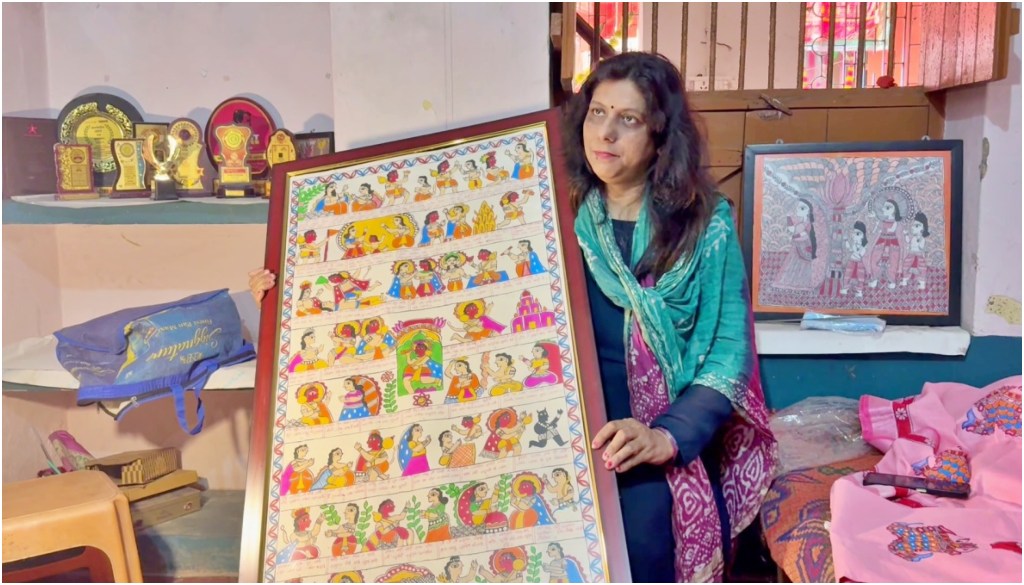
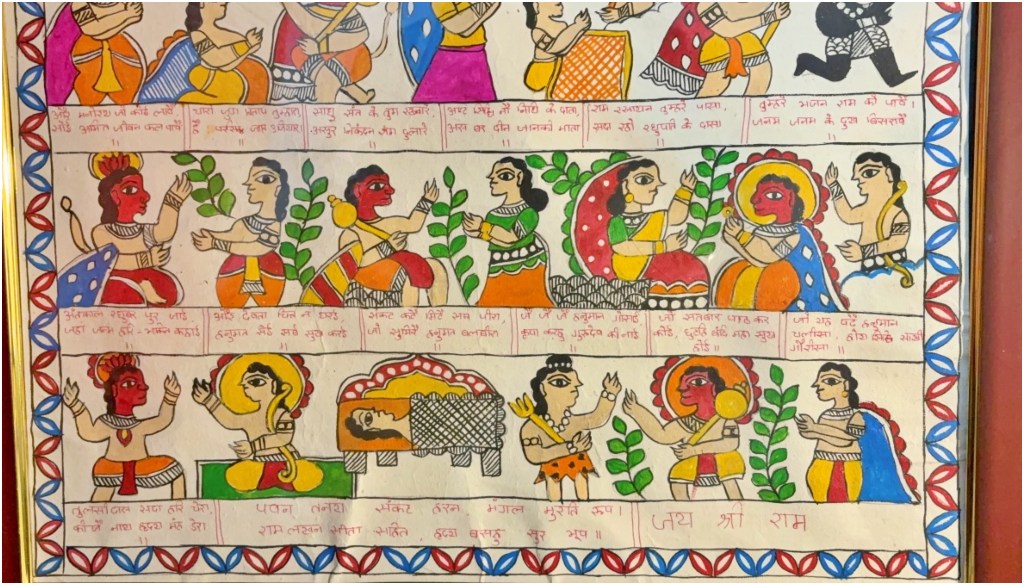
Muzaffarpur: Ipsha Pathak, a Muzaffarpur-based artist, has breathed new life into traditional Mithila painting by weaving the Hanuman Chalisa into the vibrant folk art style, inscribing the name of Lord Rama after each verse. Her innovative work has attracted attention from art enthusiasts and devotees of Sanatan Dharma alike, both in India and abroad.

Pathak spent 25 days meticulously creating the artwork, ensuring that the spiritual essence of each verse was reflected through colour, line, and symbol while preserving the distinctive style of Mithila painting. “Each verse of the Hanuman Chalisa carries different emotions and messages,” she said. “Translating that into visual form was challenging, but I embraced it with patience and dedication.”
The paintings have generated significant interest internationally. An Indian living in Sudan recently placed an order, while metropolitan cities such as Mumbai and Bengaluru have also sought the artwork. Currently, framed versions of the Mithila Hanuman Chalisa are being sold for around Rs 4,000. Pathak hopes to continue presenting other religious texts and themes through Mithila art to engage younger generations and preserve India’s cultural heritage.

Pathak’s journey into art was shaped by the coronavirus pandemic. After losing her job, she turned to her creative skills, eventually founding her company, Aavaran, which produces hand-painted bags, bangles, calendars, masks, bedsheets, and curtains sold across India and abroad.
Originally from Muzaffarpur, Pathak pursued her higher education in Sikkim and Pune, completing postgraduate studies in management. She was transferred to Muzaffarpur in 2010, and following her marriage, she embarked on a new chapter in the city. Today, she works with local NGOs, has established a thriving business, and serves as a role model for women seeking creative and entrepreneurial independence.
Mithila painting itself, traditionally made with natural colours sourced from turmeric, indigo, vermilion, and rice powder, is celebrated for its intricate patterns, floral motifs, and symbolic imagery. Its styles—including Bharani, Kachni, Tantric, Godna, and Kohbar—are characterised by bold outlines, geometric designs, and expressive facial features, particularly the eyes. Pathak’s work not only showcases these traditional techniques but also reinvents them by embedding sacred text, creating a bridge between art, spirituality, and modern audiences.