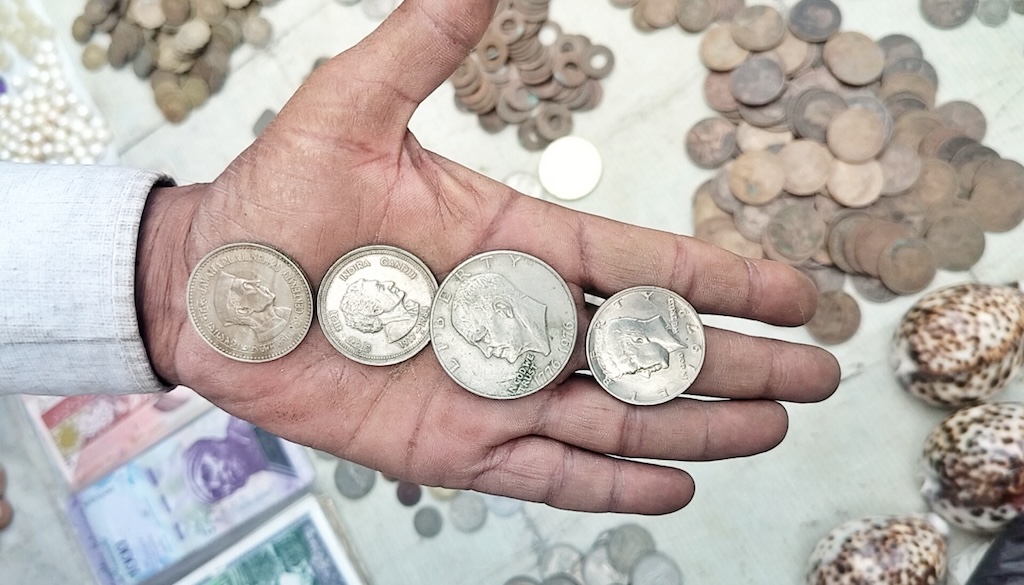
Bodhgaya/Patna: For nearly four decades, Bahram Khalifa — better known across Bodh Gaya as Kamal — has been quietly preserving fragments of India’s economic and cultural history. The 50-year-old, who now lives with his family in the Pachhatti neighbourhood, began collecting old coins as a child. Today, he owns more than 8,000 pieces, some dating back 200 to 500 years.

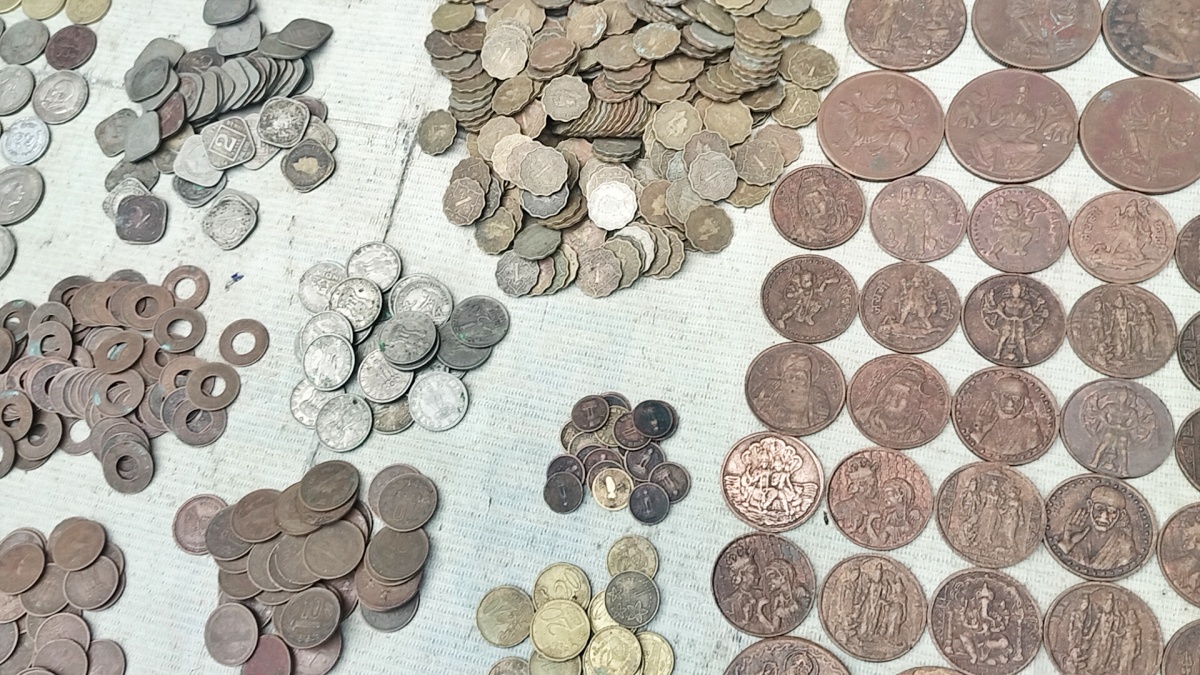
Kamal’s collection includes rare Mughal copper coins, silver currency used during the British Raj and older punch-marked metal pieces that once circulated under kings and emperors. His stall outside the Bodhgaya Temple Management Committee (BTMC) office in Bodh Gaya has earned him the title of “King of Old Coins and Tokens,” a reputation cemented by the tourists and collectors who regularly visit him.
🪙 Bodh Gaya’s “King of Coins”: Key Highlights

📍 Who is he?
- Bahram Khalifa, known as Kamal, a renowned old-coin collector from Bodh Gaya, Bihar.
- Originally from Aurangabad; now based near BTMC, Bodh Gaya.
🧾 His Collection
- Owns 8,000+ coins ranging from 200–500 years old.
- Includes coins from:
- Mughal Empire
- British Raj
- Pre-Mughal royal eras
👑 Rare Treasures
- 500 coins from Mughal & British periods—not for sale.
- Mughal copper coins (Dam) and silver coins dating back to the 16th century.
- Historic denominations such as Niski, Damri, Paula.
💰 Coin Features
- Made of gold, silver, copper, punch-marked metal.
- Carried images of kings, deities & royal insignia.
- Inscriptions in Urdu and Sanskrit, revealing the era’s economy & rule.
He estimates that he owns around 500 coins from historic eras — items he refuses to sell. “These are priceless,” he says, adding that the pieces he offers for sale are mainly sourced from Delhi’s markets. The coins from his personal archive include gold, silver and copper pieces that bear royal insignia, portraits of rulers, Sanskrit or Urdu inscriptions and symbols that reveal much about an empire’s economy and theology.
Many of the Mughal copper coins still show dates from the 16th century. Kamal explains that during Akbar’s reign, denominations such as the Dam, Niski, Damri and Paula were widely used. “These coins had the Kalima, the year, the mint name, and the ruler’s name. They were the currency of the common people,” he says.
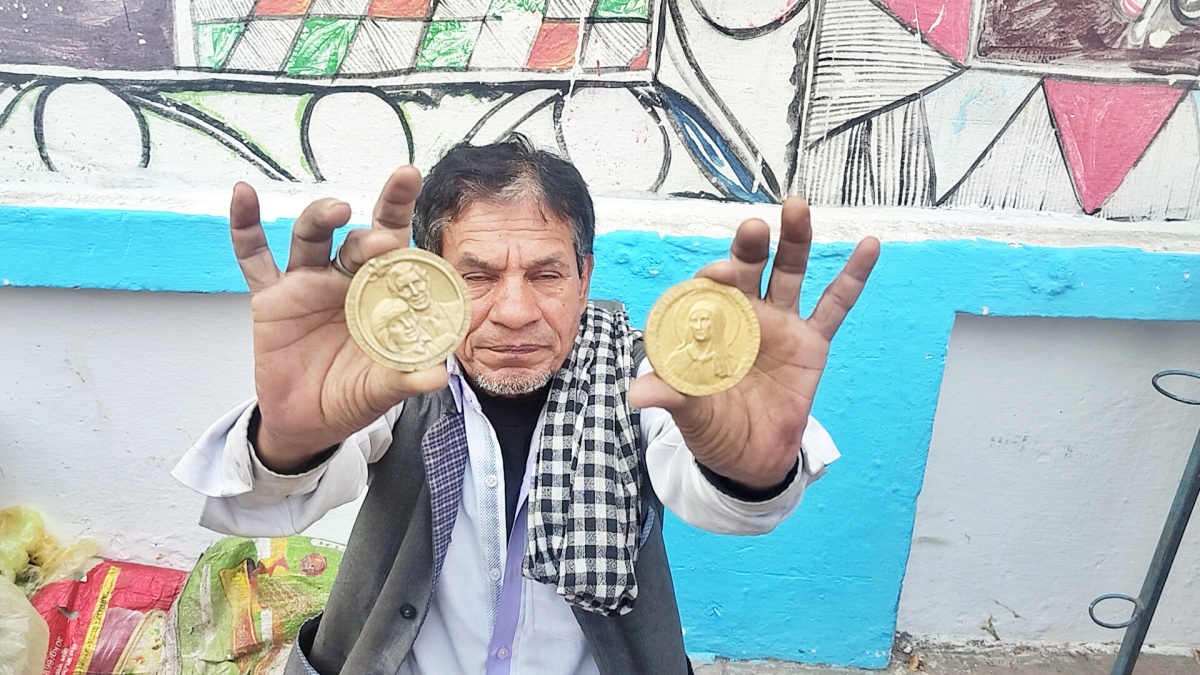
He once owned a leather coin believed to date back to the Mauryan period — an exceptional rarity — but it was misplaced years ago. “It had a hole in the middle. I still regret losing it,” he says.
Alongside his personal collection, Kamal sells a variety of old coins: Mughal copper pieces for Rs 200–Rs 500, East India Company coins for similar amounts, and smaller British Raj denominations priced between Rs 30 and Rs 50. British tourists are his most enthusiastic buyers, though he says interest from Indian collectors has grown.
During peak tourist season, he earns up to Rs 5,000 a day; on quieter days, around Rs 1,000. What began as a childhood fascination is now his primary livelihood. Earlier, Kamal worked in a clothing shop in Delhi, earning Rs 4,000 a month — yet he would still save Rs 500 to buy coins. A friend eventually persuaded him to turn his passion into a profession.
He recalls watching coin sellers outside Delhi’s Red Fort and realising that his own long-nurtured hobby could become a sustainable trade. Today, Kamal’s stall remains a small but significant cultural marker in Bodh Gaya, offering a tactile link to India’s past — one coin at a time.