
Patna: In Bihar, a state known for its rich cultural past and ancient civilisation, the story of its ageing trees tells a quieter but equally urgent tale of loss. As roads widen and towns expand, many old trees have fallen to development projects. Today, only 32 trees in the 70 to 100-year age bracket have been formally identified under the state’s heritage tree initiative.

The data comes from the Bihar Heritage Tree App, launched by the state’s department of environment, forest and climate change to document and conserve ecologically and historically significant trees. Under the scheme, any tree older than 50 years can be considered for heritage status. Citizens are encouraged to upload photographs and details, creating a participatory database that officials say is key to preservation.
So far, nearly 15,000 trees have been entered into the system. Of these, around 1,500 have been shortlisted for verification and conservation measures. Experts assess submissions based on trunk girth, height, leaf characteristics and GPS coordinates before confirming their age and classification.

The 32 verified trees aged between 70 and 100 years are spread across districts including Buxar, Aurangabad, Munger, Jamui and Bhagalpur. Notably, none have been recorded from the state capital, Patna, raising questions about the pace of urban transformation in the city.
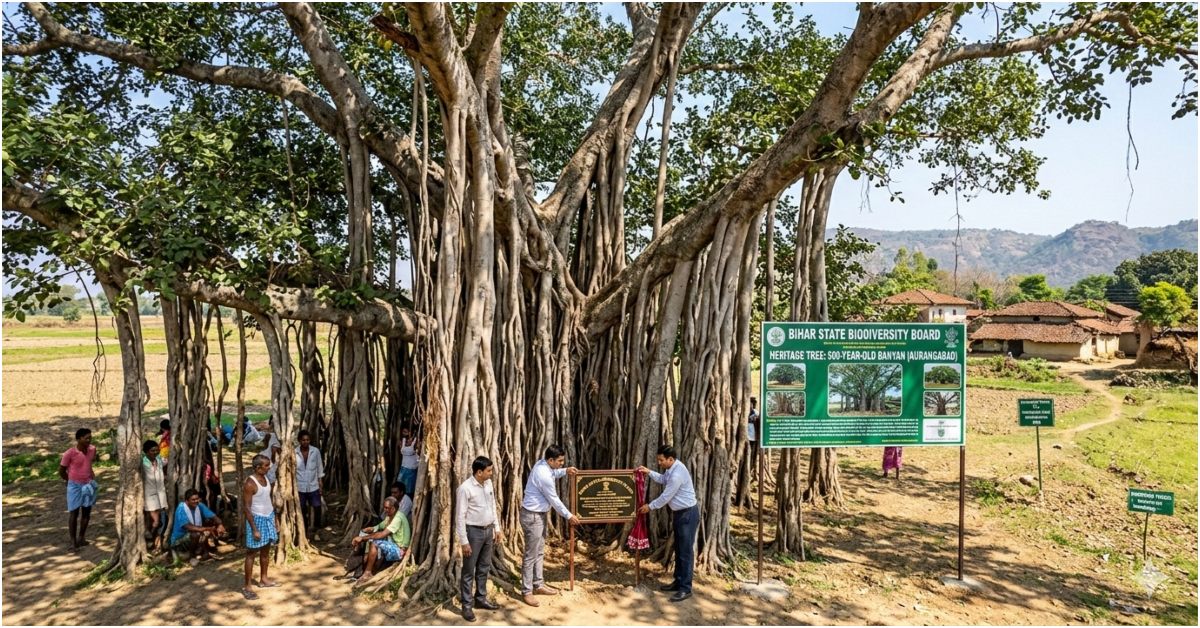
Among the most remarkable findings is a 500-year-old banyan tree located in Madanpur block of Aurangabad district, believed to be the oldest documented tree in Bihar. Its survival stands in contrast to the shrinking number of century-old trees elsewhere in the state.
According to official figures, the identified trees include 12 banyans, six peepal trees, three paakda trees, two mahua trees, two neem trees, one khirni tree, two semal trees, one gullad tree, one tamarind tree, one kalpavriksha tree and one kanak champa tree.
For Bihar, where history is often measured in centuries, the preservation of its natural heritage is emerging as a parallel challenge. The heritage tree initiative, officials say, is an attempt not only to catalogue ageing trees but also to ensure that the state’s environmental legacy is protected for future generations.