Patna: Air pollution in Bihar has reached a critical stage and is now acting as a “silent killer”, warns a new report released on Friday by The Lancet, one of the world’s most respected medical journals. Scientists have cautioned that the toxic air people are breathing today could trigger a surge in heart attacks and brain strokes over the next 12 to 24 months.

According to the report, large parts of north India — especially Bihar — have turned into what researchers describe as a “pollution trap”. Cities and districts located in the Gangetic plains such as Patna, Muzaffarpur, Gaya and Purnia are witnessing dangerously high levels of fine particulate matter (PM2.5) that remain suspended in the air for long periods.
The Lancet’s findings state that 100 percent of Bihar’s population is currently exposed to air that is several times more polluted than the safety limits prescribed by the World Health Organization (WHO).

“This pollution is working like a slow poison,” the report notes, explaining that the microscopic particles enter the lungs and then pass into the bloodstream, damaging vital organs from within. The journal’s editor-in-chief Richard Horton has also questioned the lack of public concern and political accountability on the issue of air pollution in Bihar and across north India.
The report highlights a “lag effect”, meaning the real health impact appears months or even years after exposure. While people usually associate pollution with cough, cold or eye irritation, the more dangerous consequences emerge later.
Medical experts cited in the report explain the process:
Fine particles enter the lungs and move into blood vessels, causing inflammation.
This leads to blockages in arteries over time.
As a result, cases of sudden heart attacks, strokes and even lung cancer are expected to rise sharply in the next two years.
Three major health risks identified are:
• Brain strokes due to blockage in blood vessels supplying the brain
• Rising cases of lung cancer even among non-smokers
• Growth of “superbugs”, as bacteria become more resistant in polluted air, making common infections harder to treat
Beyond health, the report warns of serious economic consequences. A large part of Bihar’s working population is falling sick, leading to a drop in productivity. For poor families, medical treatment costs are pushing them into debt.
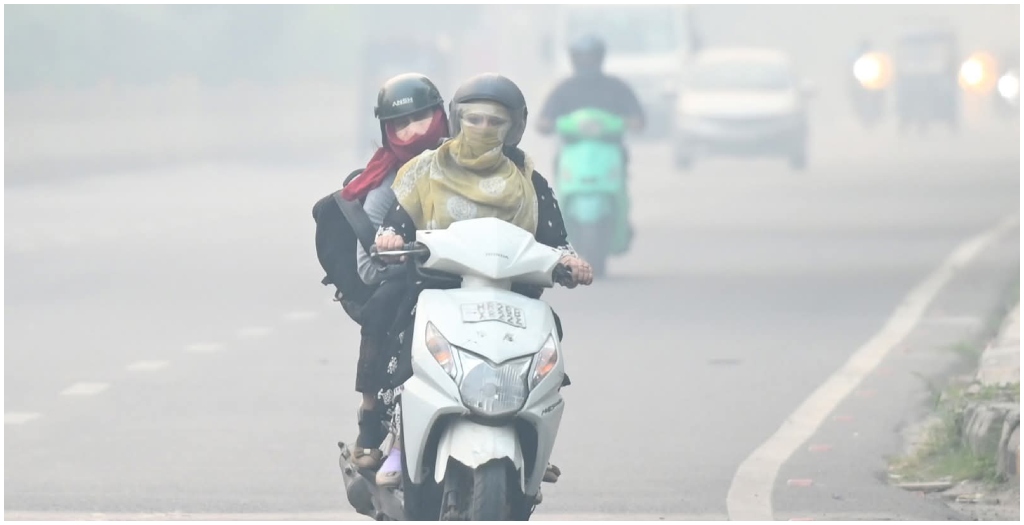
An expert said people must take immediate precautions. “Before stepping out in the morning, check the AQI. If it is above 200, avoid outdoor exercise. Use an N95 mask regularly,” he advised.
Calling the situation alarming, he added air pollution should no longer be treated only as an environmental issue.
“The level of PM2.5 in our cities is extremely high. It increases free radicals in the body and damages organs, especially the lungs and heart. The government must now declare this a medical emergency. Until strong policy changes are made, regular use of masks is the only protection,” he said.
The Lancet’s warning has once again underlined that Bihar’s air crisis is not just about smog in the sky, but about lives at risk in the near future.