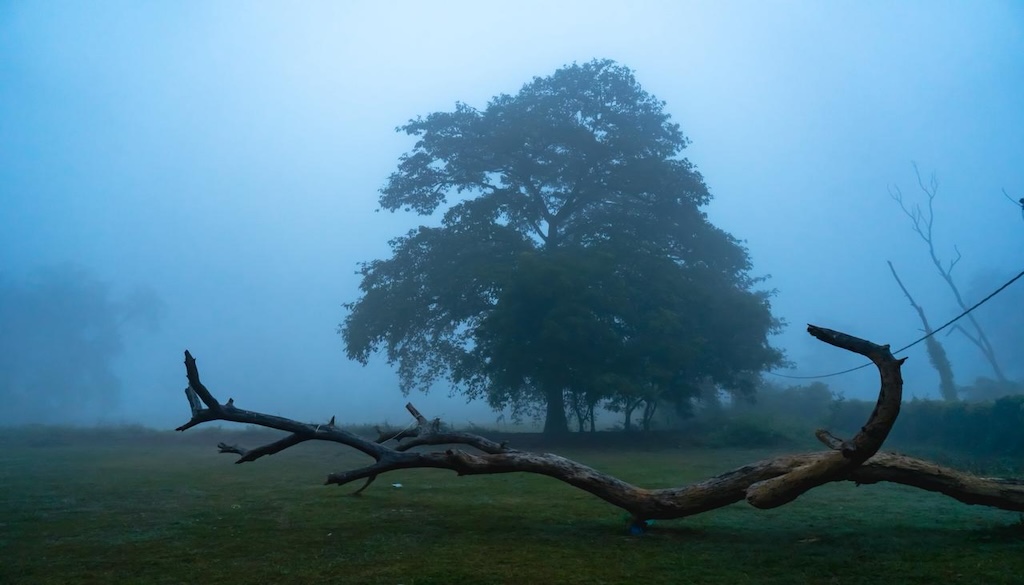
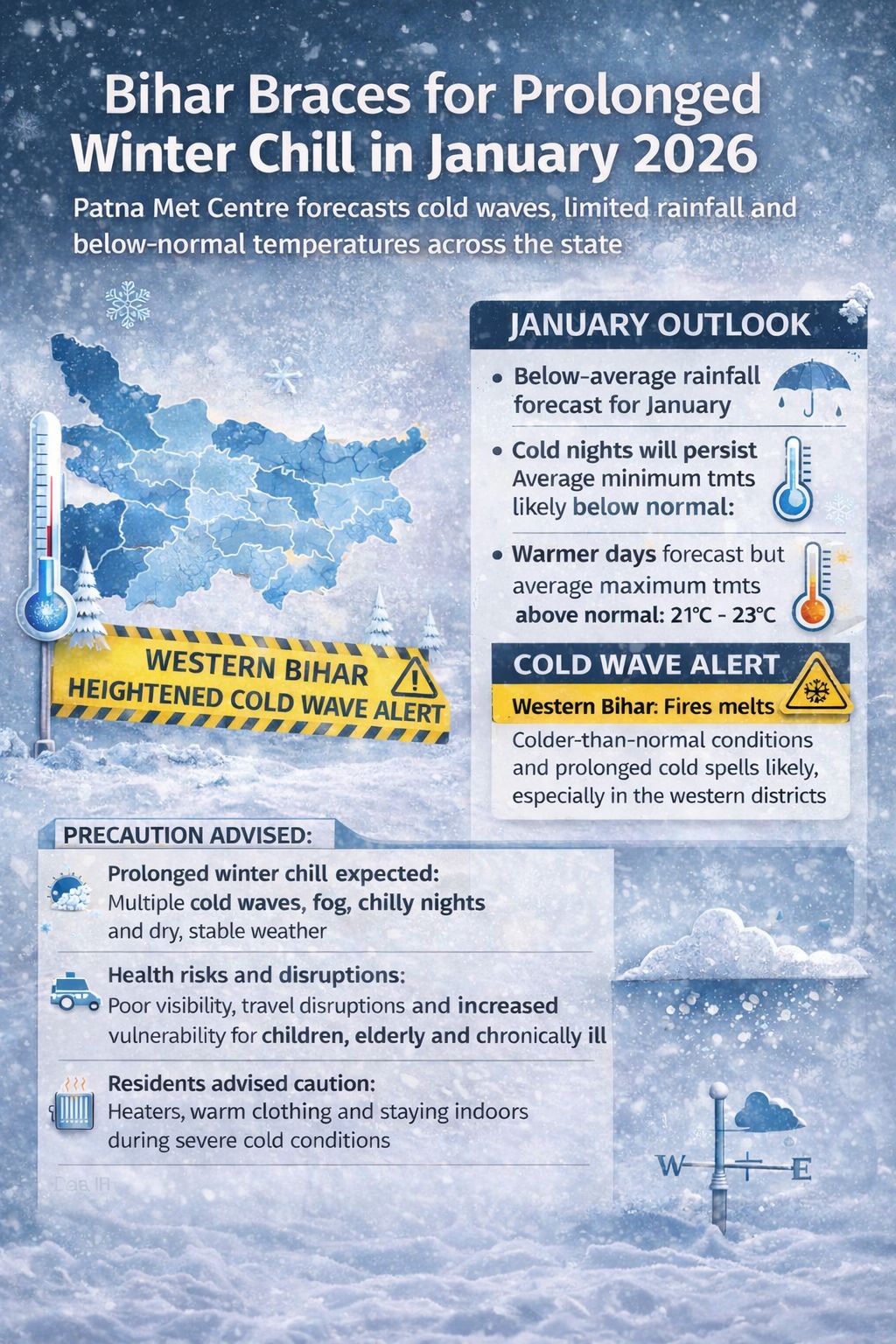
Patna: As Bihar goes through the heart of its winter season, the Patna Meteorological Centre has warned that January 2026 is likely to remain dominated by cold conditions, with below-normal rainfall, colder-than-usual nights and a heightened risk of cold waves, especially in the western parts of the state.

According to the monthly outlook issued on January 1, the state is expected to receive less than average rainfall during January, a period that typically records an average of 9.4 mm of precipitation. Large parts of Bihar may see little to no rain, prolonging dry but intensely cold conditions.
Cold nights to persist, despite marginally warmer days

The forecast indicates a mixed temperature pattern. While daytime maximum temperatures across most of Bihar are likely to remain slightly above normal, ranging between 21°C and 23°C, minimum temperatures are expected to stay below average, particularly during the night and early morning hours.
This contrast is typical of peak winter in the Indo-Gangetic plains, where clear skies and dry air allow heat to dissipate rapidly after sunset, intensifying night-time chill even when afternoons feel relatively milder.
Data from December 2025, reviewed in the bulletin, underscores the severity of the ongoing winter. Bihar recorded six severe cold days and 11 cold days last month, with the lowest minimum temperature dipping to 5°C in Gaya on December 31. Patna itself ended December with a minimum of 9.4°C, reflecting sustained cold stress in urban areas as well.
Western Bihar on cold-wave alert
Meteorologists have flagged western Bihar as a region of concern this month. The bulletin’s cold-wave duration outlook suggests that cold-wave occurrences in western districts could exceed the normal frequency, while the rest of the state may experience conditions closer to the seasonal average.
Cold westerly and north-westerly winds are expected to continue influencing the region, particularly during the first half of the month, worsening the perceived cold despite stable daytime temperatures.
Fog, visibility and public impact
Although the monthly bulletin focuses on temperature and rainfall trends, officials note that January typically coincides with dense fog episodes, especially in north and central Bihar. These conditions often disrupt road, rail and air traffic, while also aggravating health risks for children, the elderly and those with respiratory conditions.
With rainfall unlikely to provide relief, authorities may need to continue school schedule adjustments and advisories if cold-day conditions intensify.
A winter that demands caution
Meteorologists caution that while January does not signal extreme anomalies, the combination of dry weather, cold nights and periodic cold waves could prolong discomfort across the state.
“The outlook suggests a continuation of winter stress rather than a sudden escalation,” an official at the Patna Met Centre noted, adding that residents should remain prepared for sharp night-time cooling and early-morning cold spells through much of the month.
As Bihar settles into January, the forecast makes one thing clear: winter is far from over, and caution remains the best defence against the cold.