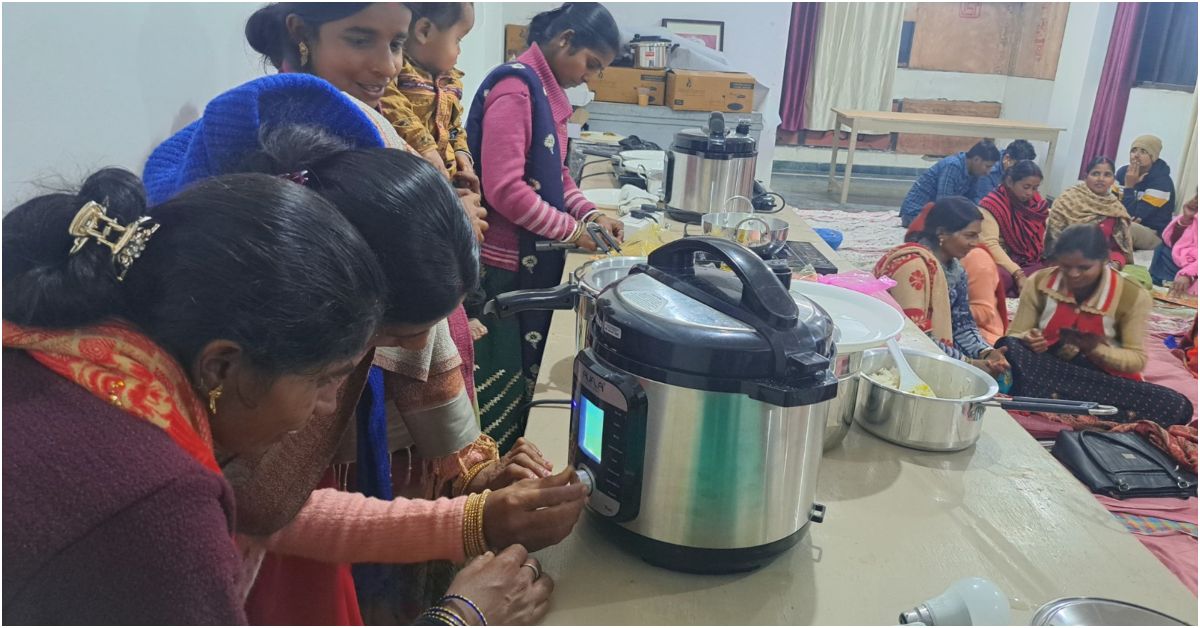
Patna: Women from Bihar’s self-help groups, widely known as “Jeevika Didis”, are set to expand their role in the state’s rural economy by manufacturing induction stoves, in a government-backed initiative aimed at training 7,000 women in technical skills.

The programme marks a shift from their earlier work producing solar panels and LED bulbs, positioning them at the forefront of clean energy solutions in rural households. Officials say the move is intended both to address cooking fuel shortages in villages and to enhance women’s technical and economic empowerment.
The project will be implemented by Jeevika Women Initiative for Renewable Energy and Solution Private Limited, based in Gaya. Engineers from the Indian Institutes of Technology in Bombay and Delhi will provide specialised training, equipping participants with the skills needed to manufacture, repair and maintain induction stoves.

Himanshu Sharma, chief executive officer of Jeevika, said women with an aptitude for business and interest in engineering were being identified for the programme. Once trained, he added, they would transition from informal labour to skilled technicians, a shift expected to increase their earning potential.
The initiative builds on efforts launched in January 2020 under the “Clean Energy, Empowered Women” vision, when a dedicated enterprise was set up in Gaya to promote renewable energy products. Since then, more than 7,000 women have joined the organisation, producing and supplying solar lamps and panels across Bihar.
Officials say the introduction of induction stoves could help ease dependence on cooking gas, which remains scarce or costly in many rural areas. The stoves are expected to be competitively priced and supported by local repair services, making them more accessible to village households.
Early signs of demand have already emerged. During Bihar Diwas celebrations at Gandhi Maidan, stalls selling the stoves reported strong interest, with units sold out within days and further orders placed.
With demand rising in both rural and urban areas, authorities expect the locally manufactured induction stoves to enter the wider market soon, offering an affordable and sustainable alternative for cooking.