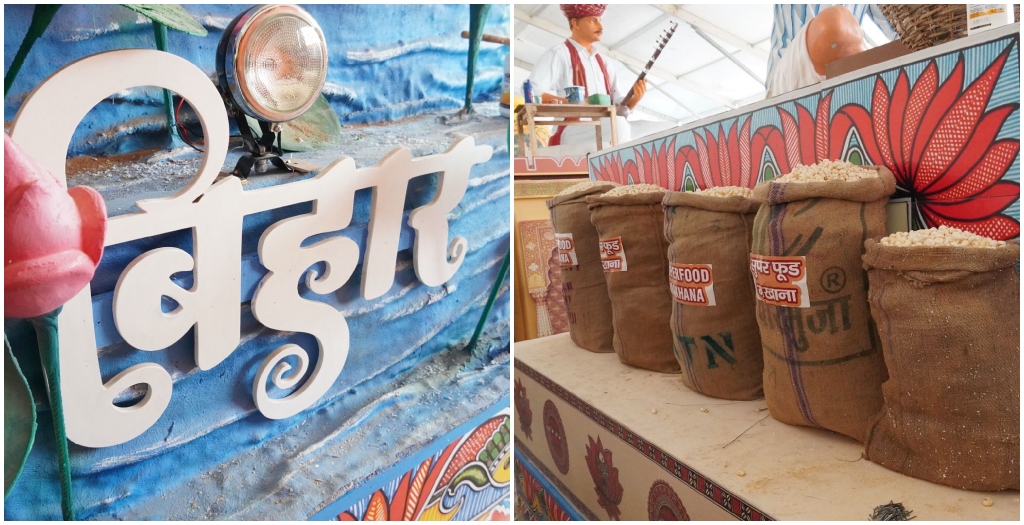
Patna: Bihar is presenting its much-loved superfood, makhana, in a grand tableau at Bharat Parv this Republic Day. The event, held at the Red Fort from January 23 to 31, is organised by the Ministry of Defence to celebrate the country’s cultural and economic diversity. Bihar’s tableau, themed “Makhana: A Superfood from Local Ponds to the Global Plate,” tells the story of how a simple pond crop from Mithilanchal has become a globally recognised product. The display celebrates the hard work of farmers, women labourers, and local entrepreneurs who have made makhana a symbol of Bihar’s culture and progress.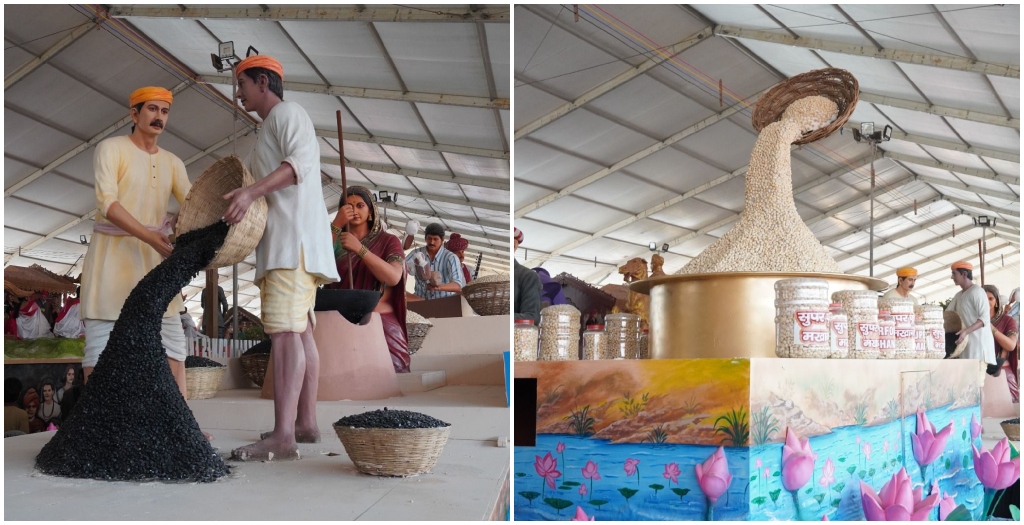

Makhana, also called fox nut or lotus seed, has been cultivated in Bihar for centuries and has always been a part of local cuisine and religious rituals. In recent years, it has gained recognition as a superfood worldwide because it is rich in protein, calcium, fiber, and antioxidants, and is helpful for managing diabetes, weight, and bone health. Bihar produces about 85–90% of the world’s makhana, and the GI tag awarded to Mithila Makhana in 2022 has given it a unique identity in international markets. The tableau captures this journey from traditional ponds to global tables, combining culture, skill, and science in one display.
The visual display is divided into two main sections. One shows tractors moving through lotus-covered ponds, with white makhana being harvested, along with the GI tag symbol and Mithila paintings on the borders. The other shows traditional methods of processing makhana: women roasting it on clay stoves, and men popping it with wooden tools. This representation highlights the role of women in agriculture, the importance of local skills, and the labour behind every stage of production. It also reflects how traditional knowledge can be combined with modern practices to create products that reach national and global markets.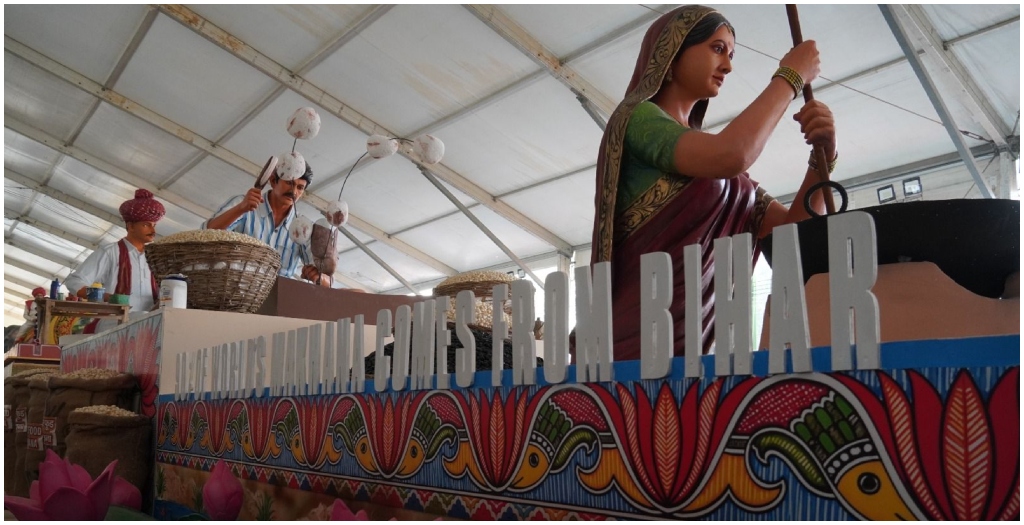

The importance of makhana is not only cultural but also economic. The Union Budget 2025–26 announced the creation of a National Makhana Board in Bihar and a development package of around Rs 475 crore to support production, processing, value addition, and marketing. These measures are expected to increase the income of farmers and make Bihar’s makhana more competitive globally. Bihar’s tableau at Bharat Parv conveys a clear message: a simple pond product has transformed into a global commodity through tradition, innovation, and hard work. It tells the story of how local livelihoods, women’s participation, and entrepreneurship can take a product from rural Bihar to the world stage.