Kaimur: As the calendar turns to a new year, thousands of visitors flock to Mundeshwari Dham, a site that marries religious devotion with natural beauty. The historic temple, one of India’s oldest, attracts both pilgrims and picnickers, offering a unique start to January 1.

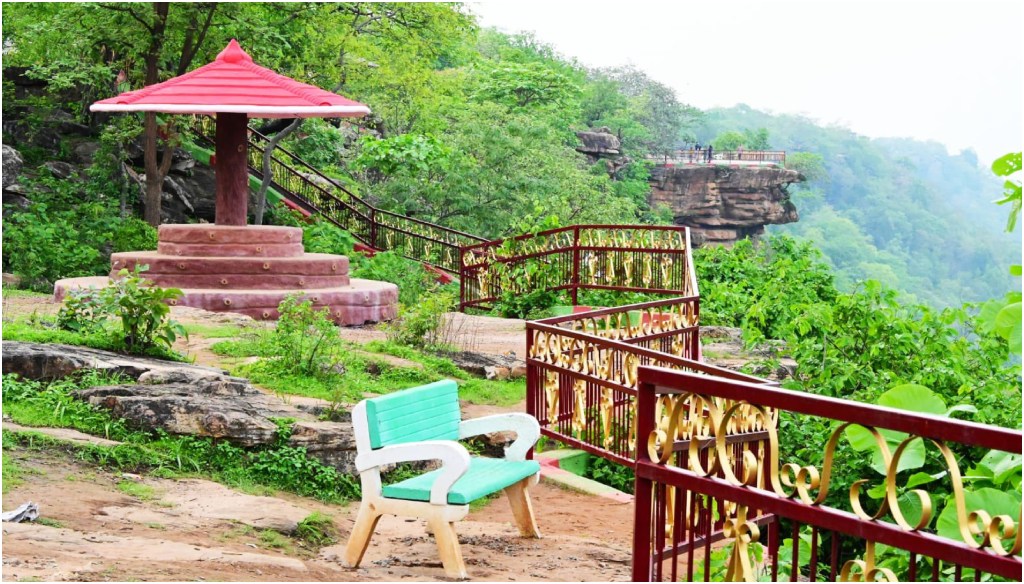
On New Year’s Day, the temple complex sees long queues of male and female devotees waiting to offer prayers, while the surrounding areas—especially Panwara Hill—buzz with families and friends enjoying vegetarian picnics. Traditional dishes such as litti-chokha, paneer-mushroom curry, pakoras, jeera rice, and pulao are commonly prepared and shared.

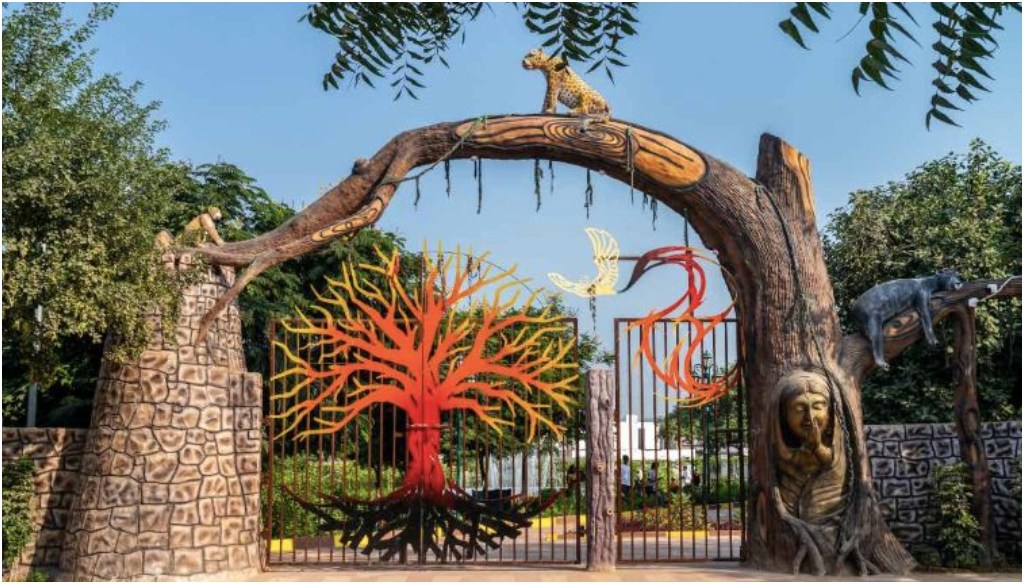
Adjacent to the temple lies the Maa Mundeshwari Wildlife Eco Park, inaugurated by Chief Minister Nitish Kumar in September 2024. Spanning 14 acres, the park blends environmental conservation with cultural heritage. Visitors encounter statues of tigers, elephants, deer, bears, monkeys, and peacocks amid lush greenery, vibrant flowers, and traditional architectural motifs. A section of the park dedicated to monkeys features three statues—one covering its ears, another its eyes, and the third its mouth—symbolising the timeless message: “hear no evil, see no evil, speak no evil.”
The park has become a major tourist attraction, drawing thousands each month. Since April, visitor numbers have ranged from 17,686 in September to 62,161 in June, surpassing 300,000 in the current financial year.
Designed to promote both physical well-being and spiritual awareness, the park incorporates sculptures of Surya Namaskar (Sun Salutation) and colourful rainbow pergolas at its entrance, representing peace and diversity. The main gate, an arch of rocks adorned with wildlife sculptures, and the secondary entrance, inspired by tree trunks and historical figures, create an immersive natural experience. Bamboo and metal footbridges, alongside tree-shelter structures, combine environmental education with wildlife conservation.
Mundeshwari Dham and its eco-park stand as a testament to Bihar’s ability to preserve cultural heritage while promoting ecological awareness, offering visitors a serene yet engaging retreat at the heart of the state’s scenic Kaimur district.