Patna: Bihar has registered more than 5 times jump in consumption of electricity in the past two decades during the NDA regime.

As per energy department official data, the annual per capita consumption of electricity rose to 401 units in 2026 from meagre 75 units in 2005, the year when NDA government first came to power in the state.
Thus, the state registered 5.3 times per capita power consumption in the past two decades.

The per capita power consumption was 134 units in the year 2012.
Electricity consumption per capita measures the average annual electricity used by a single person in a region, calculated by dividing total power consumption by the number of power consumers.
The universal electrification of villages and households, urbanisation, industrialisation have also played a crucial role in increasing per capita consumption, official sources said.
Notably, the government has already achieved the target of electrifying every nook and corner of the state in October 2018 under “Har Ghar Bijli” scheme.
The number of electrified villages currently is 39,073 in the state. However, the number of electrified villages was 14,020 in 2005 and 33,850 in 2012.
INCREASE IN POWER SUPPLY IN HOURS
At present, the average power supply has increased to 23 to 24 hours in urban areas and 22 to 23 hours in rural areas. The average power supply used to be 10 to 12 hours in urban areas and 05 to 06 hours in rural areas in 2005. The supply was 14 to 16 hours a day in urban areas while it used to be 08 to 10 hours in rural areas in 2012
POWER CONSUMERS INCREASED TO 2.22 CRORE FROM 17.3 LAKH
The number of consumers has increased to 2.22 crore from 17.3 lakh in 2005. The number of consumers rose to 38 lakhs in 2012. Of 2.22 crore consumers, around 90 lakh smart prepaid meters have been installed across the state so far. This included both domestic and commercial power consumers.
BIHAR WITNESSES A RECORD 9426 MW POWER DRAWAL IN JULY THIS YEAR
The state, which once regarded as power starved state, has witnessed a record power supply of 9426 MW on July 04 last (2026) which is more than 13 times of what it was in 2005, as per energy department official data.
The state had recorded maximum power drawal of 8822 MW in July last year (2025) while the maximum power supply, the state could draw in 2012 was 1751 MW.
Similarly, Patna, the state capital, too witnessed a record power supply of 933 MW on June 21 last (2026). The capital used to draw around 400 MW of power in 2005 which further rose slightly by 550 MW in 2015.
Sensing that the state including Patna may break their own past record of power supply this summers, the official source said that the transmission and two distribution companies of South Bihar Power Distribution Company Ltd & North Bihar Power Distribution Company Ltd have already made their arrangements by further strengthening transmission and distribution networks to deal with the situation.
The availability of power supply has given the government the option of giving 125 units of free electricity to its 1.86 crore domestic consumers. The decision to give 125 units of free electricity was taken in July, 2025.
The NDA government, which took the reins in the state in 2005, started from scratch in almost every field including the power sector and took umpteen measures to improve the overall power scenario of the state. Be it the case of increasing power supply, per capita power consumption, phenomenal rise in numbers of power consumers, reducing AT&C losses, strengthening transmission & distribution lines.
SETTING UP NEW GSS & PSS TO AUGMENT POWER SUPPLY
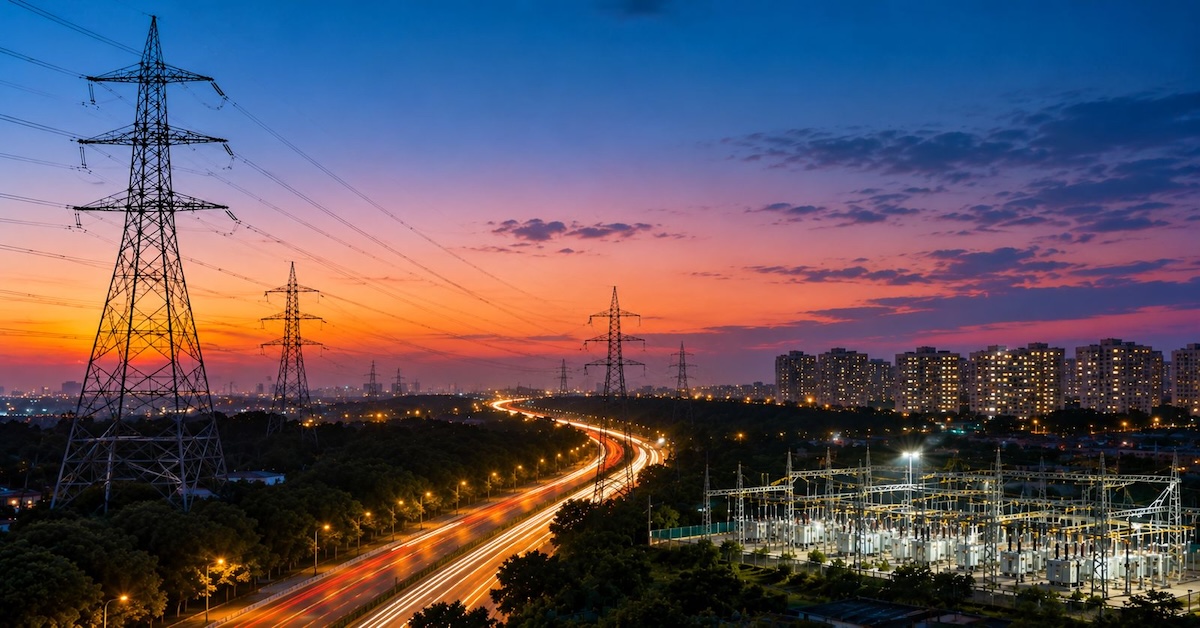
Grid Sub-Stations (GSS) and Power Sub-Stations (PSS) were built to ensure better, smooth and quality power supply. The number of GSS increased to almost four times to 175 in 2026 while it was merely 45 in 2005 and remained at 45 in 2012 also.
The number of PSS rose 3.5 times to 1283 in 2026. The number was 368 and 545 respectively in 2005 and 2012.
The number of Distribution Transformers (DTs) has increased to 10.6 times to 3.80 (3,80,185) lakh besides expanding the transmission lines of up to 21,822 circuit. It is the DT from which power consumer is supplied power to his/her household.