Muzaffarpur/Patna: A former head of the science department at Babasaheb Bhimrao Ambedkar Bihar University has developed a patented device that promises a safer and more sustainable way to protect homes, warehouses and farms from rats, a persistent problem that causes extensive losses across India.

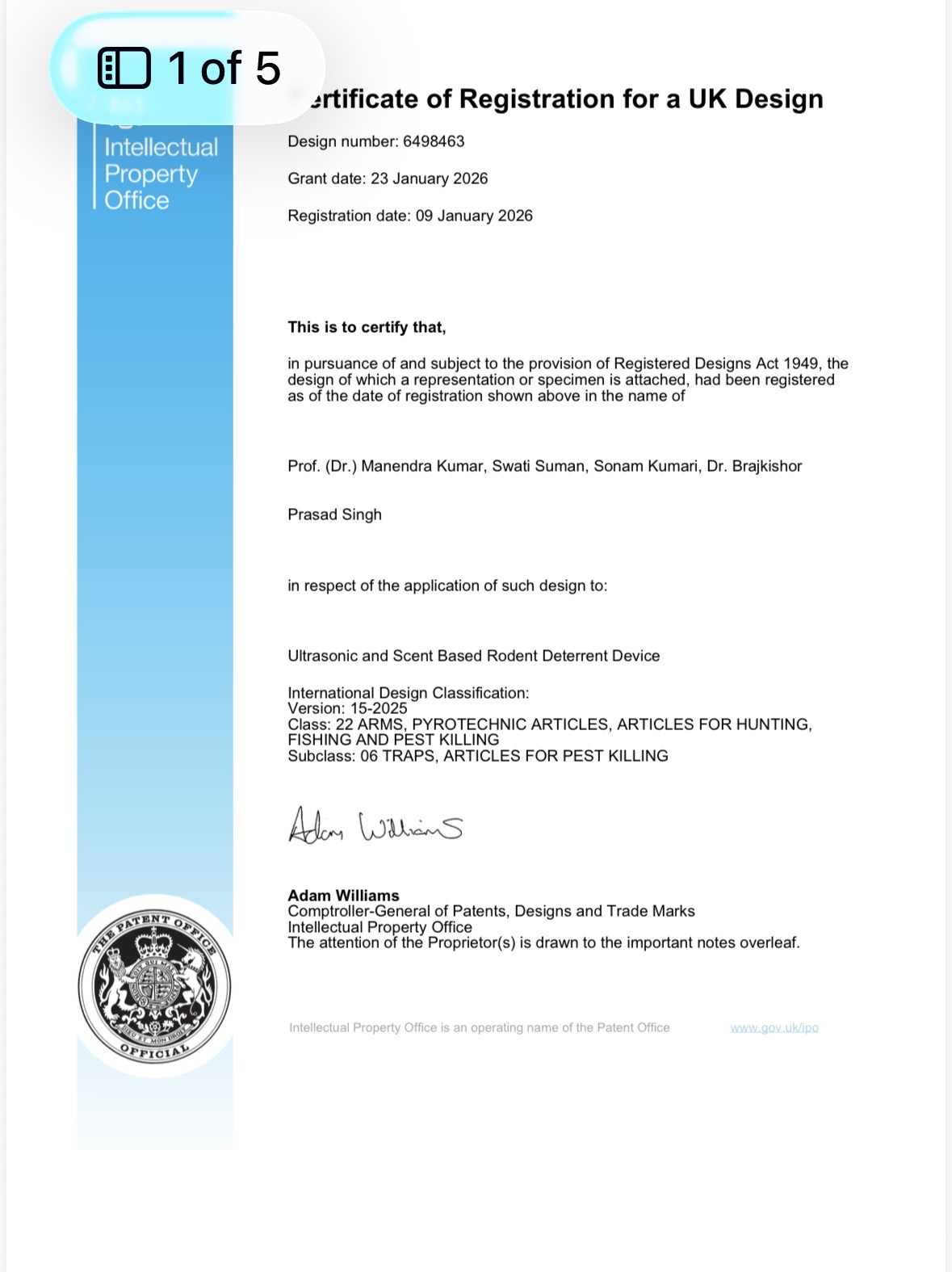
Professor Manendra Kumar, who previously led the science department at the university, said the invention—named the Ultrasonic and Scent-Based Rodent Deterrent Device—has received a patent in the United Kingdom. The approval was granted on January 24, with the patent certificate issued two days later.
Rats are estimated to cause damage worth Rs 40,000–45,000 crore every year to crops stored in fields and warehouses, according to government data. Beyond economic losses, rodents are also known carriers of diseases such as plague, leptospirosis, salmonellosis and Lassa fever.

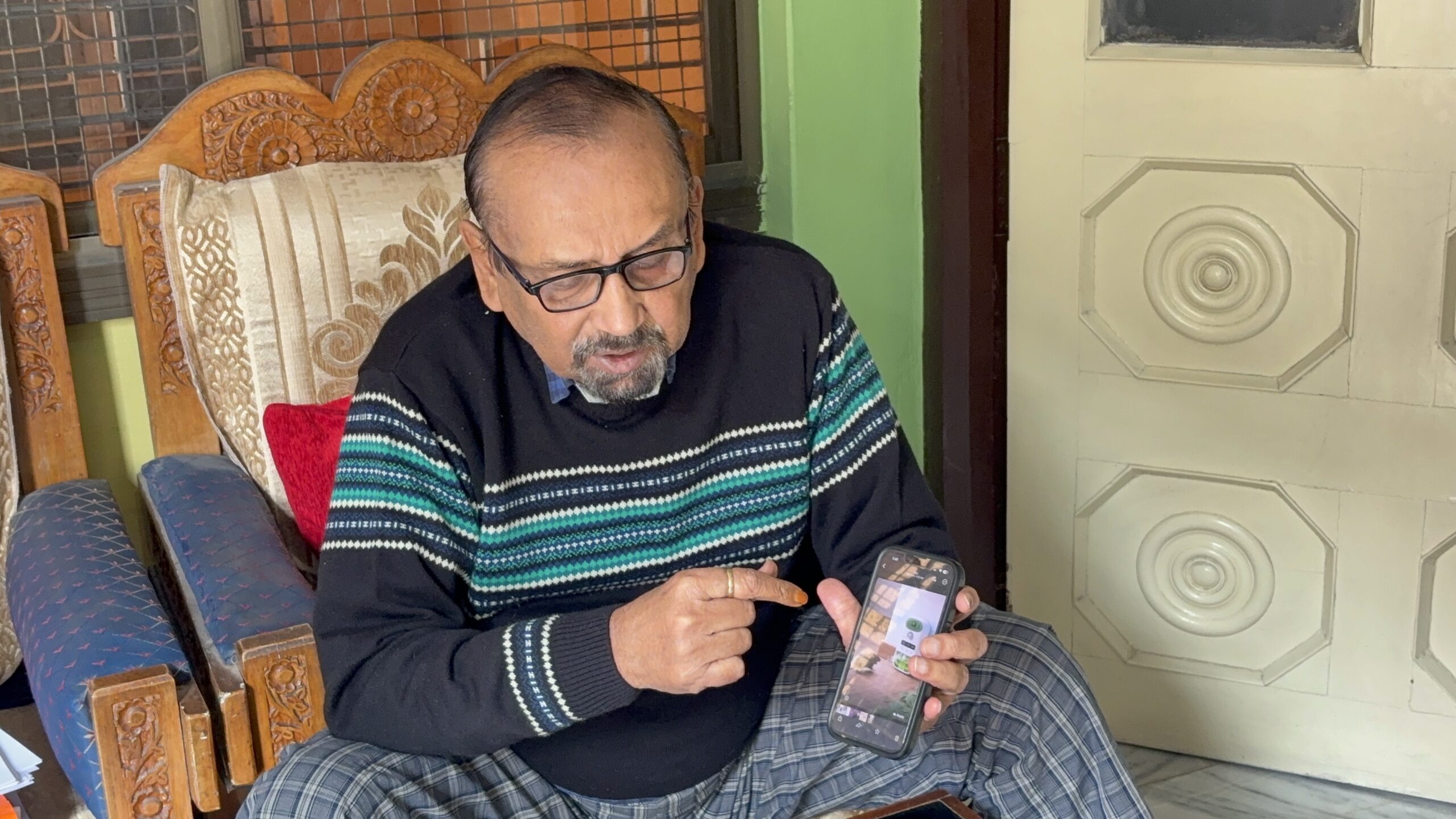
Kumar said conventional rodent control methods often rely on poisons and chemicals that pose risks to children, pets and the environment. “This device is completely poison-free and safe,” he said, adding that it had been designed as a long-term alternative to harmful pest control practices.
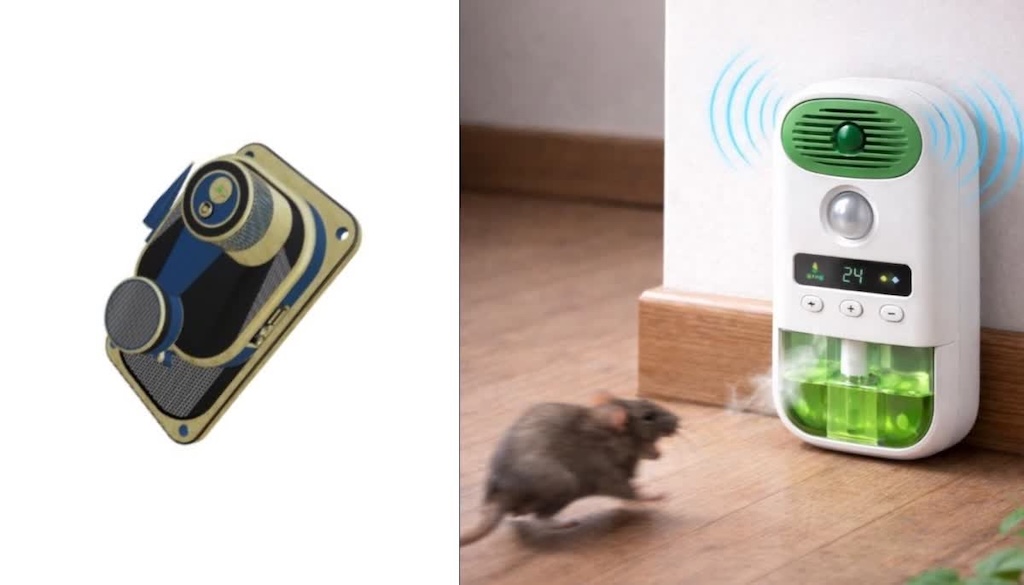
The device works by emitting ultrasonic sound waves in the range of 20,000 to 60,000 hertz—frequencies that are inaudible to humans but highly disturbing for rats. While most people cannot hear sounds above 20,000 hertz, rats are extremely sensitive to higher frequencies, forcing them to flee areas where the sound is present.
According to Kumar, the deterrent is effective within a radius of 20 to 30 feet. The ultrasonic output automatically fluctuates to prevent rodents from becoming accustomed to the sound. The device also includes a passive infrared (PIR) motion sensor to detect rat activity, with a microcontroller regulating sound and scent release.
In addition to sound, the machine emits mild natural scents from essential oils such as peppermint and citronella. These are released in micro-doses through a cartridge system, creating discomfort for rodents without affecting humans. “The combined pressure on hearing and olfactory senses makes it difficult for rats to remain in the area,” Kumar said.
Designed for low-power consumption, the device can run on batteries or solar energy, making it suitable for rural and off-grid locations. Kumar said the projected cost of the device would be around Rs 1,000, raising hopes that it could be widely adopted by farmers, warehouse operators and households.
With the UK patent secured, Kumar said the next step would be to explore large-scale production and deployment, potentially offering a cost-effective solution to one of India’s most persistent agricultural and public health challenges.