Patna: The Bihar Prohibition and Excise Department has rolled out a new Standard Operating Procedure (SOP) to standardise the destruction of seized liquor and the confiscation or release of vehicles and land linked to liquor offences, aiming to end years of inconsistent practices across districts.

Under the SOP, authorities must decide whether a seized vehicle or parcel of land will be confiscated or released within a defined window of 30 to 90 days. Owners will be given an opportunity to present their case during a formal hearing, a step the department says is essential to ensuring due process and legal clarity.
The move follows concerns that, since the implementation of prohibition, districts have followed varying procedures for storing, destroying and auctioning seized items, creating practical delays and legal complications. The department said the new SOP was designed to make the process “clear, transparent and efficient”.

Confiscation proceedings will now begin from the date of seizure. A detailed proposal must be sent to the district magistrate, accompanied by a liquor test report, a report from the district transport officer, and proof that notice has been issued to the vehicle or landowner. Any deficiencies identified in the proposal must be rectified before further action.
If, after the hearing, authorities establish that a vehicle or land was used for transporting or facilitating illegal liquor, a confiscation order will be passed in accordance with the law. The entire process must be completed within the 30–90 day timeframe stipulated in the Act.
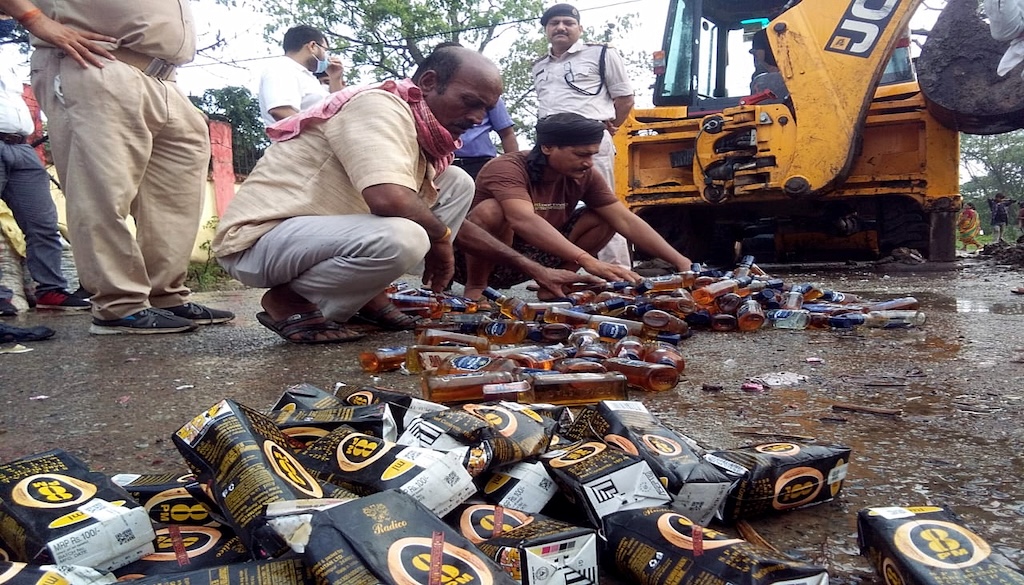
The SOP also seeks to address long delays in the destruction of seized liquor. Collectors and designated officers have been instructed to ensure that liquor is not stored for extended periods. Once the chemical examiner’s report is received, the liquor must be destroyed within 15 days of seizure.
To tighten documentation, Section 30 of the Act now requires seizure lists to be prepared in a prescribed format, with brand-wise and batch-wise details of the liquor. Investigating officers must prepare two samples of the seized liquor: in cases involving foreign liquor, one sample will be sent to a product chemist for analysis; for domestic liquor, one will go to the district excise office. A third sample will be securely stored with the case file.
After the analysis report is received, the investigating officer will submit a proposal for a destruction order to the superintendent of police or the excise superintendent, who will forward it to the district magistrate with a clear recommendation. The district magistrate will then issue a detailed order specifying the date and location of destruction and appoint an executive magistrate to oversee the process.
The SOP mandates that destruction sites must be environmentally safe and located away from private property. The entire operation will be video recorded, with footage preserved as part of the official record.