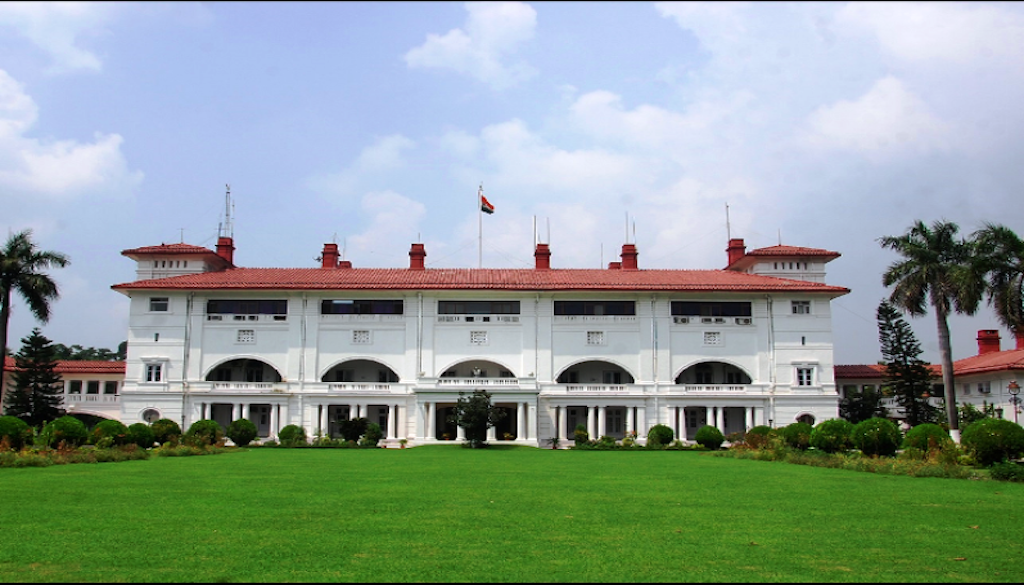
Patna: Bihar’s Raj Bhavan has been officially renamed Bihar Lok Bhavan, following a directive from the central government to replace colonial-era names of gubernatorial residences with terms reflecting democratic values. A notification issued on December 1, signed by the Governor’s Principal Secretary, R. L. Chongthu, stated that the new name would take immediate effect for all official purposes.

The decision is part of a wider Union Home Ministry order, issued on November 25, 2025, mandating that Raj Bhavans in states be retitled as Lok Bhavan, while those in union territories will be known as Lok Niwas. Officials said the move is intended to align key institutions with “people-oriented governance” and move away from terminology rooted in British rule.
Names such as Raj Bhavan and Raj Niwas trace back to the colonial administration, when these buildings served as the residences of governors and other senior officials. Since 2014, the Narendra Modi government has overseen a series of renaming initiatives involving institutions, roads, and public buildings viewed as symbols of colonial heritage.

In Patna, the transition to the new name is already under way. Nameplates, signboards and official documentation are being updated, and the Raj Bhavan’s website has been modified to reflect its new identity as Bihar Lok Bhavan.
The building itself carries a long history. Its foundation stone was laid in 1913 by the then Viceroy, Lord Hardinge, who inaugurated it three years later, on 3 February 1916. On the same day, he also inaugurated the Patna High Court and the Chief Secretariat building. The architect, J. K. Munif of New Zealand, designed these structures at a time when Bihar and Odisha were part of a unified province; Bihar became a separate state in 1912 after its partition from Bengal.
With the renaming now formalised, officials say Bihar Lok Bhavan marks a symbolic step toward reframing constitutional institutions in a post-colonial, democratic context.