
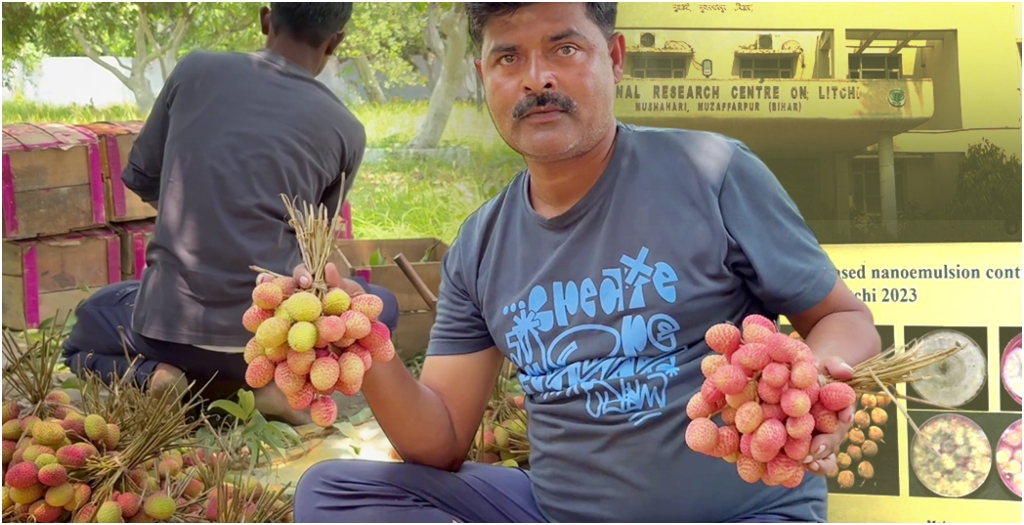
Patna: A farmer from Muzaffarpur has developed a herbal preservation process that he says can keep Bihar’s famed Shahi litchi fresh for up to 25 days, offering a possible solution to one of the fruit’s biggest commercial challenges.

The innovation comes as Shahi litchi, one of Bihar’s most recognised horticultural products, continues to face transport limitations due to its short shelf life. Once harvested, the fruit typically begins to deteriorate within three to four days, often forcing growers to sell quickly at lower prices.
Krishna Gopal, a farmer from a litchi-growing family in the district, said the method was developed after several years of research and field trials. He has named the process ‘Veda Fresh’ and said a patent application has been filed with the Government of India.

Six Years Of Research
Gopal said the project began as herbal research rather than fruit preservation. He said his team was initially studying medicinal plants before scientists at the National Research Centre on Litchi suggested applying the work to litchi storage.
According to him, the team then spent nearly six years studying the fruit’s lifecycle, skin properties and post-harvest decay patterns. He said fungal infection was identified as the main cause of spoilage after harvest.
The process uses extracts from selected medicinal plants known for antifungal properties. Gopal said phytochemicals were isolated from these plants and applied to harvested litchis, which reduced fungal growth and significantly increased storage time.
How The Process Works
Under the process, harvested litchis are first washed thoroughly before being treated with the herbal solution. Gopal said one litre of the solution is mixed in about one tonne of water, which is then used to process roughly three tonnes of fruit.
After treatment, the fruit is dried and packed in specialised packaging before being pre-cooled at temperatures between 15°C and 18°C. He said controlled storage conditions are essential to maintaining freshness during transportation.
The process requires access to a pack house and cold-chain infrastructure, which may limit immediate adoption by smaller farmers unless organised collectively.
Cost And Market Potential
The additional cost of using the process is about Rs 25 per kg, according to Gopal. This includes washing, treatment, pre-cooling and packaging.
He said the added expense could still improve returns, as farmers may be able to sell in higher-value markets outside Bihar and ship the fruit to other states or overseas without the current time pressure.
Industry observers say the innovation could strengthen the trade of Bihar’s Shahi litchi if it proves viable at scale. A longer shelf life may also support export ambitions for the fruit, which remains a major agricultural identity marker for the state.