Patna: The Swachh Survekshan 2026 survey has officially started in Bihar under the Swachh Bharat Mission (Urban), giving citizens a chance to directly share their views on the cleanliness of their cities. The survey will be conducted in all urban local bodies across the state from April 26 to May 24. During this period, residents will be asked to answer 13 simple questions related to sanitation, waste collection, public toilets and the performance of local authorities.

The Ministry of Housing and Urban Affairs has released tentative dates for the survey and has made this year’s process more detailed and effective. The Patna Municipal Corporation has completed its preparations and appealed to people to participate in large numbers. Citizens can submit their feedback through the SBM-Urban portal, the Swachhata App and other state or city-level integrated applications. Officials have also been instructed to promote the campaign widely so that more people become aware of it and take part.
This year, the government has introduced a system that allows citizen feedback to be collected throughout the year. This means authorities will be able to continuously monitor how well cities are managing cleanliness and waste disposal. The importance of public opinion has also increased in the evaluation process. The weightage of citizen feedback has been raised from 32% to 35%, and 1,000 marks have been set aside for citizen feedback and grievance redressal. This makes public participation more important than ever in deciding the final rankings of cities.

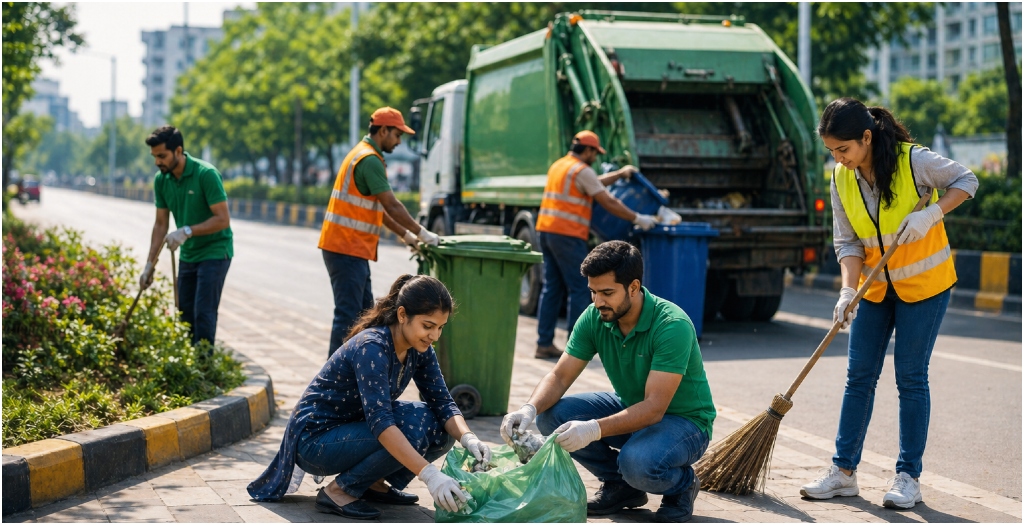
The theme of Swachh Survekshan 2026 is “Swachhata Ki Nai Pahal – Badhaen Haath, Karen Safai Saath”, which means “New Initiatives in Cleanliness: Lend a Hand, Clean Together”. Through this theme, the government wants to encourage citizens to work together with municipal authorities to make cities cleaner and better managed. Officials believe public support and awareness are necessary to improve sanitation standards.
The 13 questions in the survey focus on daily waste collection from homes and shops, segregation of dry and wet waste, street cleaning, garbage piles, public space cleanliness, open defecation, public toilet maintenance and complaint handling. Citizens will also be asked whether they know about Reduce, Reuse and Recycle centres and how they report cleanliness-related issues to authorities. The answers will help the government understand the real condition of sanitation services in each city.
Officials say the survey is not just about rankings but about improving the quality of life for people living in cities. With citizens now playing a bigger role in the process, Bihar’s performance in Swachh Survekshan 2026 will depend on both public cooperation and the efforts of local bodies to maintain cleanliness.