Patna: Planning a winter getaway? As temperatures drop and the fog settles across Bihar, popular destinations around Patna are drawing visitors seeking a mix of history, nature and tranquillity.

From November to February, the region’s crisp mornings and mellow sunshine make for ideal travel conditions. Within a 50–150 km radius of the capital, sites such as Rajgir, Nalanda, Bodh Gaya, Pawapuri, Vaishali and Maner Sharif offer an accessible and varied winter break for families, history enthusiasts and nature lovers.
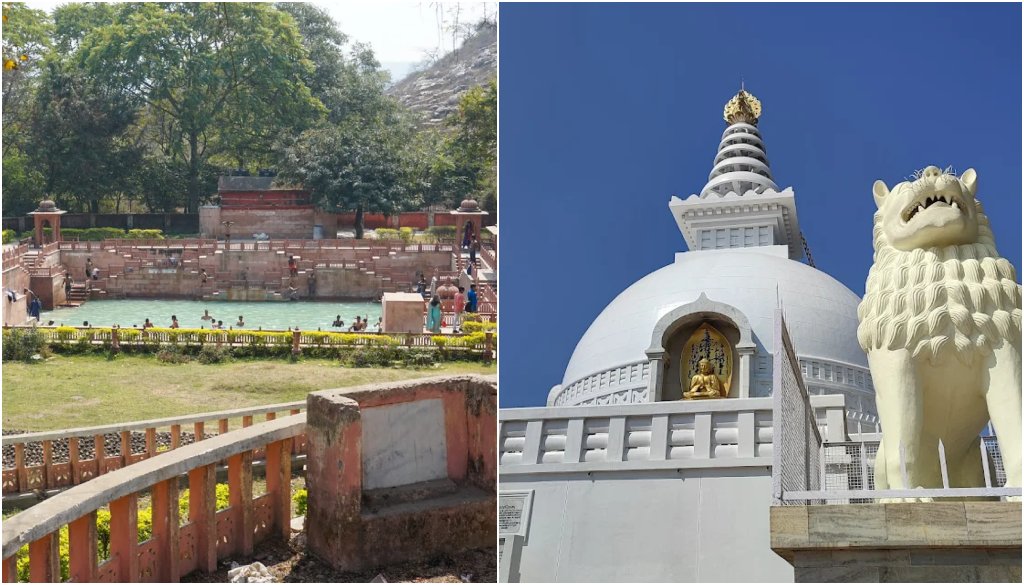
Rajgir, about 100 km from Patna, remains one of the most visited spots. Encircled by five hills, the former capital of the Magadha Empire combines natural beauty with archaeological depth. The Vishwa Shanti Stupa, built in 1978 with support from a Japanese Buddhist organisation, continues to draw crowds who arrive via the ropeway. Nearby attractions include the Son Bhandar caves, the Japanese temple, Venuvan, Veerayatan, the Saptaparni caves, and Rajgir’s nature and zoo safari. The newly built glass bridge and the Ghora Katora lake — home to a towering marble statue of the Buddha — have added to its appeal.

The town’s hot springs remain especially popular in winter, with visitors flocking to Brahmakund at dawn. According to local belief, the mineral-rich water helps ease fatigue and alleviate skin ailments. Out of 22 ponds in the area, four contain naturally heated water.
Forty kilometres further north, Vaishali offers a quieter experience. Known as the birthplace of democracy and one of ancient India’s 16 Mahajanapadas, the area is steeped in Buddhist and Jain history. The Ashoka Pillar, the Japanese temple and the Vaishali Museum highlight its archaeological importance. The town is also associated with the Buddha’s final sermon and is revered as the birthplace of Mahavira.
Nalanda, roughly 90 km from Patna, continues to be a major attraction. The ruins of the ancient university — once home to thousands of students and teachers — retain a solemn grandeur. The Chinese traveller Xuanzang studied and taught here in the 7th century, and the site is closely linked to Ashoka’s patronage of Buddhist learning.
Bodh Gaya, where the Buddha attained enlightenment beneath the Bodhi tree, remains the state’s most significant religious destination. The Mahabodhi Temple complex, the sacred Peepal tree and the Tibetan monasteries attract large numbers of pilgrims in winter, especially during the Kalachakra ceremonies.
Pawapuri, 60 km east of Patna, marks the place where Mahavira attained nirvana. Its Jal Mandir — a marble shrine surrounded by a lake — is one of the most serene spots in the region, particularly at sunset.
Closer to the capital, Maner Sharif stands as a symbol of Bihar’s Ganga–Jamuni culture. The tomb of Sufi saint Makhdum Shah Daulat, commissioned in the early 17th century, is regarded as one of the state’s finest Mughal-era structures. Set near the meeting point of the Ganga, Son and Saryu rivers, the dargah continues to attract devotees and tourists alike.
In Punpun, Bihar’s first cable-suspension bridge — modelled on Rishikesh’s Lakshman Jhula — has become a new attraction. The 325-metre bridge, inaugurated in September, spans the Punpun river and is supported by 18 cables and a 100-foot pillar.
Further south in Jehanabad district, the Barabar and Nagarjuni hills, known for their ancient rock-cut caves, are being developed as major tourism sites. New ropeways from Patal Ganga and Gau Ghat are planned to provide easier access for visitors and pilgrims heading to the hilltop Shiva shrine.