Patna: A young farmer from Patna has been reaping good profits for the past two years by adopting Israeli farming technology that delivers water and fertilizers directly to the roots of plants, improving yield and reducing wastage.

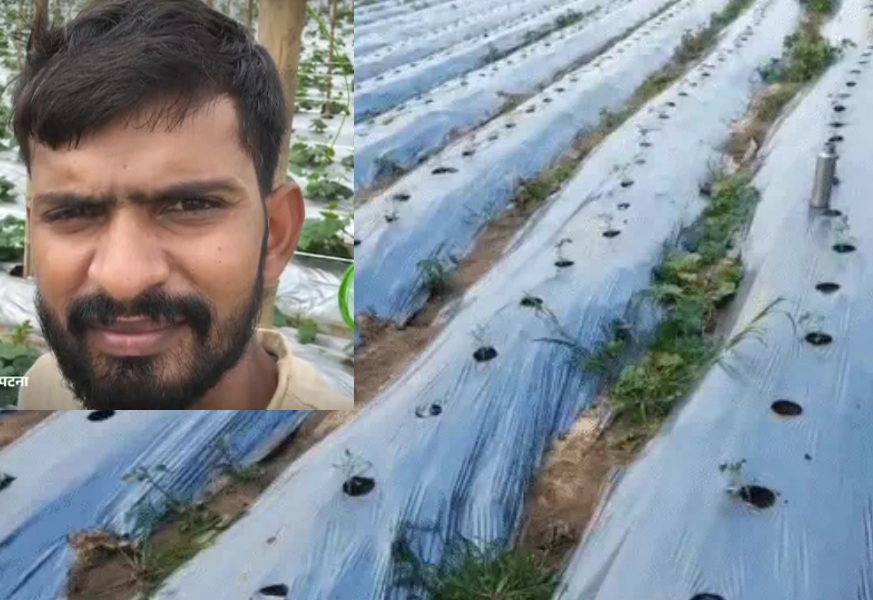
Akash Kumar, a resident of Arap village in Bikram block, was earlier involved in the poultry farming business. Inspired by the efficiency of Israeli agricultural methods, which he learned about through a friend and YouTube videos, he switched to vegetable cultivation using this system.
How the Technology Works

The method involves ridge-based farming, with three-foot ridges fitted with 16 mm plastic pipes. Water for irrigation flows through these pipes, which have holes every 16–18 inches, ensuring a precise supply of water mixed with liquid fertilizers directly to plant roots. The process also reduces the need for manual labour.
The technology costs about ₹36,000–₹40,000 to install per acre. Once set up, it can be used for up to three crops, bringing the average per-crop cost down to ₹20,000–₹22,000 per acre, including expenses on irrigation and fertilizers.
Advantages Beyond Irrigation
A key feature of this system is mulching, where the field is covered with a 25-micron plastic sheet. This prevents weed growth, retains soil moisture, and helps maintain soil temperature. Between the ridges, “vessel doses” containing a mix of cow dung, potash, DAP, micronutrients, and soil are placed, serving as a nutrient-rich base for plants such as tomatoes, cucumbers, capsicum, and beans.
Weather-Resilient Farming
Akash says that crops grown using this method are less vulnerable to adverse weather conditions. “There is almost no chance of the crop getting spoiled, and the produce finds easy acceptance in the market,” he noted. On average, he earns a minimum net profit of 25% over the cost of cultivation, with higher profits in good seasons.
According to Akash, this approach could help address the uncertainty that drives many farmers away from agriculture. “This technology is the solution to farming risks. It saves water, reduces fertilizer use, and ensures consistent yield,” he said.