
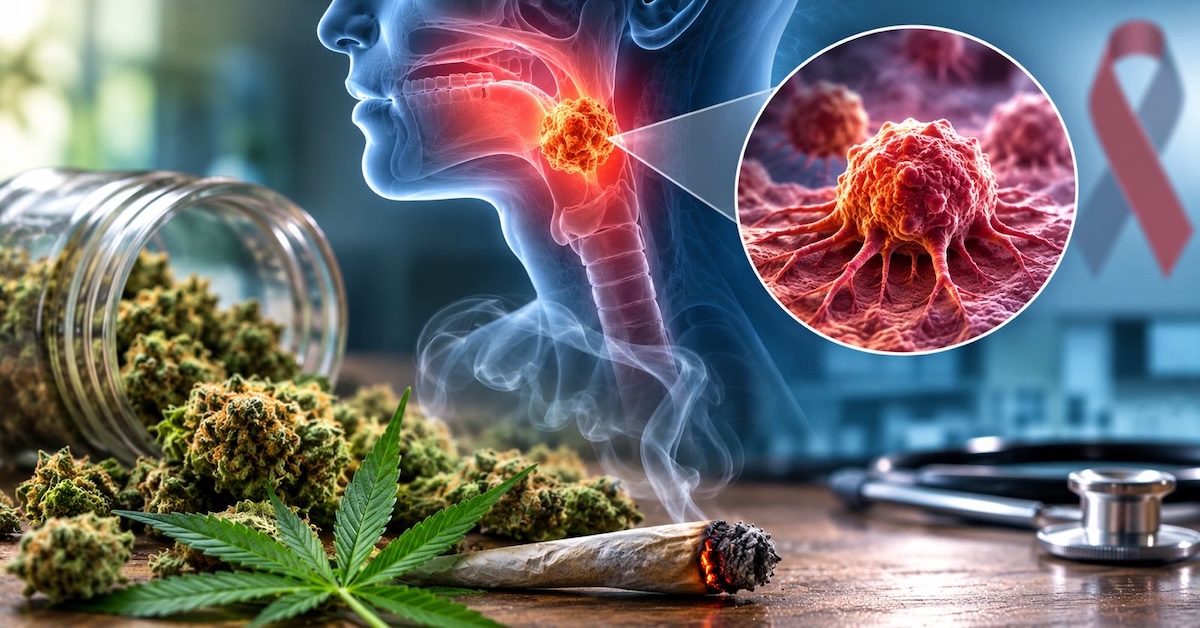
New Delhi/Patna: A large study analysing millions of medical records has found that people with cannabis use disorder may face a substantially higher risk of developing cancers of the mouth, throat and other parts of the head and neck than those who do not use cannabis.

The findings, published in the peer-reviewed journal Preventive Medicine Reports, add to a growing body of research examining the long-term health effects of cannabis use as its legalisation expands across parts of the world.
Researchers stressed that the study identifies an association rather than proving that cannabis directly causes cancer, and said further research is needed to understand the biological mechanisms involved.

Threefold Increase In Oral Cancer Risk
The study found that individuals diagnosed with cannabis use disorder (CUD) were more than three times as likely to develop oral cancers affecting the lips or tongue within five years compared with people without the disorder.
According to Dr Niels Kokot, the study’s senior author, the analysis suggests that cannabis users have a significantly greater likelihood of developing head and neck cancers than non-users.
Although the research did not distinguish between different methods of cannabis consumption, Kokot noted that smoking remains the most common form of use, making smoked cannabis the most likely source of the observed association.
Findings Based On More Than 45,000 Patients
The researchers analysed data from more than 45,000 patients diagnosed with cannabis use disorder.
Among those with CUD, 0.74% developed oral cancer during the study period, compared with 0.23% of people without the disorder.
After adjusting for tobacco use and other lifestyle factors known to influence cancer risk, researchers found that people with cannabis use disorder remained 3.25 times more likely to develop oral cancer.
The association appeared even stronger among tobacco users. Smokers with cannabis use disorder were 6.24 times more likely to develop oral cancer than tobacco users who did not use cannabis.
What Is Cannabis Use Disorder?
According to the US Centers for Disease Control and Prevention (CDC), cannabis use disorder is diagnosed when an individual experiences at least two symptoms associated with problematic cannabis use.
These may include strong cravings, increased tolerance, consuming larger amounts than intended, continued use despite personal or social problems, using cannabis in risky situations, withdrawal symptoms, and unsuccessful attempts to stop.
Why Early Detection Matters
Head and neck cancers can be life-threatening if they are diagnosed late.
According to the US National Cancer Institute, around 69% of people diagnosed with cancers of the mouth or throat survive for at least five years. However, survival falls to 14% if the disease has spread to distant parts of the body.
For laryngeal (voice box) cancer, the five-year survival rate is about 61%, declining to 16% once the cancer has metastasised.
Symptoms To Watch For
Doctors say the early symptoms of head and neck cancer can resemble common illnesses such as a cold or sore throat, making diagnosis challenging.
People should seek medical advice if they experience persistent symptoms such as:
- A sore throat that does not improve.
- Ongoing ear pain without an obvious cause.
- Frequent headaches or persistent pain in the face or neck.
- Pain while chewing or swallowing.
- Hoarseness or lasting changes in the voice.
- Difficulty breathing or speaking.
- A persistent lump in the mouth, throat or neck.
- Mouth or tongue ulcers that fail to heal.
- Frequent nosebleeds or blood-stained saliva or phlegm.
- White or red patches inside the mouth.
- Swelling of the jaw, neck or one side of the face.
Health experts emphasise that these symptoms do not necessarily indicate cancer, as they are often caused by less serious conditions. However, anyone experiencing persistent or unexplained symptoms should seek prompt medical evaluation to determine the underlying cause.